As I was catching up on some episodes of NPR’s Throughline this week, I listened to the episode from February 9 which was titled The Whiteness Myth. The episode features the University of Virginia Professor Amanda Frost who details the history of whiteness in the United States as it pertains to the ability to become a legal citizen in her book You Are Not American: Citizenship Stripping From Dred Scott To The Dreamers.
The episode got me into a deeper dive into the history of whiteness. Below are just a few of the excerpts I found meaningful and a list of resources I found along the way.
Let me say it again: Whiteness has a history whose meanings change. Neither scholars nor ordinary people have been able to agree upon the definition of white people — who is white and who is not — nor on the number of races that count as white. Disagreement reigns and has reigned since the modern scientific notion of human races was invented in the 18th-century Enlightenment. Nota bene: invented in the 18th century. (Painter 2020)
What appears to have some people confused is the way anti-racists differentiate between white people, on the one hand, and whiteness as a social, political, and cultural idea, on the other…Whiteness is inherently oppressive and racist because the history of the concept has been intrinsically bound up with creating and maintaining a racial hierarchy. It has no history separate and apart from oppression. But the people called white are not the problem. In fact, the anti-racist position is that whiteness was something done to so-called white people, which those of us so-called should reject. (Wise 2021)
With the Stop WOKE act in Florida, continuing to be a top news story after the College Board’s decision to white wash its African American Studies course curriculum, it seemed important to take a deeper dive into the origin of the word “woke.” What is the history of this word? Where did it originate? Why has the meaning become negative?
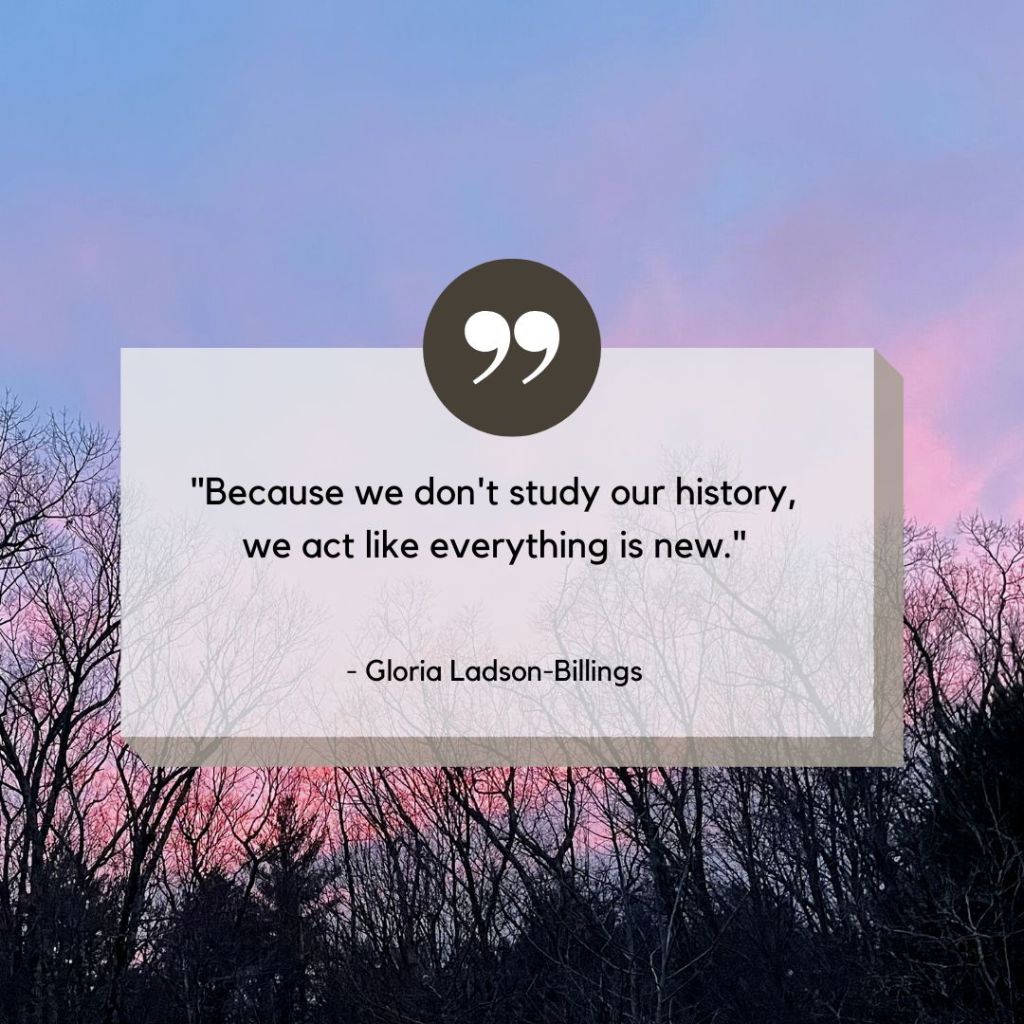
From a literal standpoint, it would seem that being awake would be a good thing as opposed to the alternative, staying asleep. This is where the quote from Dr. Ladson-Billings comes into play. Due to the lack of a commitment to discuss our country’s full history, there is an obliviousness to the explicit details of the story. Those who are in positions to make these decisions (mainly white men) remain unwilling to pursue a more accurate portrayal of how we as a nation have arrived at our current position. Could we avoid this ebb and flow of pushes to “reconstruct” our country to a place where all men and women are guaranteed the same rights?
Back to the history of the word woke, which according to an article from the NAACP’s Legal Defense Fund titled HOW WOKE WENT FROM “BLACK” TO “BAD” notes that the use of the word goes all the way back to the 1920’s, “the use of “woke” as an in-group signal urging Black people to be aware of the systems that harm and otherwise put us at a disadvantage is documented as far back as the 1920s.” Author Michael Harriot adds the following: “When you look at the long arc of history and America’s reaction to the request for Black liberation – every time Black people try to use a phrase or coin a phrase that symbolizes our desire for liberation, it will eventually become a cuss word to white people.” (i.e. Black Power, Black Lives Matter)
The post concludes with the following two paragraphs:
“It’s hard to get people to demonize human beings and lives and history. But it’s easy to get them to demonize a word. And if you can use that word as a placeholder for those people, for caring about those people, then it’s easy to demonize instead of saying, ‘We’re just gonna stop caring about people,’” Harriot concludes.
Okayplayer Senior News and Culture Reporter Elijah Watson agrees, “When I think of political figures like (Governor) DeSantis and the rampant fight against critical race theory — you are really trying to erase history and trying to erase knowledge that we need to grow better as a people. The fact that you are trying to hide these experiences all for the comfort of your white fragility is troubling, harmful, and, most importantly, dangerous. And that’s literally everything that woke goes against.”
Do those in control want to be better? Maybe a first question should be what does better looks like to you?
Recommended Read:
Who’s Afraid of History? – This essay from Dr. Henry Louis Gates Jr. weighs in on the importance of teaching the truth about our country’s history. Dr. Gates notes, “School is one of the first places where society as a whole begins to shape our sense of what it means to be an American. It is in our schools that we learn how to become citizens, that we encounter the first civics lessons that either reinforce or counter the myths and fables we gleaned at home.”
Lessons the Right Wing Does Not Want Taught – From Zinn Education Project, this page highlights three examples of lessons where students are able to explore U.S. History and develop a deeper understanding of our country’s past. The site encourages readers to “Judge for yourself: “indoctrination” or an exploration of U.S. history that helps students think for themselves and shape a more just future?”
The Forgotten History of Eugenics – This piece from rethinking schools asks provides some much needed background into the Eugenics movement in the United States. In addition it poses the following important questions: “What is the economic and political context in which the contemporary version of educational reform is being touted? What are the assumptions about student learning that fuel the current wave of testing? What are the effects of this testing on the lives of students and the educational climate of schools? How do these tests affect the equitable distribution of educational resources and opportunities between different school districts?”
Whiteness As Property – From the Harvard Law Review (1993) – “Professor Cheryl Harris examines how whiteness, initially constructed as a form of racial identity, evolved into a form of property, historically and presently acknowledged and protected in American law.”
Childbirth Is Deadlier for Black Families Even When They’re Rich, Expansive Study Finds – This interactive page from the New York Times highlights the study, published last month by the National Bureau of Economic Research that highlights “The richest Black mothers and their babies are twice as likely to die as the richest white mothers and their babies.” The data shows that out of every 100,000 births, 173 of the babies born to the richest white mothers die before their first birthday as compared to 350 babies born to the poorest white mothers die, and 437 babies born to the richest Black mothers die. The data comes from a California study of 2 million births to new mothers between 2007 and 2016.
Recommended Watch/Listen:
Bill Russell: Legend – As a lifelong Celtics fan, I learned a lot from this two-part Netflix documentary about the racism Russell endured. It is interesting to me that I don’t remember a lot of talk about the fact that Russell was the first black NBA coach or that the Celtics were the first team to play five black players together at the same time. The documentary highlights that while Russell and his teammates were winning all those championships, the racism he and his family endured in his white suburban Massachusetts community was despicable. The film also shows the incredible Civil Rights work Russell did alongside Martin Luther King Jr., Muhammad Ali, and others. If you only know about Bill Russell’s incredible basketball resume, you don’t know Bill Russell. Check out the trailer below:
My daughter is reading Orwell’s 1984 in her AP English class at her school and with all of the fighting in some states to white-wash the history that is being taught I can’t help reflecting a bit on the following quote from 1984:
“Who controls the past controls the future: who controls the present controls the past.”
Ultimately, a philosophical question we need to answer is – what is the purpose of education? Are we hoping that students will have their heads filled with “facts” and information or do we hope they will be presented with different points of view and discuss these points of view and ask questions to better understand people, places, and experiences that in which they are unfamiliar?
Another person who had their work cut from the AP curriculum was best-selling author and award-winning journalist Ta-Nehesi Coates. In the interview with Chris Hayes (available below) from this past week, he gave his opinion on what the goal of education should be: “The goal of education is enlightenment, some deeper understanding of humanity.”
In reference to the backlash against his work and others Coates added, “Backlash happens when those that most want to maintain the status quo are afraid.
Another great interview worth watching from this past week was one that Ari Velshi did with Howard University Professor Nikole Hannah-Jones regarding her thoughts on the continued backlash against her Pulitzer Prize-winning 1619 Project. Like Coates, she stressed the importance of students gaining a deeper understanding of our history. “I want my child to learn complicated and nuanced things,” she noted. Jones also noted the importance of discussing interpretations of our history. “To say I disagree or wouldn’t say that is different than saying kids shouldn’t be exposed to this.”
The Truth Behind the College Board’s Decision…
As the College Board continues to try to explain the how and why of its decision to cut out major topics from its AP African American studies curriculum, the information coming out seems pretty clear as to the intentions. The College Board is a money-making organization that want to continue to have the same impact it has had historically in all 50 states. When a number of these states are now passing legislation that makes it illegal to have topics that might be considered “divisive concepts,” the College Board does not want to see a big reduction in access to its materials. Instead of taking a stand, they decided to provide a comfortable curricular pathway for states and districts where there is no appetite for teaching an accurate account of the history of our country. The organization had a chance to show its values and it did…making money is the College Board’s number-one priority.
A post earlier this week by Phil Lewis outlines a clear contradiction to the statements the College Board made about the revisions in the AP African American studies curriculum not being influenced by Florida’s pushback against certain topics. Lewis notes: “If you’ll remember, the College Board said in a statement that the major revisions were “substantially complete” by December 22, 2022, several weeks before “Florida’s objections were shared.” But this letter claims that the nonprofit has been working with Florida since January 2022 — an entire year prior.”
Street Data – by Shane Safir and Jamila Dugan – This is the best education book I have read in quite some time! I keep wishing I had picked up this one sooner. Dr. Chris Emdin writes in the foreward, “Instead of listening to the families and young people we should be designing schools to serve, we listen to test numbers and test scores and choose to believe anything but the most valuable source of data in our buildings: human experience.” The book definitely provides the why and the how of radically changing how we do school improvement.
More Street Data resources:
Safir and Dugan have a podcast that goes into great depth about the Street Data process and featured educators who are immersed in the work in their schools and districts.
Black History Uncensored by MSNBC’s Ja’han Jones on the ReidOut Blog
Jones is highlighting works by authors caught up in the conservative movement’s school bans. Here are the important people in our country’s history that have been highlighted so far:
PEN America has created a list of the 176 books that were banned in Duval County Florida as of February 10.
Recommended Listen
Into America podcast – With 2023 being the 50th Anniversary of the birth of Hip-Hop, Trymaine Lee is diving into the history of Hip Hop this month. The first episode, Concrete Jungle, talks about how the concrete jungle of New York in the 1970s led to the birth and spread of hip-hop and features some of the pioneers of hip-hop. The second episode, Broken Glass Everywhere, discusses how Hip-Hop artists used their work to use their music to pushback against police harassment.
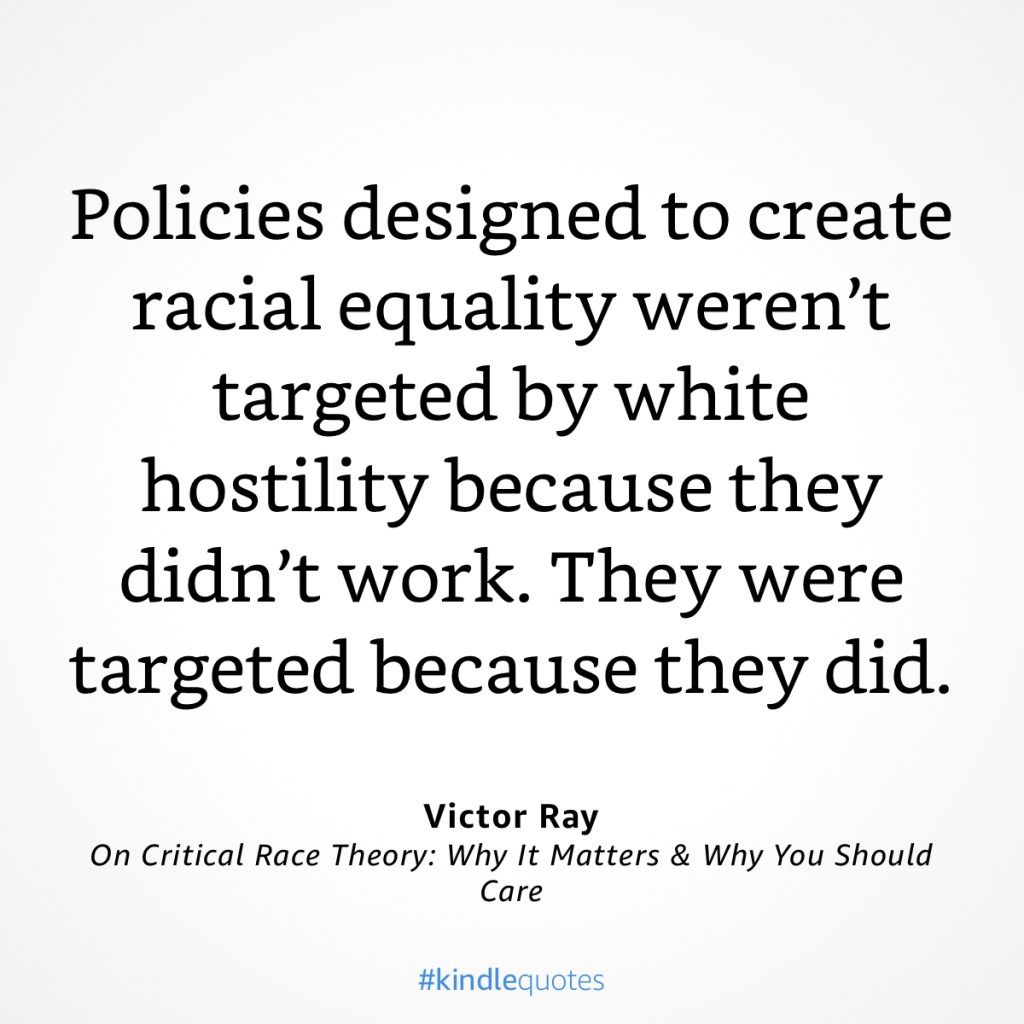
It is hard to understand why the outrage about Critical Race Theory did not quickly subside when the actual architects of the framework had the opportunity to explain its origin and intentions: “to develop laws and policies that can dismantle structural inequities and systemic racism.” (NAACP) Is there another reason that people would intentionally misconstrue the meaning behind this theory or block current students from learning and thinking about it, other than to maintain the status quo? The following quote from Victor Ray certainly resonates here:
To continue to better understand things like CRT that I was never taught in school, I will endeavor to gain a deeper understanding of these “divisive concepts” that some are trying to stop students from learning about. This weekend, Kimberlé Crenshaw appeared on Ali Velshi’s show on MSNBC over the weekend to discuss the controversy over the College Board’s decision to revise its Advanced Placement African American History Curriculum and cut out the following topics:
The Movement for Black Lives
Institutional Racism
Structural Racism
Systemic Racism
Queer Theory
Prison Industrial Complex
Mass Incarceration
As part of this revision process, the work of Crenshaw, one of the architects of CRT, has been cast aside due to the ongoing misinformation campaign that defines CRT as a theory that is intended to make white kids feel bad about themselves. Crenshaw, a professor at both Columba and the University of California, points out in the interview with Velshi that “Critical Race Theory is not teaching people that they are individually responsible, it’s actually somewhat doing the opposite. It’s saying that these things are the inheritances of structures: structures of the economy, structures of the housing market, and structures of policing.”
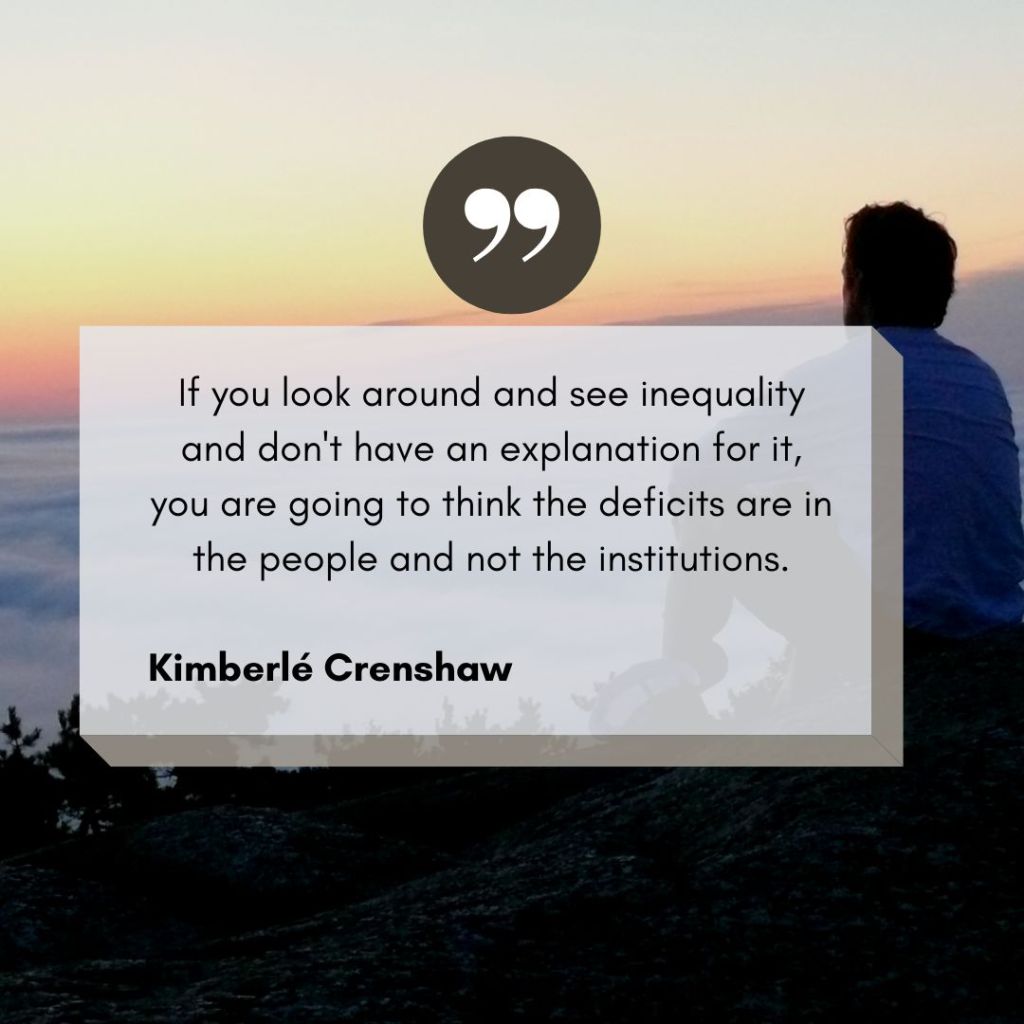
Professor Crenshaw goes on to add, “If you look around and see inequality and don’t have an explanation for it, you are going to think the deficits are in the people and not the institutions.”
The entire interview, which is just under nine minutes, is below.
While the news stories continue about the state of Florida pressuring the College Board regarding some of the content of its AP African American Studies curriculum, there are a few things worth highlighting. First, AP courses are elective courses…This means that no one is forced to take them. Second, the College Board is probably best known for the Scholastic Aptitude Test (SAT) which Carl Brigham, a noted eugenicist, developed. Dr. Tracey Benson, a school leader, researcher, and the co-author of Unconscious Bias in Schools highlights the problematic nature of the College Board offering an AP African American Studies course in his post on medium DeSantis v. Black Studies (2023): New Dog, Old Tricks. He notes, “Ultimately, the pretty package of developing and offering an African American studies AP course represents putting cracked eggs in a flimsy basket.”
If College Board wanted to look anything but disingenuous in this endeavor, they would have had a much more transparent process in the curricular decisions that were made around this course. They could have modeled the type of collaborative process that is necessary when fear-based tactics are used to pressure educators. As Lauren Porosof notes in her ASCD article Navigating Tough Curriculum Conversations, we need to ask ourselves reflective questions like “Is this curriculum making people unsafe or merely uncomfortable? Who, exactly, is uncomfortable? What might be the source of that discomfort.” Porosof also notes that it is pretty common for adults to “mischaracterize experiences as unsafe when they’re merely uncomfortable.”
The article concludes with a subheading titled “A Manifestation of Values.” Here’s the first sentence: “Creating curriculum is always a matter of deciding what’s most important for students to know and do, and what anyone considers most important reflects that person’s values.” In this case, it reflects the values of both the College Board and the Governor of Florida. In Florida’s case, there is some irony in the fact that the state is simultaneously moving towards permitless carry of weapons for residents over 21 while at the same time reminding teachers they could face felony charges for unapproved books in their classrooms.
Recommended Listen/Watch
Democracy-ish Podcast – New episodes drop each Thursday. Here is the description of the podcast from the Democracy-ish website: “Democracy-ish is a podcast dedicated to fighting for democracy and preserving your sanity in a time when both are under active assault by forces committed to white supremacy and stupidity. For far too long our body politic has been viewed through an all-white prism that does not represent the multiracial nation that is the United States of America. Hosts Danielle Moodie and Wajahat Ali always keep it real, blunt and entertaining as they discuss how we can achieve a multiracial democracy and cover all the ground left behind by mainstream media and seek to make sense out of the nonsense.”
Last week’s, Bustin America’s Racist Myths episode featured Princeton History Professor Kevin Kruse who discussed his new book Myth America: Historians Take On the Biggest Legends and Lies About Our Past , a collection of essays by historians which addresses some of the biggest historical inaccuracies about our country. The book includes an essay on Voter Fraud by Carol Anderson, author of New York Times Best Seller White Rage: The Unspoken Truth of Our Racial Divide and Professor of African American History at Emory University, and an essay on Police Violence by Elizabeth Hinton, author of America On Fire and Associate Professor of History in the Department of History and the Department of African American Studies at Yale, with a secondary appointment as Professor of Law at the Law School.
This week’s episode, Banning Black History, discusses the College Board’s decision to delete som portions of its AP African American History curriculum after criticism from Florida Governor Ron DeSantis
Recommended Read
A few more articles on the situation with the College Board
This a great article on Resisting Book Bans! The authors share a constructive and proactive framework that ensures diversity, equity, inclusivity, and social justice are prioritized.
Did you know research done in 2019 found that over 80 percent of Chief Diversity Officers were white? Gassam Asare notes, “Not enough conversation centers around how those of us hired to help eliminate workplace inequities are instrumental in perpetuating harm.” The four areas she goes in-depth on in the article are: expertise, pay inequity, deprioritizing black issues, and aggregating all non-white employees.
New data indicates that two-thirds of voters feel culture wars distract schools from their core mission of educating students. Despite this data, the truth is that some states are continuing to pass regulations around “divisive concepts” and banning books that limit access to diverse points of view and cause fear in educators.
The article is as relevant as it was a year ago when Jennings wrote:
“Education equity advocates and allies must stand united once again, for divided we fall. We must actively resist legislation and state policies that force educators to whitewash U.S. history and deny students the literature that will help Black students see themselves in history and for White students to develop empathy for those who don’t look like them.”
This article is from this past September and Myles’s words about inclusivity certainly resonate this week:
“We must operate in a heightened state of awareness to ensure inclusivity in all realms. Failure to operate on this high frequency means failing ourselves as human beings as we yearn to make the world a better place in which tremendous gifts and opportunities are not wasted because of bias and anti-Blackness.”
As some may be aware, Bishop is referred to as the “mother of multicultural literature” for her groundbreaking research in children’s literature. Check out the short video here with Professor Bishop discussing the importance of Mirrors, Windows, and Sliding Glass Doors.
UCLA School of Law CRT Forward Tracking Project – The CRT Forward Tracking Project (FTP) identifies, tracks, and analyzes local, state, and federal measures that attempt to restrict access to truthful information about Critical Race Theory (CRT), race, and systemic racism. To demonstrate the breadth of anti-CRT measures across the country, FTP provides a comprehensive database of anti-CRT measures across all levels of government and varying types of official action.



 My Un-Learning Journey