
-
How to Create Online Collaborative Whiteboards
Stoodle is a free online collaborative whiteboard tool hosted by CK12
-
CK-12 Launches a New Collection of Elementary School Math Resources
from Richard Byrne – CK-12 has long offered tutorials and practice exercises for middle school and high school science and math students. Today, CK-12 unveiled a new collection for resources for elementary school mathematics. The collection is organized by grade level (grades 1 through 5) and skill. The resources are a mix of videos and online practice exercises.
-
Where America’s Racist Tweets Come From – The Atlantic
Racist tweets in America, mapped http://t.co/ccLvYWcyt7 http://t.co/I8IMJbv2Bn
-
Who’s Investing in Ed-Tech? (2015)
A great look at the landscape of educatioanal technology by Audrey Watters – who is creating it, who is using it, and who is telling the story
-
Most organizations go too slow, study things too much and most of all, work to not matter too much, because mattering is a good way to get noticed and getting noticed might get you in trouble. The upside of working in a fast-changing world is that you regularly get a new chance to reshuffle the deck and start mattering.
-
Have you heard? We just launched FREE K1-5 Math Pr
Have you heard? We just launched FREE K1-5 Math Practice and videos! Click: http://t.co/MnRtDDRSsh http://t.co/WXVwGCnWNR
-
The Techies Who Are Hacking Education by Homeschooling Their Kids | WIRED
-
The Importance of Teaching ‘Traditional’ Typing Skills in 2015
-
Learning In Burlington: The Best TED Talk I’ve Seen – Brene Brown – The Power of Vulnerability
.@jesslvalenti & I luv this 2 MT @patrickmlarkin: The Best TED Talk I’ve Seen via @BreneBrown: Power of Vulnerability http://t.co/N273ruFS5B
-
FCC Chairman Tom Wheeler: This Is How We Will Ensure Net Neutrality
-
Independent bookstores rising: They can’t compete with Amazon, and don’t have to.
More thoughts on the fact that there is still a place for physical books
-
Children and High-Tech Addiction: A Look Beyond the U.S.
Larry Cuban looks at questioning the push for schools to go 1:1
-
The easiest, simplest way I’ve found to differentiate instruction
-
Princeton Review’s Ranking of the Colleges That Pay You Back
-
Great site of numerous web 2.0 tools curated by Russ Tarr
-
Welcome to PD Without Borders!
Wonder how something like this would combine with HighBrow?
-
Zak Ebrahim: I am the son of a terrorist. Here’s how I chose peace. | Talk Video | TED.com
From TED.com – If you’re raised on dogma and hate, can you choose a different path? Zak Ebrahim was just seven years old when his father helped plan the 1993 World Trade Center bombing. His story is shocking, powerful and, ultimately, inspiring.
-
Twitter tool that allows you to pause Twitter chats
-
Highbrow Delivers Short Courses to Your Inbox
With the lack of time teachers have – I like this as a possible model
-
Practical Ed Tech Tips – from Richard Byrne
From Richard Byrne – Last fall I started to put together a playlist of how-to videos that I have created. I called the playlist Practical Ed Tech Tips. In the videos I provide demonstrations of how to use some of my favorite educational technology tools and services.
-
Mapping Media to the Curriculum » show what you know with media
Great site for teachers with a variety of options for different creation projects.
-
Student iPad Radio Shows Shared on YouTube
The most remarkable thing about Audio Recorder Pro is the number of export options it provides, including exporting audio as video which can be saved locally to the camera roll or uploaded to video sharing sites including YouTube.
-
When getting deferred from college is a gift –
This is the sixth post in a continuing series about a high school senior attemping to navigate through the college admissions process.
Category: Uncategorized
Once Again Fact Is Stranger Than Fiction – U.S. Toddlers Targeted For Online Preschool
I remember reading an article back in the fall by the Onion which was titled
Increasing Number Of U.S. Toddlers Attending Online Preschool.
The article cited a fictitious report from the United States Department of Education which had an expert citing the following:
“With access to their Show-And-Tell message boards, recess timers, and live webcams of class turtle tanks, most toddlers are finding that they can receive the same experience of traditional preschooling from the comfort of their parents’ living room or home office.”
 |
| Image via http://i.telegraph.co.uk/ |
However, it appears that the folks from the Onion may have been on to something now that Vinci Education has created just such an option. In an article in The Washington Post’s Answer Sheet Column, Valerie Strauss highlights Vinci’s endeavor by citing the following cautionary message to parents from the company’s website:
“The preparation needs to start when your child is 4, if not earlier. VINCI Virtual School provides you with a ready-to-go curriculum to make your time more effective, with the structured lessons and with the focus on building literacy and math skills while broaden knowledge on science.”
I can only pray that parents do not buy into this type of thinking and instead worry more about interacting with their preschool children and not letting some online program do it.
My Weekly Diigo Bookmarks (February 1, 2015)
-
Video explaining SAMR
-
Tells the translation of any word, by clicking on the map of a particular country/region
-
From Greg Kulowiec – n my never ending blog posts about how to use Explain Everything, here is a new one, creating pop-up style videos. The process is best explained via video tutorial (below), but the final product will essentially look like the videos that VH1 created in the mid 90s.
-
Do you have one of the best jobs in America? These are the top 100: http://t.co/r2ZeNUgIqi http://t.co/LoXQ5ZDJiY
-
“Proof you don’t need grades and a curriculum” – http://t.co/QxWUFgphzS
-
-
Cite Bite is a simple tool for creating a direct link to a passage of text on a webpage.
-
From the Washington Post – An Illinois bill allowing schools to ask for social media passwords from students has led to at least one district notifying parents of the policy.
-
Twine publishes directly to HTML, so you can post your work nearly anywhere. Anything you create with it is completely free to use any way you like, including for commercial purposes.
-
Commonlit is an organization that is building sets of thematic discussion questions to use in conjunction with upper elementary school and middle school students.
When It Comes To Social Media – I Say Bring On The Strangers
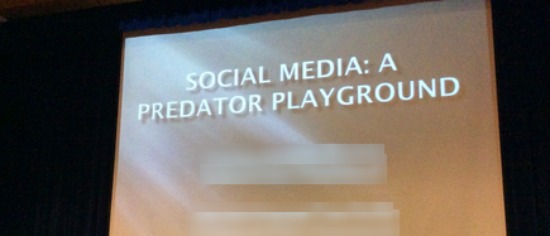
The slide above was the opening slide in a presentation to parents last week at the high school that my children attend. As I sat waiting for the presentation to begin, I felt sick to my stomach regarding the message that would be delivered to the other parents who were in the audience. Then again, when I saw that this session would be led by law enforcement officers I have to admit that I expected a heavy dose of fear.
The presenter introduced himself saying, “I would love to tell you that at the end of the presentation you will feel very good about yourself” and then proceeded to go through a list of various symbols which represented various social media tools and described why parents should be concerned about each of them. The low point of the whole evening was a video about a young woman named Alicia who was kidnapped when she was 13 by a sexual predator she met online and then held hostage in another state. Later on, the officer role-played a psychopath who had found a child online and then stalked him and kidnaped him without leaving a trace. “It’s your job to communicate with your kids before we pull them out of a hole in the ground,” he told us.
To be fair, the presenter works for the state of NH task force that deals with internet crimes against children. I can only imagine the horrific cases that he and his colleagues deal with. Furthermore, I am extremely grateful that we have individuals committed to dealing with the individuals who use the internet to hurt children. Later on the officer did weave in some personal stories of dealing with his own teenagers and some good parenting tips for keeping tabs on teenagers and their online activities. He advised parents to have a central place in the house for devices to be left after 9 p.m. and to have all of the passwords for the social media accounts of their children. He also shared some positive repercussions from social media use and concluded with “Social media is going nowhere and we have to get on top of it.”
The Message That Wasn’t Heard
However, the message that wasn’t heard was that social media tools are neither good or bad, it is the people typing the keystrokes that are good or bad. Just because we are hearing horrific stories does not mean that they are the norm. As Danah Boyd stated in her book It’s Complicated:The Social Lives of Networked Teens, “It’s critical to recognize that technology doesn’t create these problems, even if it makes them more visible and even if new media relished using technology as a hook to tell salacious stories about youth.” Boyd’s book should be a community read in every school community to help parents make sense of the foreign territory in which their children spend so much time.
Without supporting and educating parents on the use of social media tools, we will not be able to move past the misguided perception that they are something to be feared. The fact of the matter is that your digital footprint is also rapidly becoming your resume. We need to move beyond fear and start developing a comfort level in supporting our kids to create impressive online portfolios. Messages like the one I heard this past week are more likely to have parents denying access rather than supporting positive usage.
Social Media Has Connected Me With Some Amazing Strangers
Personally, I have met countless strangers online who have taught me more than I could have ever dreamed of. In fact, I add more strangers daily to my Personal Learning Network (PLN) in the hopes of learning even more new things from educators around the globe who share my passion for supporting learners. These connections have opened countless doors for me that would not have been possible without my use of social media tools. We need to show parents these types of examples of what can happen for their students when they take advantage of the connections that are at their fingertips.
While there have been a number of stories about students who have lost opportunities due to social media use (i.e. They Loved Your G.P.A. Then They Saw Your Tweets and One Bad Tweet Can Be Costly To A Student Athlete), my worry is that these stories will cause students to go on lockdown with their accounts and operate under an alias or delete accounts all together. In a recent conversation with a former stranger, Alan Katzman the founder of Social Assurity, I was told that colleges take it as a red flag if they don’t find anything about an applicant online. In my opinion, it means one of two things to the college. Either you deleted some bad stuff or you are antisocial, neither of which looks good. The former stranger also told me that Cornell became the first school in the country this year to accept students solely based on their social media profile. Cornell allowed students to apply to their MBA program using LinkedIn Profiles.
There is no doubt in regards to the direction things are headed for our students and social media. The only question that remains is how many of them will be hampered by scared adults who are getting a jaded picture offered by someone with a narrow point-of-view?
For me, I’ll continue to push the power of building a network of strangers into a powerful PLN!
Related articles
My Weekly Diigo Bookmarks (January 25, 2015)
-
Check out @jlscheffer #padlet on the question What is causing the gender gap in #STEM ? http://t.co/cPBRq84Hxz #educon
-
A report on the current state of affairs and how we are hurting kids by pushing too much too soon.
-
An interesting conversation from Educon about reframing professional learning for twachers.
-
MT @patrickmlarkin: The Quest for an AA Degree in #HighSchool http://t.co/xwaIC6PTfu @Getting_Smart #echs
-
If your company is about to transition to Google Apps, there will undoubtedly be some strong resistance. It’s a matter of human nature – people don’t tend to embrace change. We like things the way they are. This is why your company needs a strategic plan for dealing with change management when you begin to implement Google Apps.
-
From Richard Byrne – There are plenty of good places to find free ebooks online, here’s another worth taking a look at. Forgotten Books republishes thousands of classic works that are in the public domain. Forgotten Books offers all of their titles as free PDF downloads and provides links to ePub versions of the titles.
-
From Richard Byrne – “Google Earth and Google Maps has always been a natural fit in social studies classrooms. But Google Earth and Maps can also be powerful tools in other content areas. The resources below represent some of my favorite resources for introducing Google Earth and Maps in areas outside of social studies.”
-
From Larry Cuban “claims from technological enthusiasts that “progress” means classroom teachers will be obsolete in the 21st century are, at best, premature, or, at worst, mindless.”
-
On selecting devices – One District’s Search for the Next-Gen Device – Part III – See more at: http://t.co/z52OGeEBPb #1to1techat #byotchat
-
MT: @GetKahoot Brand new features: Google Drive Export, Cheating Prevention & more http://t.co/9xRJuInhLV #bpschat #1to1ipadchat #edtech
-
From Justin Tarte – Over the last two years there has been quite a lot of work done in my district in regard to grading beliefs and grading practices. As a result, our HS has recently agreed upon these 4 beliefs on grading.
My Weekly Diigo Bookmarks (January 18, 2015)
-
Pin by Starr Sackstein on technology | Pinterest
How Twitter in the Classroom Connects Your Students http://t.co/K9pxr7REkX
-
Coalition to Support Grieving Students
Great site to support students dealing with loss
-
Meet the Techie Ladies of BHS! | Burlington High School Help Desk
Love this video created by @jlscheffer and her female students who are leading the charge in tech! http://t.co/qzylkt4avm #edtech
-
Reagan students excited to receive laptops for school and home use | News Blog
thoughtful 1:1 rollout in @HoustonISD http://t.co/FLJ8e5bgOz Looking frwd to visiting HISD schools today!
-
Why You Should Play on Your Strengths–Not Focus on Your Weaknesses via @LollyDaskal http://t.co/4Uzm7nPTIU http://t.co/ysXqtwssCi
-
Book-Writing Productivity Hacks – Business Insider
The Productivity Hacks I Used To Write A 93,000-Word Book In 6 Weeks – thought you would like this @thenerdyteacher http://t.co/6hGrpyijyO
-
From Read Write Think
-
Separate People From Their Phones, And They Perform Less Well | Smart News | Smithsonian
“a new study suggests that being separated from your phone can have serious psychological and physiological effects. As smartphones become even more ubiquitous—as of 2014, 58 percent of all adult American cell phone owners had one—there’s been plenty of backlash against constant connectivity. But don’t put down that phone just yet—a new study suggests that being separated from your phone can have serious psychological and physiological effects. Read more: http://www.smithsonianmag.com/smart-news/putting-down-phone-can-make-you-dumber-180953873/#dmrj3AkHD8dFxT0Y.99 Give the gift of Smithsonian magazine for only $12! http://bit.ly/1cGUiGv Follow us: @SmithsonianMag on Twitter
-
Performance Goes Down When People are Separated from Their iPhones | Big Think
Our findings suggest that iPhone separation can negatively impact performance on mental tasks. Additionally, the results from our study suggest that iPhones are capable of becoming an extension of our selves such that when separated, we experience a lessening of ‘self’ and a negative physiological state.”
-
Explore the World with the Google Cultural Institute
From Jen Carey – “I am a big fan of the Google Cultural Institute; it’s an amazing repository of Artistic Masterpieces, Wonders of the Natural World, Historical Artifacts, and more. By using it as a repository of digital materials, it’s an easy way to access cultural content from around the world in my classroom. I can pull up a high definition image of Van Gogh’s Starry Night and use its powerful zoom features so that students can see the impasto brush strokes. We can explore the Street Art of Sao Paulo with a Google Street View for a unit on modern art or the Ruins at Angkor Wat when covering a unit on Ancient History.”
-
Good thoughts on failure from Cathy Davidson
-
History in Motion – Create Multimedia History Stories
From Richard Byrne – “History in Motion is a promising service that allows teachers and students to build multimedia history stories. On History in Motion you can build animated timelines that can move in conjunction with movements on a map. At each stop along your timeline and map you can include descriptions of events, display images, and display videos.”
-
Another site for free online textbooks
-
A site for free online textbooks
-
Google for Education: Bringing Learning Online
Google’s Guide to Online education
Getting Ready To Go 1:1 FAQ’s

As a school district that has implemented a 1:1 initiative where every student is provided an iPad, we get frequent inquiries from other communities looking to begin similar programs. Back in 2011-2012 school year as our 1:1 Planning Team began the process of setting the stage for year one of this initiative, we had more questions than answers. Interestingly, each school district that we speak with regarding our 1:1 journey has many of the same questions. With this in mind, I thought it would be worthwhile to share some of these common questions and our responses to them.
However, before answering these questions, it needs to be noted that there is no one right answer to many of these questions. These questions need to be answered by the stakeholders in your community because the final solution for our schools is not necessarily the final solution for another school or district. In addition, some of these questions will need to be revisited given the ever-changing nature of technology. Finally, I am sure that I missed a lot of questions so feel free to drop new questions or follow-ups in the comment section.
What type of equipment do you recommend? (laptop? iPad with a keyboard?)
In regards to the final device choice, I would suggest something that meets the needs of all learners and can support your instructional goals. While you will never be able to choose one device that would be the first choice for everyone, you will be able to choose a device that will allow everyone to get their work done. Your technology of choice should be integrated to support your current objectives.

How do you control students getting distracted by all the websites they love to visit while they are avoiding the work at hand?
This is an important conversation that should be had frequently in the early months of 1:1 within and across departments. The more we discuss this, the clearer it becomes is that the best way for teachers to monitor student activities in their classrooms has not changed due to the arrival of more devices in the hands of students. The key is for staff to be active moving around the classroom and use what one colleague calls “the two legs app.” Students have always been distracted and always will, but we need to talk about classroom best practices that can help us in minimizing these distractions.
Do you find that students are more excited about learning?
We have seen an increase in the levels of classroom engagement, but this is more do to changes in instructional practices than the addition of technology to the classrooms. Even prior to the arrival of the iPads in our district, we had started Learning Walks to look at the level of student engagement in our classroom. We have found that the level of engagement is higher due to the numerous digital resources that are available to staff and students which allow a greater variety of methods for students to show their learning.
What are some examples of collaboration you have seen happening in your district that otherwise would not have happened without the 1:1 technology?
Some of the examples of technological resources that have helped us increase collaboration between staff and our stakeholders are our district blogs which have grown to over 100 across the districts. Knowing that their students all have web-enabled devices in their hands, teachers have taken advantage of using online spaces such as blogs and web pages to post assignments, videos, and other instructional resources.
In addition, we have numerous social media accounts at both the school and district level which allow opportunities for collaboration. Our use of Google apps, particularly Google Drive and Google Docs has created an increase in collaborative writing and collaboration in general due to the ability of staff and students to connect both synchronously and asynchronously to complete tasks.
Do you have a fee/rental fee/lease fee/pay to own for the use of the technology?
We do not have a fee, but we do have students and parents sign a responsibility form and we recommend insurance.
Do they own the iPad/laptop when they are finished with high school?
Upon graduation, students have the option of purchasing the iPad. The vast majority of our students take their iPads with them.
What happens if a computer is damaged/breaks? If it is the students fault are they responsible for paying the replacement cost of the laptop/iPad?
Insurance covers loss, theft, and damage to the iPads, but if a family does not have the insurance then they need to cover the cost of the repair or replacement.
Do the students bring the laptop/iPad home with them for use at home?
Students at the high school bring their devices home and we are looking at a plan for students at other levels to bring their devices home as well. The use of tools like Google Apps for education allows students to access their work on any device to which they have access which minimizes the impact of students across the district who only have access to iPads in school.
Do the parents/guardians sign an agreement policy for the use of the iPad/Laptop?
Yes
Does the technology department keep the computer/iPad over the summer months to clean the computer and download new software?
High school students are allowed to bring their devices home during the summer while iPads in grades K-8 are kept at school.
Did your district start with all student getting the technology or did the district start with a certain grade level?
The 1:1 initiative began at the high school in 2011-2012 and expanded to the middle school in 20012-2013. In addition, we began a pilot in a single classroom in grades 1, 4, and 5 at each of our four elementary schools in 20012-2013. The teachers for these pilots were chosen due to their high-level of interest in Started at the high school. Then we went to the Middle School and had pilots in the elementary.
How did you fund your 1:1 plan? School budget, capital expense, grants, donations?
We have funded our plan through the school budget. Two things helped us obtain the funds that we needed to begin and sustain this initiative. First was a commitment from our school board and town to agree to have a regular line item for technology purchases in our school budget. Our superintendent made the argument that technology needs (both infrastructure and equipment) need to be looked at as a utility that is purchased annually. We spend over $1,000,000 annually on electricity in our district and no one flinches. In our current day and age, we need to also understand that technology will be a regular expense in order to provide the resources our students and staff need to ensure that they are being prepared for the “real world.”
When you went 1:1, did you simultaneously make any changes to your textbook purchases, in terms of electronic subscriptions or plans? How did those changes affect your budgeting (i.e. how much did it add per device purchased)? If your rollout was one grade per year, how did you handle textbook changes for cross-grade courses?
When we went 1:1, we made a commitment to not buying any new sets of textbooks and instead commit time for teacher to build own resources. The process of staff developing their own resources continues to be an ongoing process. With the growing number of Open Educational Resources available as well as tools for teachers (and students) to create their own “books” to move beyond the traditional textbook, time and training are the only hurdles that need to be cleared.
Were there any bulk purchases for e-books for the school library with the 1:1 initiative? If so, how were they funded?
There were not any bulk purchases for e-books made. We continue to buy a generous amount of books for the libraries in our district. In addition, we have tried to add to our digital collection as well for students who prefer to do their reading digitally. Our goal is to continue to offer a balanced collection to meet the varied preferences of staff and students
What was your planning and timeframe for professional development with the 1:1 plan?
We spent a year ahead looking at digital resources that could help add value for teachers and students. This type of PD has been ongoing and embedded with the support of building and district-wide Instructional Technology support. Our Student Help Desk has also played a huge role in our ongoing learning in regards to utilizing digital tools. The BHS Help Desk provides support daily for staff and students who need help with their device or would like to know how they can use a specific digital tool to support their learning.
During the first year, we simply asked that all teachers consider using a digital space to share work with students and then provided time for teachers to share what was working best for them. Now in year four, we have added a district-wide Mobile Learning Coach to support building-based Instructional Technology Staff.
My recommendation for schools and districts who would like to move forward is to commit to spending 20-25% of what you spend on “the stuff” to Professional Development in the form of training or staff to support classroom teachers.
What additional technology infrastructure/staffing did you need for the Tech Team and the school network to successfully host/manage so many additional wireless devices?
The network was in place first. I regards to staffing, there has been no significant change to the IT Staff that handles our network and hardware issues. We did add a Director of Technology Integration and a Mobile Learning Coach.
Chromebooks, ipads or laptops, which one and why?
I would say iPads or Chromebooks from a cost and management standpoint. You can decide which makes sense for you based on the types of tasks you expect students to be completing in their daily routines. This is a conversation that needs to take place locally and with the appropriate commitment to Professional Development I do not think that there is a wrong choice.
If you would like a little background information on Chromebook vs. iPad, check out this thoughtful post on The Great Device Debate written by a couple of BHS students last year
Which grade do you begin with 9, 10, 11 or 12? Does grade 12 even make sense?
Again, what are you goals with the program? Are there grade levels where you feel the capacity of staff is stronger in regards to implementation. Starting smaller where you are confident there will be success makes the most sense. The important things is that no matter where you start your 1:1 journey, there needs to be regular updates for staff, students, and the community to share successes, challenges and plans for further expansion the program.
For more information on our journey to become a 1:1 school/district, please check out the following series of posts which were written during and after our first year of 1:1 implementation:
Becoming a 1:1 School Series
Looking Back at Year One of 1:1
For more information on our journey to become a 1:1 school/district, please check out the following series of posts which were written during and after our first year of 1:1 implementation:
Becoming a 1:1 School Series
Looking Back at Year One of 1:1
My Weekly Diigo Bookmarks (January 11, 2015)
-
Teacher Leadership Is More Complicated Than You Think http://t.co/hLPhG0AeRx
-
“current practices of our educational institutions—and workplaces—are a mismatch between the age we live in and the institutions we have built over the last 100-plus years.”
-
Interesting take from James Delisle in EdWeek
-
Easily create an eBook with these 3 powerful apps – http://t.co/gsOuyuakxO #edtech #edchat #ettipad
-
Great example of elementary classroom connecting online to empower students to do great things
-
Article in Science Magazine from Justin Reich
-
“Supporting ELLs in The Common Core Era” http://t.co/TZblngyHwD via @larryferlazzo
-
from notosh
-
From George Couros – In case you missed it @BHShelpdesk Ss @kristian1ty & @cathoyt_ had 2 of the 3 top posts 1st half of 14-15 http://t.co/UBRROsRuBW #bpschat
-
From John Seely Brown
-
Good resource from Gino Bondi
-
Another article blaming the tool instead of the behavior
-
Great talk from Annie Murphy Paul on intelligence and a Growth Mindset
-
Great literacy resources
What Do You Do When You See Inappropriate Social Media Posts By High School Students?
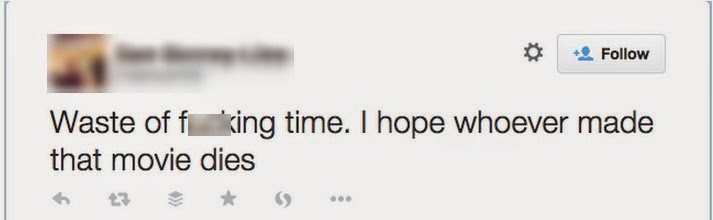
It’s no secret that I’m a huge fan of social media as a tool for learning. In order to stay on top of the various conversations that I like to follow, I have a number of lists that I have created. These various streams sometimes lead me to inappropriate posts by students. These instances concern me as to the amount of guidance that these students are being given in regards to the things that they post online and the possible ramifications.
As an educator, I feel it is the job of all of us to support students and ensure that they are fully aware of the implications of their online activities. Therefore, when I saw the tweet above from a local student-athlete, I decided to send the e-mail below to his Principal. I encourage others to take similar actions when they see this type of behavior. (I have removed the name of the student and the school because the truth of the matter is these things are happening at all of our schools).
Dear Principal Name,
I wanted to ask you to please have a conversation with Student Name about his use of Twitter. I stumbled across it while looking for some local high school basketball scores last night. While I do not think most student profanity on Twitter or other social media is a school issue, I have a concern for students who say things in this forum who may fail to understand the implications. As a former high school Principal and a current Assistant Superintendent, I am a big advocate of social media use and I continue to push for the constructive use of social media by all members of a school community.
My concern is that I do not want to see students lose out on opportunities due to comments they make on Twitter or anywhere else on social media. At one point when I was a high school Principal, I pulled all of my juniors and seniors into the auditorium and shared some of the comments that I had seen them using and talked about the ramifications with them in regards to the question on the top of the slide below. I worry that someone would make a judgement about the type of person one of our students is because of a single social media post. However, the fact of the matter is that this might be the only evidence of social interaction from that individual to which a school or employer has access and when there is a pile of other applicants it is easier to move to the next option.


In addition, The New York Times article They Loved Your G.P.A. And Then They Saw Your Tweets highlighted the fact that some college admissions offices check the activity of students Just this week, USA Today had an article titled One Bad Tweet Can Be Costly To A Student Athlete. While I know most student-athletes aren’t concerned about scholarships, they should know that employers and college admissions offices actively check social media accounts of applicants and make decisions based on what they find.
In most cases, a quick Google search by a students using their name + Twitter would quickly bring you to their account information.
I was going to tweet to Student Name directly, but I did not want to bring attention to this. I have little doubt that he is a fine representation of a student-athlete at your school and I hope he will consider cleaning up his social media accounts. While I don’t condone the use of profanity and such, I remember being a high school student and the fact that many of these same conversations and comments were common in the locker room or hanging out with friends or teammates. My concern is that now many of our students are having these conversations online without a full awareness of how public they are.
Anyway, sorry for the long e-mail. I wish you the best during the remainder of the school year and trust that this will not be a disciplinary matter but just a “teachable moment.” Good luck to Student Name and the team for the rest of the year!
My Weekly Diigo Bookmarks (January 4, 2015)
-
What Connected Educators Do Differently by @ToddWhitaker @Jeff_Zoul @casas_jimmy http://t.co/w0uUG5F71M #IAedchat #edchat
-
If we want better students, end the 19th-century ‘grading game’ via @Shareski cc @lowenESST #PSD70 http://t.co/CK0L7uCiA9
-
Found #examples beat textbook ones http://t.co/vJtldkKttJ #digital #resources #ela #engchat
-
Apps to ring in the New Year, and for the resolutions after http://t.co/7Z81N98u4z
-
The Spirit of the Lord and the Magic of Being Loved http://t.co/XqxTSs13CP via @lifeingrace
-
Is Your High School Hurting Your College Chances? http://t.co/iXv0wWOo7E
-
Education thought leaders forecast 2015 trends – @DA_magazine http://t.co/WecncxrSr1
-
Keep gaining with this tip: http://t.co/pWgwWCObtP http://t.co/FkomF6sMhI
-
5 Ways school administrators can use Google apps http://t.co/5vQEgw5Pan
-
Better, faster, stronger (and happier) — talks for your New Year’s resolutions: http://t.co/Iew7fZ7cRY
-
This is WAY better than the Facebook automatic year-end movie! https://t.co/Z47Fgx9mUj https://t.co/WBv1GNixoj
-
Social media education for high school students: How one tweet can be costly to a student-athlete http://t.co/oor7ZoktHZ @SAISnews @coach_ad
-
The 10 most clicked links I shared on Twitter in 2014: http://t.co/mHJe0EpNEg #edtechchat #edchat #teacherfriends http://t.co/Ah82bLQWVS
-
Three reasons becoming a Google Education Trainer might be a great goal for 2015: http://t.co/OluZsLeHk9 #GoogleEDU #edtech #fetc
-
A contest just for Massachusetts STEM teachers: http://t.co/jAUHx7clu6 http://t.co/4vjCuKXJ8o
-
“@Stanford Carol Dweck explains how a growth mindset can help studnts succeed http://t.co/Fc2BnJZdPF” In athletics 2! Give the grade #notyet
-
NH Sports Page Basketball Bedford vs Londonderry 12-19-14: http://t.co/MJp3TrCiPa via @YouTube
-
It’s only 2 minutes, but don’t let that fool you—this is insanely tough. http://t.co/YVlKxW5jBU http://t.co/EJeNs75oSI
-
Education Should Step Away from Apple Devices #edchatMA #ntchat #edtech #teaching http://t.co/gbSC8YgJqO
 My Un-Learning Journey