Inclusion Expert Lisa Dieker to Present at #BPSCon

Screen Shot 2017-08-24 at 7.55.17 PM
Photo via today.ucf.edu

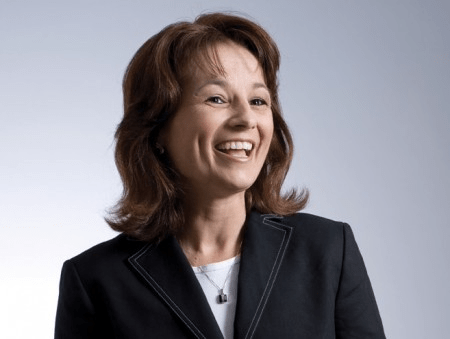
Burlington Public Schools is excited to welcome Lisa Dieker as a presenter at BPSCon.  Dr. Dieker is a Pegasus Professor and Lockheed Martin Eminent Scholar at the University of Central Florida.  She has authored several books including Leading the Co-Teaching Dance: Leadership Strategies, 20 Tools for the Collaborative Classroomand Strategies for Teaching Content Effectively in the Inclusive Secondary Classroom.

Dr. Dieker will present to high school and middle school teachers on Thursday.

Thoughts From Admin. Retreat Day 1

FullSizeRender

One word that resonated with me today was behaviors. In Beth’s opening session about supporting innovation and change, she talked about the importance of articulating what behaviors we would like to see in regards to the implementation of a particular initiative. The simple part is understanding that we cannot have change without a change in current behaviors. Of course, the harder work is coming to a consensus on what those new behaviors should be.

My other takeaway from Beth’s time was her discussion on incremental change and how we can support staff by helping them move from no to somewhat or somewhat to yes in regards to implementing behaviors/teaching moves that provide evidence of instructional practices we look for in our observations.  

In our File Cabinet Review with Carol, the importance of behaviors was once again highlighted as we looked at the data from 223 teacher evaluations completed by 16 evaluators.  Multiple tables mentioned the need for more consistency of language among evaluators. What is the best way to change this behavior? In addition, it was notable that the topic of diversity was only mentioned 11 times in 223 evaluations. We revised the Great 8 last year to include “Respects Differences” in an effort to bring a greater focus to our Strategic Initiative in the area of Cultural Competence. How can we revise our practice as evaluators to support a change in behaviors in this area?

Carol’s quote “You get what you assess for” reinforced the need for us to provide exemplars for staff to help support areas where we would like to see more growth.

Screen Shot 2017-08-22 at 8.27.43 AM

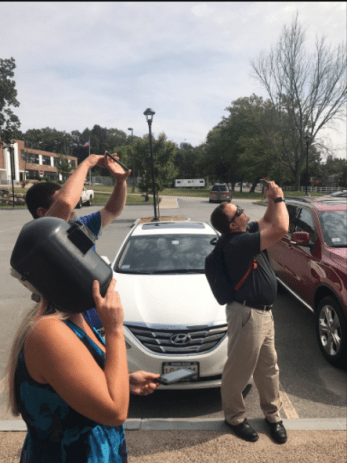
The end of the day reinforced my admiration for the educators in Burlington as I witnessed the enthusiasm of the team as they rushed out the door to witness the eclipse. It is great to work with people who get so excited to see something extraordinary! Having educators who model this for our students is a behavior that we can never have enough of!

From USA Today – If later school start times are better, why aren’t they more popular?

This post was cross-posted on the Burlington School Start Times Blog

This past week, USA Today ran an article about the mixed reception that later school start times receive in many communities.  The article highlighted the conversations that have taken place in Germantown, Tennessee during the past year as they move from a school day that spanned 7 a.m. – 2 p.m.  to a school day that ran from 7:45 a.m. – 2:45 p.m.

One of the points made in the article is that the later start to the school day cannot happen in a vacuum. There must be other conversations that take place to ensure that students are learning about healthy sleep routines.  Sleep expert, Dr. Merrill Wise notes the following in the article:

“We are living with a sleep deprivation epidemic…(The school day) one of the most modifiable factors that parents and school personnel could pursue…But a later start time isn’t solely the answer. Families have to be educated about healthy sleep schedules, prying electronic devices away from children at night and creating routines that lead to more sleep…Without those factors, schools may not see much difference in their children”

The article goes on to cite other struggles that schools across the country have had with the transition to later school start times (i.e. cost implications for transportation and later start and end times for extra curricular activities).  The balanced look at the issue also contains links to other articles on the topic, including the following:

High Schools, wake up to later start times: USA Today’s Editorial Board’s View

Later start times disrupt families: Opposing View

#BPSCon Welcomes Lyn Hilt – Teacher, Administrator, Google and Apple Certified Trainer…

Screen Shot 2017-08-17 at 9.13.05 AM

We are excited to have Lyn Hilt join us at BPSCon to support teachers and administrators in becoming more adept at using the vast resources available in the Google Suite for Education.  Lyn spent over 15 years working as both a teacher and a Principal at the elementary and middle school levels in Pennsylvania.  She is well known among educational leaders across the country for her work as both as a teacher and a Principal.

In a recent blog post, Lyn described her work as a consultant and the joy she gets in working with teachers around the country:

I love being a consultant. I know that to some educators, consultant is a dirty word. It need not be. As a teacher and principal, I, too, was skeptical of someone from “the outside” coming to our schools and classrooms to show & tell their way into our hearts and minds. In fact, I think I truly connected with and appreciated the work of maybe only a handful of consultants in my time as classroom teacher, coach, and principal. But most days, in this line of work, I leave with a smile on my face, feeling energized and privileged to work with the teachers and school leaders in my midst.

You can see Lyn’s schedule at BPSCon here.

#BPSCon Welcomes Mindfulness Expert Caitlin Krause

Screen Shot 2017-08-15 at 8.40.13 AM

We are excited to have Caitlin Krause, the founder of MindWise, join us all day Wednesday at BPSCon.  Caitlin has been a featured speaker at numerous events around the world for her insights on the importance of integrating Mindfulness into schools and classrooms.  In addition, she is finishing up her first book Mindful by Design (Corwin Press), which addresses mindfulness, neuroscience, creativity and innovative learning with a compassionate, curiosity-driven mindset, focusing on connection at the core.

Caitlin will run three one-hour morning sessions titled Mindfulness-Beyond the Buzzword and then a two-hour session after lunch titled “Mindfulness by Design” Mindset: Back to School, All About Connection.


Has Your Family Reached A Tech Tipping Point?

2013-12-25 19.17.59

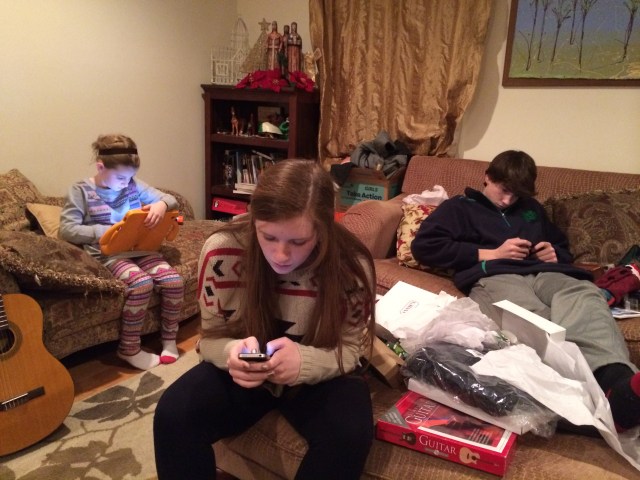
In a recent post, I shared some excerpts from The Atlantic article titled Have Smartphones Destroyed a Generation?  While my answer to the question would be no, I do think that we need to set clear boundaries with our children regarding their online habits.  My feeling is that too many parents (myself included) do not model device use well. In addition, there is no discussion and/or game plan for the use of devices by their kids.

As we head towards the start of a new school year, it is a perfect time for families to find some balance in their technology use. Research conducted by Common Sense Media shows the following:

On any given day, parents of American tweens and teens average more than nine hours with screen media each day. Eighty-two percent of that time (almost eight hours) is devoted to personal screen media activities such as watching TV, social networking, and video gaming, with the rest used for work.

Common Sense Media also provides some great resources for families to help them construct a plan to gain some control over the time they spend online.  Here are a few recommendations from a post on the downsides of multitasking:

Keep your kids on task. Limit them to one screen and one activity at a time (especially when they’re doing schoolwork), and reward them for sticking to it.

Model balanced media habits. Show your kid how you want him to use media by practicing what you preach. That includes not interrupting conversations with technology.

Co-view or co-play. Ask your kid to show you what she’s watching and playing. Sharing and explaining something challenges kids to think more deeply.

Establish media-free times and zones. Explain that at certain times of the day and in certain places in the house, media is not welcome. Use those times and places to focus on one thing. Kids need time away from stimuli to help them learn to focus.

Help your kid increase his ability to concentrate. Whatever activity she’s engaged in, encourage her to think or focus for one more minute.

If you are an adult who thinks that he or she can multitask, I encourage you to check out the Infomagical  Bootcamp from the folks at the Note to Self podcast.  I wrote about this back at the beginning of 2016 and came away a huge proponent of single-tasking.  If there is only one part of this challenge that you try, make it the single-task challenge. It’s the day-one challenge and you can hear the 11-minute overview here.

The exact route you take to ensuring a healthy balance for you and your family does not really matter. The most important thing is that your family is having face-to-face conversations about the role technology is playing in your lives.   By the way, when you and the people you live with are all home together, do you spend more time communicating with people online or communicating face-to-face with the people you live with?  Just wondering…


#BPSCon Countdown is 18 Days – NEWSELA is Coming

Screen Shot 2017-08-09 at 2.06.31 PM

With BPSCon just 19 days away, I wanted to start highlighting some of the more than 130 sessions that will be offering at our 10th annual back-to-school professional learning extravaganza.  Aside from nearly 100 sessions led by BPS teachers, we also have some outside presenters coming to support staff in a variety of areas.

Our first highlighted topic is Newsela, a resource we piloted across the district last spring. Due to the tremendous feedback we received from staff who utilized Newsela, we have purchased a Pro account for all staff this year. Common Sense Media describes Newsela as follow:

an online news-as-literacy program that features current articles in seven categories: War & Peace, Science, Health, Kids, Money, Law, and Arts. Content is updated daily, with stories from a wide range of sources (from the Associated Press to Scientific American to the Washington Post) in both English and Spanish. On top of this, all articles are Common Core-aligned and available in five Lexile levels, ranging (roughly) from third to 12th grade. Each leveled text features a quiz tailored to that particular article plus a writing prompt that asks kids to write and respond to what they’ve read.

newsela-logo

We will have a trainer from Newsela running sessions all day on Wednesday so that staff members can have multiple opportunities to get up and running with Newsela.  In the meantime, please take a moment and go to Newsela.com and click on the sign-in button in the top-right corner of the page. Choose the sign in with Google option and then your BPS Google account to be signed in automatically. If you would like to get started learning about Newsela prior to BPSCon, you can check out the numerous options on the Learning and Support page which can be found under the question mark at the top of the screen on the right once you sign in.

We are excited to add Newsela to the list of resources available to BPS staff and students! You can check out the entire BPSCon schedule here.  We will continue to tweak the schedule in the final days leading up to BPSCon.

We Need To Talk About Smartphones

pokemon-pokemon-go-phone-game-159395

A recent article in The Atlantic titled Have Smartphones Destroyed a Generation?  asserts some dire outcomes due to the use of SmartPhones by our children. While I would say that the headline is a bit hyperbolic, I do think that the article is a must read for all parents and educators.

Here are a few of the excerpts that caught my attention, along with some of my thoughts and questions:

 The arrival of the smartphone has radically changed every aspect of teenagers’ lives, from the nature of their social interactions to their mental health. These changes have affected young people in every corner of the nation and in every type of household.

Sadly, I don’t think that SmartPhones have radically changed the way that teenagers are educated. I can’t help wondering if we were more proactive in seeing the opportunity of a web-connected device in every student’s hand if we could have avoided some of the negative consequences outlined. What if we had embraced SmartPhones? What if we at least talked about the implication of these devices for our kids and worked with families to come up with a plan to help our students find some balance?

The more time teens spend looking at screens, the more likely they are to report symptoms of depression.

Electronic devices and social media seem to have an especially strong ability to disrupt sleep.

I can’t help thinking that there is a direct connection to the time spent on devices looking at social media and the lack of sleep. I would love to know the percentage of teens who have their phones in their rooms and are looking at these devices late at night.  I know teens tend to be sleep-deprived in the best of circumstances, but in how many cases is this due to the presence of a SmartPhone in their room?

As the technology writer Nick Bilton has reported, it’s a policy some Silicon Valley executives follow. Even Steve Jobs limited his kids’ use of the devices he brought into the world.

I realize that restricting technology might be an unrealistic demand to impose on a generation of kids so accustomed to being wired at all times.

We need to help our kids understand the impact that devices are having on their lives. Are they suffering from Fear of Missing Out? I wrote a bit about this back in February of 2016.

This brings me to my next area of discussion which is about the behavior of adults in our device-laden world. I am sure that I have not always done the best job modeling for my kids in regards to the importance of being present and enjoying some tech-free time. I am guessing that I am not alone in this… How many adults are also stressed out and/or depressed due to the prevalence of SmartPhones in our world?

While we could spend a great deal of time looking at all of the areas of concern outlined in this article, the more constructive activity would be to start creating supports to ensure that we do not continue these destructive patterns.  Thankfully, we have resources like Jennifer Casa-Todd’s Social LEADia  that can help us as we build this support system in our school community.



My Weekly Diigo Bookmarks (August 6, 2017)

Posted from Diigo. The rest of my favorite links are here.