
-
How rudeness and incivility stop people from working together and stop good work from getting done. https://t.co/y7WBFmtx2H @HarvardBiz
-
Extending beyond school or classroom walls to build a community of readers means engaging adults within the community, through their work or volunteer connections, then forging partnerships based on common values and goals for children’s literacy.
-
Teenagers who routinely snuggle up in bed at night with their computer or mobile phone are more than twice as likely to be sleep deprived than other adolescents, research shows.
-
good overview of agile planning
-
From Dan Rockwell – Structure trumps talent. Badly designed organizations sabotage the best performers.
-
From Tom Vander Ark and Justin Reich – “eadership development is typically part of organizational development. Less apparent is the opportunity to structure the change agenda as a leadership development agenda.”
-
From Getting Smart – “Self-Organizing Learning Environments (SOLEs), which draw on children’s natural curiosity to create a dynamic space for students to learn, interact and develop critical problem-solving skills.”
-
‘The 4-Hour Workweek’ author says a 3-step process he learned from Tony Robbins drastically improved his life https://t.co/ygmy4P6ptK
-
According to Kim Cameron at the University of Michigan’s Ross School of Business, positive leaders and organizations promote outcomes such as “thriving at work, interpersonal flourishing, virtuous behaviors, positive emotions, and energizing networks.” He points out four behaviors of positive leaders…
-
The focus on this piece is on ecredentials and higher ed., but I also wonder about how school districts can expand what they offer to staff for Professional Learning.
-
Google and Pinterest have each created new ways to search using images. Both companies have recognized that people who search images online may not want to simply find out what something looks like.
Is Your School Like United Airlines?
 |
| Image via https://www.flickr.com/photos/brentdpayne/ |
A sub-headline from the Wall Street Journal’s article about the recent viral incident aboard a United Airlines plane immediately had me thinking about some of the things we do in schools. The headline about the situation where a United passenger was forcibly removed from his seat for refusing to give it up was the following:
“Airline’s rules-based culture in spotlight after man was dragged off flight by law enforcement.”
As I read through the article a few other lines had me thinking about what we sometimes do in schools. Feel free to substitute school for airlines and students for passengers wherever appropriate:
“Like most Airlines, United Continental Holdings Inc. follows strict rules on every aspect of handling its passengers… “
“Deviating from the rules is frowned upon…”
“Employees followed the policy,” said a person familiar with United’s executive suite.
On Wednesday morning, in an interview with ABC, United CEO Oscar Munoz called the event a “system failure” and said United hasn’t provided its front-line managers and supervisors with “the proper tools, policies, procedures that allow them to use their common sense.”
These quotes and the entire sad situation that played out on the United Airlines flight reminded me of the theme of chapter 4 of The Innovator’s Mindset by George Couros. Chapter 4 is titled Relationships, Relationships, Relationships and the main point that George makes is the need to establish a culture of trusting relationships where employees feel empowered to make decisions that are in the best interest of the customer (students).
He goes on to explain the fact that this is not the individual employee’s fault, but it is more of a leadership issue due to the establishment of a culture that does not trust employees to make common sense decisions.
Let’s face it, we see a number of embarrassing stories from schools each year that are caused due to rigid compliance to an outdated set of rules. If we are truly interested in having learning environments where staff and students are comfortable taking risks and thinking outside the box then we need to revise these ridiculous sets of rituals. The following quote from George in Chapter 4 sums up the rationale for this shift perfectly.
“As leaders in education, our job is not to control those whom we serve but to unleash their talent. If innovation is going to be a priority in education, we need to create a culture where trust is the norm. This must be modeled at the highest level of the organization if we expect teachers to create the same culture in their classrooms.”
Later Start Times Are A Good Idea For Teen Sleep – But It’s Not The Only Good Idea
.jpg)
We are involved in a discussion about a later school start time for high school in Burlington as we look at a possible change for the start time at BHS in the fall of 2018. I first wrote about the positive research on school start time in a post back in 2010 and referenced research from Minnesota from the late 1990’s which referenced a change in the start time at Edina High School. The folks in Edina, at the urging of the Minnesota Medical Association, moved their start time from 7:30-8:30.
The result of this change led to the following (source University of Minnesota Center for Applied Research and Educational Improvement):
- Students in Edina reported statistically significant less depression compared with two similar districts.
- School counselors and nurses reported fewer students seeking help for emotional problems and somatic physical complaints.
- 92% of parents in Edina said their teenagers were “easier to live with”
Over the last 20-plus years, there have been a number of additional studies noting the positive impact that later school start times can have for teenagers. A number of these can be found here at laterschoolstart.net/case-studies.
While a later school start times is one accommodation that schools have made to support the health of their students, there are additional ways we can support our students in getting a full night’s sleep. One of the other big issues for our students according to recent studies is the impact of extended exposure to blue light from electronic devices, especially exposure right before bed. The video below explains this phenomenon.
My issues on the topic of teen sleep are with those that want to throw out the research due to their perception that we are coddling students or that the blue light issue alone is the main culprit. We should continue to look at all of the research available to us and modify our practice based on this information. Maybe decreasing exposure to blue light and changing the school start time would be helpful? While we are at it, we should discuss the influence of sugary treats and caffeine-infused drinks on teen sleep patterns. There are a number of things we can do to support the physical and emotional health of our students. Why can’t our solution be All of the Above?
Monday Must-Reads – April 17, 2017
As a means to try to get myself writing in this space a bit more, I am starting each week by sharing three posts that I came across during the previous week that struck a chord with me. While my intentions are mainly self-serving, I am also hoping that a few folks might catch a post that they missed.
Let’s see how many weeks I can keep this up…Three weeks and counting…
1. Climb Aboard: School Buses Reimagined – Emelina Minero
In this post from Edutopia, Emelina Minero looks at some school districts that have found a creative way to solve their space problems. By repurposing old school buses, the districts have created mobile learning spaces that can be moved around within a district so that all students have access.
“By repurposing available space and capitalizing on mobility, these traveling art studios, cafeterias, and science labs are reducing barriers to access and meeting students where they are.”
2. On Assigned Summer Reading – Pernille Ripp
As we hit the homestretch in the school year, Pernille Ripp gives her perspective on mandatory summer reading.
“…we forget that not all children have time to read over the summer? That not all children will be able to read the book assigned? That not all children have access to a safe place where they can work on homework during their time away from us.”
Ripp goes on with some practical ways that we can deal with this dilemma and still encourage students to read over the summer.
3. The one question school leaders and parents aren’t talking about… – Randy Ziegenfuss
This post from Randy Ziegenfuss looks at the elephant in the room for educational leaders. Are we really doing things in our schools and classrooms that will prepare our students for the rapidly changing world that they will be entering? In the post Ziegenfuss references background reading on this topic ( Nancy Duarte’s Illuminate and Alec Ross’s The Industries of the Future). I agree with Ziegenfuss’s on the fact that we should be continually asking the following:
“What other resources can school leaders and parents access to learn more about tomorrow’s economy? What do our learners need now to compete, succeed and thrive in the future?“
My Weekly Diigo Bookmarks (April 16, 2017)
-
8 Things I Learned My First Year Of Teaching With Project Based Learning https://t.co/SJoCl0VSL6 #EdChat #PBLchat… https://t.co/1ve0p3Z3oC
-
If you would like to view book recs & talking points, here’s my #TheEdCollabGathering #5 preso w/ @teachermantrav. https://t.co/yEhH2ncJ0r
-
Turn your classroom into a powerhouse of learning. Explore our comprehensive library of middle school science curriculum-aligned edgames.
-
For knowledge management in a complex world, the best curators are the story tellers.
-
For knowledge management in a complex world, the best curators are the story tellers.
-
-
There’s a common cultural assumption that “kids these days” can’t focus due to screen time. They simply lack the attention span needed to engage in deep work. But what if that’s not entirely true? What if this generation is capable of reaching a state of creative flow?
-
There’s a common cultural assumption that “kids these days” can’t focus due to screen time. They simply lack the attention span needed to engage in deep work. But what if that’s not entirely true? What if this generation is capable of reaching a state of creative flow?
-
-
¨Real change over a five-year window represents light speed for many schools. Schools that have started to adopt some of this language and thinking, if not formal metrics like these, are pulling away from schools for which this thinking continues to be alien or absent.
-
Real change over a five-year window represents light speed for many schools. Schools that have started to adopt some of this language and thinking, if not formal metrics like these, are pulling away from schools for which this thinking continues to be alien or absent. Standing pat, or even slow movement, is the same as moving backward.
-
Monday Must-Reads – April 10, 2017
As a means to try to get myself writing in this space a bit more, I am starting each week by sharing three posts that I came across during the previous week that struck a chord with me. While my intentions are mainly self-serving, I am also hoping that a few folks might catch a post that they missed.
Let’s see how many weeks I can keep this up…Two weeks and counting…
1. Getting Past the Attention-Span Myth (Thoughts on Creative Focus) – John Spencer
In this post, John Spencer touches upon the misconception that it is impossible to get the attention of students today due to the negative impacts of screen-time:
“The issue isn’t attention span. It’s engagement. No, it’s not just engagement. It’s empowerment — the kind of empowerment that happens when you are fully immersed in creative play.”
Spencer shares six strategies to help get students in a focused state.
2. Neurodiversity: The Future of Special Education? – Thomas Armstrong
In this article from ASCD’s Educational Leadership, Armstrong shares a new model for Special Education that gets away from looking at student deficits and instead focuses on strengths:
“At some point, the field of special education needs to rid itself of its negative baggage and embrace a more progressive way of educating students who learn differently. The concept of neurodiversity provides thecatalyst for such a change.”
3. THE FUTURE IS NOW: METRICS OF INNOVATION IN SCHOOLS – Grant Lichtman
This post by Grant Lichtman focuses on the need for schools to look at how they measure their level of innovation as an organization. While this can be a difficult task for many schools, Lichtman notes that it is a necessity to ensure relevance:
“Real change over a five-year window represents light speed for many schools. Schools that have started to adopt some of this language and thinking, if not formal metrics like these, are pulling away from schools for which this thinking continues to be alien or absent. Standing pat, or even slow movement, is the same as moving backward.”
My Weekly Diigo Bookmarks (April 9, 2017)
-
Really interesting read and ties to changing work culture – 10 Company Rules That Destroy Trust And Teamwork https://t.co/jd0HJR2wYb
-
From The Atlantic – “Increased focus on kids’ psychological health may seem like the education world’s flavor of the day, but it’s achieving results.”
-
If we want to use the most effective approaches with kids—and draw on new research about the brain—special education needs to change its approach.
-
From Edutopia – Tips on giving your students a choice about where and on what to sit—including ideas about seating charts and classroom management.
-
George Couros asks the question we all should be asking ourselves – Are schools adequately preparing students for their future?
-
Great satire on textbooks from Cracked…
-
Very excited to be joining the amazing team at ISTE! https://t.co/LlkUZpSi0j @isteconnects
-
.@BostonHeraldHS: Overbearing parents were too much for ex-Braintree girls basketball coach Kristen McDonell… https://t.co/nHfMBw6pN7
-
From Jimmy Casas – “Ineffective leadership in my opinion is the biggest issue facing not only public education, but small business and larger companies alike. “
-
From George Couros – “We can’t continue to ask for creativity, innovation, and collaborative cultures with deep, independent thinking, while not acknowledging that compliance driven environments prevent these from happening.”
-
Good post on integrating the ISTE standards to better engage students
-
Love the GIFT Acromym here in regards to feedback
-
From Richard Byrne – You can now insert your Google Keep notes and bookmarks into your Google Documents. In the video embedded below I demonstrate how to insert Google Keep notes into Google Documents.
-
Great Design Thinking reading list from Stanford
Don’t Give Away Engagement
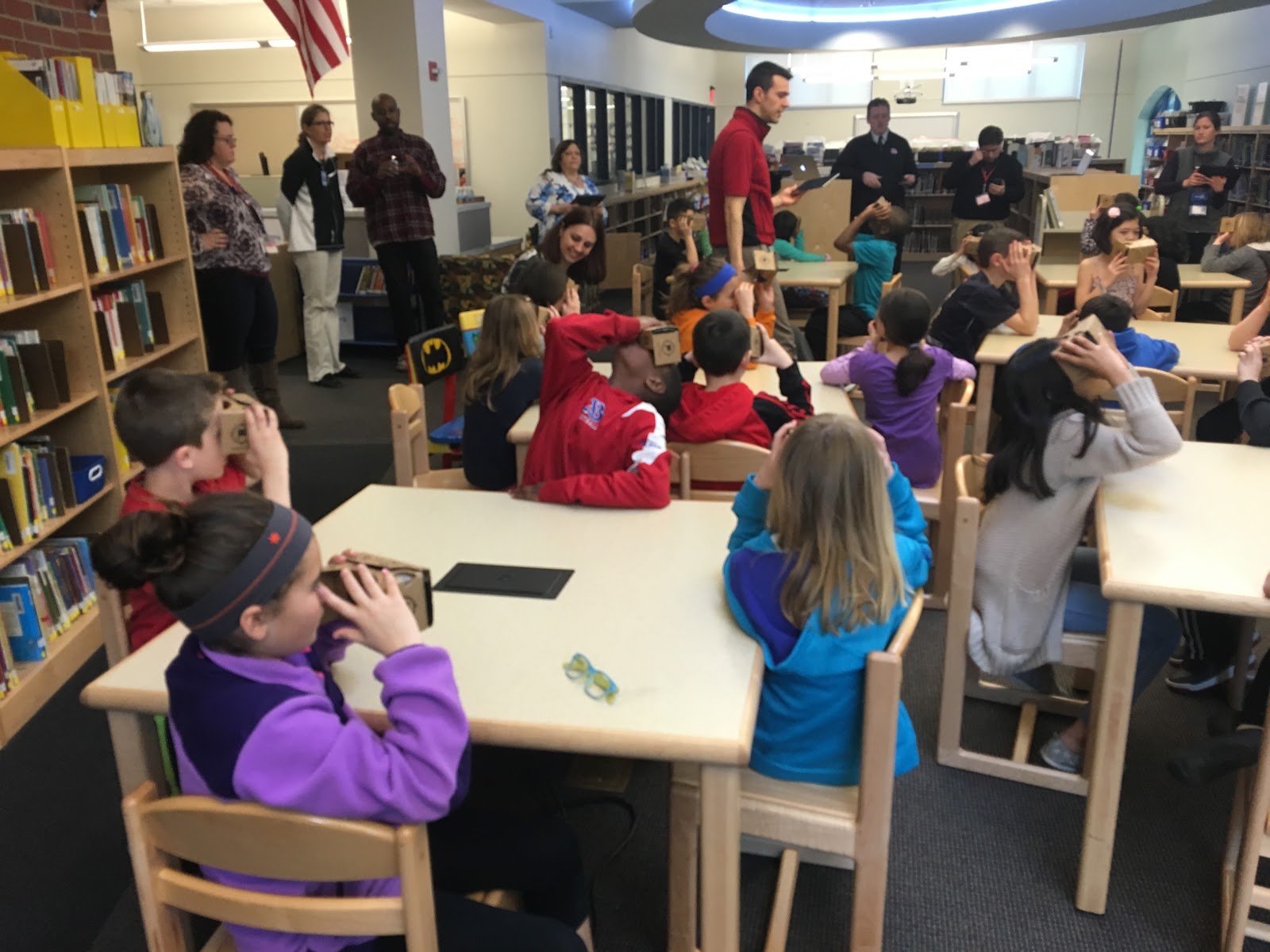
“Every student in the class was engaged.”
I have heard statements like this a number of times and my immediate thought has always been one filled with skepticism. In most cases, educators utilizing the term engagement have really been seeing compliance. While compliance is certainly a positive trait, it is just a starting point. Engagement is much more than students paying attention and following directions.
I think back to a time a few years ago when we were doing weekly learning walks focused on student engagement and the discussions we had around coming to a common understanding of what we meant by engagement. During walkthroughs, Teachers tended to want to check off the box for engagement for their hard-working colleagues who had created thoughtful lesson plans. But in order to truly raise levels of engagement, we had to make sure that we were not just giving away that designation too easily.
We utilized the following prompt in an attempt to hold the line on engagement:
Does the work assigned to students incorporate engaging qualities? Check all that apply. (3=engaged)
- Personal Response
- Clear Modeled Expectations
- Emotional/Intellectual Safety
- Learning with Others
- Sense of Audience
- Choice
- Novelty/Variety
- Authenticity
If we could check off three or more of the boxes above, we came to the conclusion that students were engaged. If you would like to see our short walkthrough form, you can access it here.
I saw another great scale to measure classroom engagement in a post by George Couros last week. I love the fact that this scale raised the stakes even higher by adding empowerment.
Monday Must-Reads – April 3, 2017 (Volume 1)
As a means to try to get myself writing in this space a bit more, I am going to start each week by sharing three posts that I came across during the previous week that struck a chord with me. While my intentions are mainly self-serving, I am also hoping that a few folks might catch a post that they missed.
Let’s see how many weeks I can keep this up. Ready…set…go
1. What We Ask of Our Students and What We Do – George Couros
In this thought-provoking posts, George Couros calls upon educators to reflect upon whether they are walking the walk or just talking the talk when it comes to setting the stage for innovation in their schools and classrooms:
“We can’t continue to ask for creativity, innovation, and collaborative cultures with deep, independent thinking, while not acknowledging that compliance driven environments prevent these from happening.”
Be sure to check out the post for the great scale that is included to help educators answer the question of whether their students are compliant, engaged, or empowered.
2. Leadership…The Biggest Issue in Education?‘ – Jimmy Casas
Iowa Principal Jimmy Casas calls upon educators to avoid the long list of hurdles available to them when it comes to education’s shortcomings and to look to the one source where they can guarantee improvement…themselves.
“You see, everyone here has the capacity to lead and everyone here is responsible for the culture and climate of your organization. No one person is responsible for determining your success or failure as a teacher but you and no one is responsible for your morale but you.”
For some reason, I have Michael Jackson’s Man in the Mirror echoing in my head now.
3. Feedback is a GIFT – Matthew Arend
With Summative Evaluation season on the horizon, this post from Texas Principal Matthew Arend was quite timely. There were a few things in Matt’s post that I continue to reflect upon, but the most important one for me was the following obe about ensuring that we have someone who is providing feedback to us that will push us:
“…if you are giving feedback, you should have someone providing feedback to you also. Feedback is by no means a one way street. We all need someone to “push us to come up with better and brighter ideas.”
My Weekly Diigo Bookmarks (April 2, 2017)
-
#OER Curation for #PersonalizedLearning https://t.co/IAIw4QELHC via @Getting_Smart @knovation
-
@patrickmlarkin @pernilleripp Here is what it looks like in action https://t.co/gZex9xN5me
-
Great example of a branding guide from CCSD in Illinois
-
“We are shifting from a focus on professional development to professional learning.”
-
I love this idea, starting persuasive writing and public speaking early! “I liked this book because…” works even… https://t.co/o0ppSzMT25
-
From AJ Juliani – “I had to change up my practice, because it was directly in my face: it didn’t work. The tests didn’t work. The challenging traditional assignments did not work. There was no retention.”
-
From Common Sense Media – “To be true digital citizens, our students need teachers who model pro-social, creative, and responsible social media use.”
-
Good site for ELL resources
-
From Tom Vander Ark on Getting Smart – “The goal is to build consensus around a lexicon, metrics and strategies that more fully embrace the integration of academic goals and SEL. We believe that one of the most effective strategies for marrying SEL and core subjects is to embed SEL into the formal curricula. Outlined below are numerous examples.”
-
Good List from Getting Smart
 My Un-Learning Journey