
-
From Brendan Schneider – Some good insights on how to use Facebook for marketing/engagement
-
A good framework to share with teachers looking to get started with PBL.
-
Apple Overhauling iPad for Education Program to Simplify Sharing Devices and Apps http://t.co/gkeuloLQ3Z
-
“The measure of a free society is not how it treats its good citizens, but how it treats its dissidents.” http://t.co/8BsMBFAZ7x
-
Best part of #LFL15 connecting with my good friend @patrickmlarkin https://t.co/pZKwjlE1Ik
-
My day began with a Facebook suicide letter from a friend. http://t.co/wFSaG629DV
-
Interesting look at how the textbook companies are dealing with the digital shift.
-
Great site for new tweeters!
-
From Richard Byrne – Text 2 Mind Map and MindMeister’s Google Docs Add-on bridge the gap between the outline format and the mind map format.
-
From Getting Smart – “My School Information Design Challenge”
-
A4: Interesting article by @patrickmlarkin http://t.co/bCv6S4j0RN bottom of the article talks about innovation #perrychat
-
from Richard Byrne
-
Good overview of 50 of the top Chrome Extensions for Teachers
-
From Scottsburg, Indiana
-
The Common Core has become a flashpoint at the nexus of education politics and policy, fueled by ardent social media activists. To explore this phenomenon, this innovative and interactive website examines the Common Core debate through the lens of the influential social media site Twitter. Using a social network perspective that examines the relationships among actors, we focus on the most highly used Twitter hashtag about the Common Core: #commoncore. The central question of our investigation is: How are social media-enabled social networks changing the discourse in American politics that produces and sustains social policy?
-
Today, however, Thompson and her fellow drivers understand they are uniquely positioned to play important roles in children’s experience of school, beyond getting them there and back home safely.
-
From Justin Reich
-
Check out 5 Google Chrome Apps for Social Studies Teachers http://t.co/zfhCziB6Ri #edchat
-
Goodies galore! Our new #GoogleClassroom updates make it a treat to teach. Learn more about what’s been added: http://t.co/IADBC3G8zD
-
10 Intriguing Photographs to Teach Close Reading and Visual Thinking Skills http://t.co/xmU8s2sFTK http://t.co/hq03qjQEk5
-
How can games support classroom practice? via @eschoolnews http://t.co/KOlq1PpCBe
Author: Patrick Larkin
I have been in school leadership for over 25 years. I feel blessed to be an educator. I have had the good fortune of working as an English teacher, an Assistant Principal, a Principal, and an Assistant Superintendent in three districts in MA. I am also proud to be an IDEAS Instructor working with educators across the state and region who are part of schools and communities that promote anti-bias, anti-racist education.
Twitter is whatever users want it to be…
A lot of the chatter in the Boston-area over the last few days has been about some nasty Twitter comments made about the 17-year old daughter of former Red Sox pitcher Curt Schilling. This whole story began over the weekend when Curt tweeted a congratulatory Tweet to his daughter Gabby regarding the fact that she will attend Salve Regina College next year and be a member of the softball team. Unfortunately, this celebratory tweet from Curt to his daughter brought out some vulgar tweets from people who are not fans of Schilling. If you are out of the loop on this story, which has now gone national, you can read about it here on Schilling’s Blog (Warning – Schilling’s article shares some of the x-rated tweets that were made). I have also listed a few links at the bottom of this post from news sources who have covered this story.
 |
| Twitter (Photo credit: Wikipedia) |
Anyway, my reason for writing this post is not to editorialize on the Schilling situation. Instead, I would like to defend the use of Twitter which I heard classified by local sports radio host Michael Felger as “a sewer.” The interesting thing about Felger’s commentary about Twitter is that he does not use it himself. How can someone who does not understand the scope of Twitter declare that it is something vile? For me this is akin to denigrating a movie that you have not seen, a book that you have not read, or a location that you have not visited.
Is it fair to make final judgements on cities, towns, or countries because of the negative headlines that are coming out of that location. No, I think we need to go a bit deeper and find out both the negative and the positive of places before making a decision. The reality here in regards to Twitter is that it is a microcosm of the world we live in. If you hang out in a bad area of a town or city known for a certain type of criminal behavior, then you are going to see more criminal behavior.
Twitter is an amplifier
So let’s look at this incident in regards to the area that it emanated from, the sporting world. Unfortunately, the trend in our country (and probably beyond) is that people who are fans of a particular team or athlete take their passions about that individual or team to a level that is well beyond the lines of decency that we expect. The same can be said for Twitter-based conversations that are related to athletes or teams. While we see many comments that are inappropriate, it is a lot more common to stumble on some negative and/or offensive comments than you would find regarding some other topic.
My point here is that Twitter amplifies conversations bit it does not change the standard on its own. Pick some of the opposite sides of the spectrum out there (i.e. Red Sox-Yankees, Patriots-Jets, Democrat-Republican) and you are more likely to run into some conversations, both in-person and on Twitter, that cross the lines of decency. Twitter is not the issue, but I will give in to the point that there are a lot of people who will say things online that they would not say in person. But again, the main thing here is that a discussion that lends itself to venomous comments takes new heights and is amplified on Twitter.
My Six Years on Twitter have been extremely positive
For me, Twitter has been a godsend that has connected me with educators from all over the world. I have seen very isolated instances of nastiness and would call the stream of information of which I partake the furthest thing in the world from the “sewer” that Michael Felger describes Twitter as. The connections with the fine educators I have connected with on Twitter have opened the door for endless learning opportunities for me, for teachers, and for students.
In addition, our use of these tools in our school community has helped us have conversations with our students about navigating this digital world and helping them avoid some of the negative aspects of social media. It has helped us build a sense of community by the use of a school and district hashtag (#bhschat and #bpschat) to share news and successes.
Of course I could ramble on and cite countless examples of the connections that have taken place on Twitter over the past six years for me and others I know, but the important thing is why it is happening. We know where to go and where to look for the constructive conversations that we seek and I find it insulting to be thought of as someone who hangs out in a “sewer.” There are a number of amazing hashtag-based chats that allow educators to have constructive and meaningful conversations with others who share our passions about students and learning.
There are some nasty things happening on Twitter for sure, but that is not indicative of the intentions of the majority of Twitter users. Those people who use Twitter for positive ends know this and those who refuse to partake should refrain from jumping to drastic conclusions. While social media may not be for you, please don’t insult my right to use it.
Related articles
An Uplifting Story – Burlington Blog Update (Edition 18)
The post below is actually a copy of a weekly e-mail that I send to our staff to promote our Burlington Public Schools Blog which shares the great work going on across our school district. I also try to give a quick technology tip/resource that I think would be useful. It is the 18th post in the series.
As we deal with this record-breaking winter, we’ve finally surpassed the 100-day mark of the 2014-2015 school year. Given the fact that it has been a little depressing dealing with “Snowmageddon”, I have decided to share an uplifting story about a father in Florida who was concerned about his autistic son and finding him a job that would highlight his strengths.
Burlington Blog Update
- Day 92 – ConnectEd BINGO: Don’t Miss This Epic Reading Event! – Jenn Scheffer – BPS Mobile Learning Coach
- Day 93 – MSMS Photo Club Update: Food, Glorious Food! – Mrs. Rogers – MSMS Staff
- Day 94 – MSMS Students Compete in National Geographic Bee
- Day 95 – Looking for 1:1 Success? You Need Ubiquity! – Ben Schersten – Francis Wyman IT Specialist
- Day 96 – Playing With Sound – Mrs. Kippenberger – Memorial School Third Grade
- Day 97 – Segovia – Ms. DeSousa – BHS Foreign Language Dept.
- Day 98 – 7th Graders Go Shopping (Ir de Compras) – Ms. Mirabella – MSMS Spanish Teacher
- Day 99 – Designing Water Wheels – Jane Lynch – Pine Glen Third Grade
- Day 100 – Branching Out With STEM – BPS Tech Savvy Parenting Digital BootCamp Series (March 2)
- Day 101 – Windows 10 Technical Preview – Sid Srivastava – BHS Junior
- Day 102 – New MSMS Help Desk Video – Josh and Ronin
- Day 103 – Annual Tennis Ball Tournament (In Math Class) – Mrs. Tate – MSMS 6th Grade Math
Only 77 more posts to go…
Here’s to another 5-day week!
Here’s to another 5-day week!
Blizzard Bags Making News Across North America
As we were discussing Blizzard Bags at work this past week, I noticed my phone had an incoming call from Prince Edward Island, Nova Scotia. Since we were in a meeting, I let the call go to voicemail. Ironically, when I checked the message a bit later, the call was from to discuss Blizzard Bags. The call was from Paul Bennett, a professor and consultant from Canada who has spent some time on this topic. Mr. Bennett has voiced concerns for quite a while on the need for schools to ensure continuity for students when bad weather interferes. He wrote a piece back in 2010 titled Schools Out, Again: Why “throw-away’ school days hurt students where he cited concerns regarding lost time due to weather in the Province of Nova Scotia.
Anyway, here are a few of the stories regarding Blizzard Bags that have been in the news over the past week:
“Blizzard bags” make for a smart snow day – Halifax Herald, Paul Bennett (A lot of comments)
E-learning should replace snow days, expert says – CBC News
School districts scramble to make up snow days – Boston Globe
Educators scramble for ways to make up lost time – Boston Globe
Burlington school district plans blend of traditional and new approaches to make up snow days – Burlington Union
My Weekly Diigo Bookmarks (March 1, 2015)
-
School snow days should be turned into e-learning days with students attending class online, a Halifax education expert says.
-
From Paul Bennett – Director of Schoolhouse Consulting and adjunct professor at St. Mary’s University in Canada
-
Example of a teacher’s work-flow with Google Classroom
-
The fifth grade students at Bradwell School of Excellence explain why their home is not Chiraq.
-
When a gardening project went awry, they discovered a naturally occurring bacteria in soil called Diazotroph. The girls determined that the bacteria could be used to speed up the the germination process of certain crops, like barley and oats, by 50 percent, potentially helping fulfill the rising demand for food worldwide.
-
From Richard Byrne – Tackk is a free tool for creating blogs, simple webpages, and digital portfolios.
-
5 principles for designing a digital badging PD system http://t.co/xJwOBaPEFW #AASA150 @EducatorsCoop @CajonValleyUSD
-
See the happiest & unhappiest jobs in 2015: http://t.co/HJ2E04Qeza
-
When instructors engage with e-texts, students do too: digital textbook study from Indiana U http://t.co/rvs7R1HtBf http://t.co/LRs9KkLblS
-
@jonbecker http://t.co/i9mqw9X3H4 http://t.co/WNdBEx3hRO and http://t.co/UvTB80Nc0e also @chadsansing wrote a good piece (I thnk I sent it?)
-
Great site from Moore County Schools
-
From Alfie Kohn in the Washington Post
-
The Managing Complex Change model puts language to that which makes some schools successful while others struggle. The model looks at five components necessary to create a desired environment. These include vision, skills, incentives, resources, action plan. If any one piece is missing the model indicates results schools will experience including change, confusion, anxiety, gradual change, frustration, and a false start.
-
-
Last night, John Stephens and Lonnie Lynn –better known as John Legend and Common–won an Oscar for their emotional song “Glory” from this year’s Academy Award nominated film Selma. Beating out Tegan and Sarah’s amazing theme song, “Everything is Awesome” from The Lego Movie, and Glen Campbell’s career-capping song “I’m Not Gonna Miss You” from the documentary Glen Campbell….I’ll Be Mine, which explores the famed singer’s battle with Alzheimers, “Glory” had some tough competition. Addressing the racial inequality America still faces, “Glory” is a song that brought tears to the eyes of the Oscar audience, including David Oyelowo who played Dr. Martin Luther King Junior in Selma. Common and Legend took the stage to perform the song, accompanied by a chorus slowly marching forward to reflect civil rights protestors, and were awarded the Oscar immediately following. While many believe that Oyelowo and Ava Duvernay, director of Selma, were snubbed by the Academy for not being nominated, and this year’s Academy nominations have been criticized for lacking diversity, “Glory” spoke to the struggle of African Americans and highlighted the consistent racial inequality painfully present even at the Hollywood ceremony.
Watch the awards ceremony performance, and their stirring acceptance speech to understand the immense power of the song and its relevance to contemporary American society.
-
-
Interesting TED Talk~http://t.co/yAjhX2mx6f ~thanks for sharing Travis Hunt. http://t.co/x8Aay9yoLZ
-
Chrome Extension – Gradebook Split http://t.co/dLYJRctU2P via @alicekeeler #usd246 marvelous piece of work, thanks Alice!!
-
How Spelling Keeps Kids From Learning – Atlantic Mobile http://t.co/vwlilJupQ2
-
Great example of a blizzard bag assignment from a teacher in NH
-
Best Online Collaboration Tools Directory – 500+ Tools organized & ranked http://t.co/D2GpCPcNSu #collaborationtools http://t.co/pkKxaKkePp
-
USB Heated Gloves? YES PLZ. 21 Products Everyone Who Works in a Freezing Office Needs http://t.co/kScLLgroKK http://t.co/PUIbcSXaZy
-
VCU Fans Fool Refs, Entire UMass Team With Fake Shot Clock Countdown (Video) http://t.co/1mH3bobzYK
I Think It’s Obvious Why College Students Prefer Real Books
 |
| If this is how you grew up reading, what would your preference be? (Photo credit: Wikipedia) |
Earlier this week the The Washington Post ran a story titled Why digital natives prefer reading in print. Yes, you read that right. Every time I see one of these stories it makes me think a bit about why this is the case. It actually amazes me that people are so surprised that “Digital Natives” prefer real books to e-books. The fact of the matter is the in the case of this article, we are talking about college students who have spent more than a decade completing their reading in real books and having educators assign work from real books. Just because they now have access to e-textbooks and/or e-books does not mean that they will choose to abandon the workflow they have used for their entire educational career. Why are we surprised by this?
In Burlington for instance, we handed out iPads four years ago and our current seniors have had iPads for their entire high school careers. Yet, we have not seen a seismic shift in the amount of reading that has moved away from traditional books. Again, is this a shock? Given that these students had done almost all of their reading through eighth grade in a traditional format, I think not. Do I think that our elementary students will feel the same way? No, I think we will start to see more of a split in the choice by students in regards to a preference of reading online vs. reading traditional books.
The Only Way To Get Students Comfortable With E-Reading
The major problem in regards to seeing some of the unique aspects of reading online is to have students guided through the process and shown some of the things a reader can do digitally that they cannot do with a traditional book. Unfortunately, this is still something that many educators are uncomfortable with or unwilling to try. Personally, I love reading online and the fact that I can click on hyperlinks, bookmark key points/articles, and interact with others interested in the same topic/novel. In fact, we have had a pilot in our middle school this year using LightSail that has shown some indications of success. (I’ll write more about this later).
The point here is that we need to give students access to all of the tools and resources that can help them engage with whatever they are reading and then let them choose what works best for them. The key part of whether students choose to read traditionally or online is choose to read. We need to encourage reading and discussion about reading with our students and help them on a pathway that will help them enjoy this lifelong journey. The only mistake in this whole conversation is to micromanage the decision.
Embrace the Struggle
We need to embrace the struggle that is part of this and have meaningful conversations to guide our own learning and the learning of our children.
Denying these opportunities benefits no one!
My Weekly Diigo Bookmarks (February 22, 2015)
-
Massachusetts: Business Group Endorses Common Core Testing | Diane Ravitch’s blog
-
Peter Greene live-blogs his taking of the PARCC test. Interesting read.
-
Could You Teach Without Grades? |
Great podcast with Starr Sackstein on her experience in a high school Englisg classroom with no grades.
-
A Wonderful Example of Learning Enabled by Technology
Good example and pointers on using explain everything
-
The Choreography of Presenting
Great post from Royan Lee
-
The 55 Best Free Education Apps For iPad
The 55 Best Free Education Apps For iPad #yorkuict @tcdsbntip #yorkutc http://t.co/Vcpr7WTkdc
-
one of the most interesting sites I’ve see lately #gdelt http://t.co/c92yIBuTe8
-
Teays Valley Local Schools – Blizzard Bags
From Teays Valley School District in Ohio
-
From Akron, Ohio
-
Samples from Willard, Ohio
-
http://www.willard.k12.oh.us/images/BlizzardBags/MiddleSchool/Garrett/Garrett-Gr8-LA-Day1.pdf
-
Alex Rodriguez’s return to the New York Yankees
The guy who wrote this already owns a Pulitzer, which means this probably isn’t even his best work. Read & be amazed. http://t.co/F8IHNEYf1P
-
How to Search for Publicly Shared Google Docs, Slides, and Spreadsheets
From Richard Byrne – Searching by file type and searching by domains is a great way for students to refine their Google searches – i.e. site:docs.google.com
-
Everone knows my district is a big fan of…
From Tim Holt – Here is a short video we created giving you an idea of how CK12 works in a BYOD environment.
-
Bad Maths | Flickr – Photo Sharing!
Great Flickr Feed from Danny Nicholson – A place to store all those images of crazy special offers and examples of things that just don’t add up. The aim is to be able to use these in maths lessons
-
The decline of play | Peter Gray | TEDxNavesink – YouTube
All work and no play makes Jack a maladjusted boy [Watch] http://t.co/MPJOw5Bmwo #edchat #miched #tlap #elpspd http://t.co/Lkcn9VrRs6
-
STUNNING: THE INTERNET IN REAL-TIME: http://t.co/
STUNNING: THE INTERNET IN REAL-TIME: http://t.co/rx4kuQTvIL http://t.co/FNpVXxI6DD
Pondering School Work For Snow Days…What The Heck Is A Blizzard Bag?
 |
| photo via – https://c1.staticflickr.com/ |
It is old news by this point that we have had a decade’s worth of snow this winter in the Greater Boston area. In the last few weeks, we have had three times more snow than we did during the historic Blizzard of 1978. While many schoolchildren are thrilled to have missed multiple days of school (five here in Burlington), the thoughts of administrators have turned to making up some of these days prior to the dog days of June. Here in Massachusetts, our district will pilot “Blizzard Bags” in an attempt to reduce some of the make-up days that now have us in school until Thursday, June 25.
What are Blizzard Bags?
I have to admit that I was unfamiliar with the term Blizzard Bag when I first heard it and was unaware that the practice of employing Blizzard Bags to compensate for snow days is something that has been happening in states like Minnesota, Ohio and New Hampshire for a few years. In fact, I have started to bookmark sites of districts using this practice to get some ideas about how this works. In all honesty, I have been underwhelmed with what I have found thus far on many of the sites. Many of the samples are simply worksheets that students would do independently and would fall short of the definition of structured learning time articulated by Massachusetts Commissioner of Education Mitchell Chester in one of his weekly updates below:
The Department has received inquiries regarding so-called “blizzard bags,” assigned work sent home with students in advance of an expected storm. In many cases, this work appears to be very similar to normal homework assignments; there is educational value, but it does not necessarily meet the standard for structured learning time. For this approach to count toward the student learning time requirements, school districts must ensure that such work is structured learning time, is substantial, and has appropriate oversight and teacher involvement.
Blizzard Bags in Burlington
As expected, we have received numerous inquiries from parents and news media about our Blizzard Bag proposal which must be approved by both the Burlington School Committee and the Massachusetts Department of Elementary and Secondary Education. In all honesty, we have not yet articulated what the work will be that students will be asked to do in grades K-12. The plans will be constructed over the next month or so and then brought forth to our School Committee.
While I can’t tell you specifically what our Blizzard Bags will be, I can tell you some of the qualities I think these assignments should have. But before, I go down that path I think it is important that we recognize this wonderful opportunity we have before us. We have been presented with a chance to discuss learning and the countless activities that we could offer students to learn outside of our schools. We need to embrace this collaborative endeavor and ensure that we include staff, students, parents, and others with experience in this type of endeavor in the planning. Lastly, we need to be honest with ourselves regarding the fact that this will not be perfect. Some of the learning opportunities that we create will work well and others will not. But isn’t that what happens as we plan lessons during our 180-day school year anyway?
So here are a few of the opportunities that I think Blizzard Bags should provide students…
- Independence
- Collaboration
- Hands-on
- Digital learning
- Inquiry
- Teacher Feedback
- Peer Feedback
While I could continue with more examples, the point here is that these assignments should allow for choices by students and staff. They should not be worksheet-driven as a few of the examples I have seen in other districts using Blizzard Bags. In the end, we are attempting to have a learning experience for our students that would be equally as meaningful as a day at the end of June. No offense intended here, but I think we can do much better than that.
A Question For School Leaders…Are you preparing students for…?
 |
| Image via http://farm8.static.flickr.com/ |
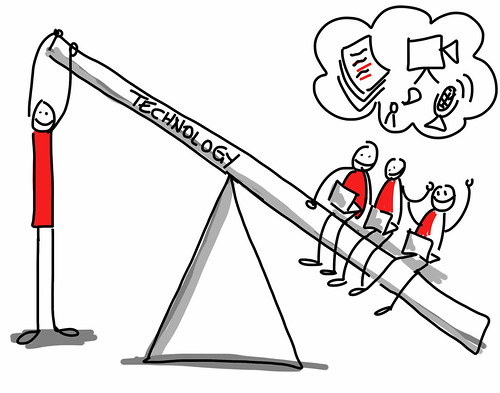
I still remember how excited I was back in May 2011 when the National Association of Secondary School Principals (NASSP) published their position statement on Social Media and Mobile Technologies. As we approach the four-year anniversary of this document, my feelings have changed to disappointment due to the limited progress I perceive in this area. Ignoring and/or banning the use of social media and mobile technologies in schools is still far too prevalent and it is bad for kids.
Here is the key phrase in this position statement for me:
“Education should prepare students to be active, constructive participants in a global society.”
The best way for this to happen is also clearly articulated in the position statement:
“Encourage and model the appropriate and responsible use of mobile and social technologies to maximize students’ opportunities to create and share content.”
Along the same line, the recent interview below that Joe Mazza did with Richard Culatta, Director of the United States Office of Education Technology Culatta talks about what we need in our schools to create schools that are “Future Ready.”
“It’s not OK for district and school leaders to say I’m not that tech savvy. Even joking about that is not funny anymore…The strategy for using technology to transform learning cannot be delegated…”
So I ask my colleagues the following question: What are you doing to model the use of technological tools in your role?
Here’s a place to start
If you aren’t sure where to start, NASSP has shown great leadership over the past four years with its Digital Principal Award that selects three school leaders annually “who exhibit bold, creative leadership in their drive to harness the potential of new technologies to further learning goals.”
Check out the work of this year’s winners John Bernia, James Richardson, and Bill Ziegler to get a look at what best practice looks like. In addition, look back at past winners (2014) Daisy Dyer Duerr, Jason Markey, Derek McCoy, (2013) Dwight Carter, Ryan Imbriale, Carrie Jackson, (2012) Eric Sheninger, Mike King, and me. All of these school leaders are just a few keystrokes away and they are willing to answer questions that you may have to help you and/or your school community move forward on this challenging and exciting path!
To Have Technology or Not Have Technology Is Not The Question
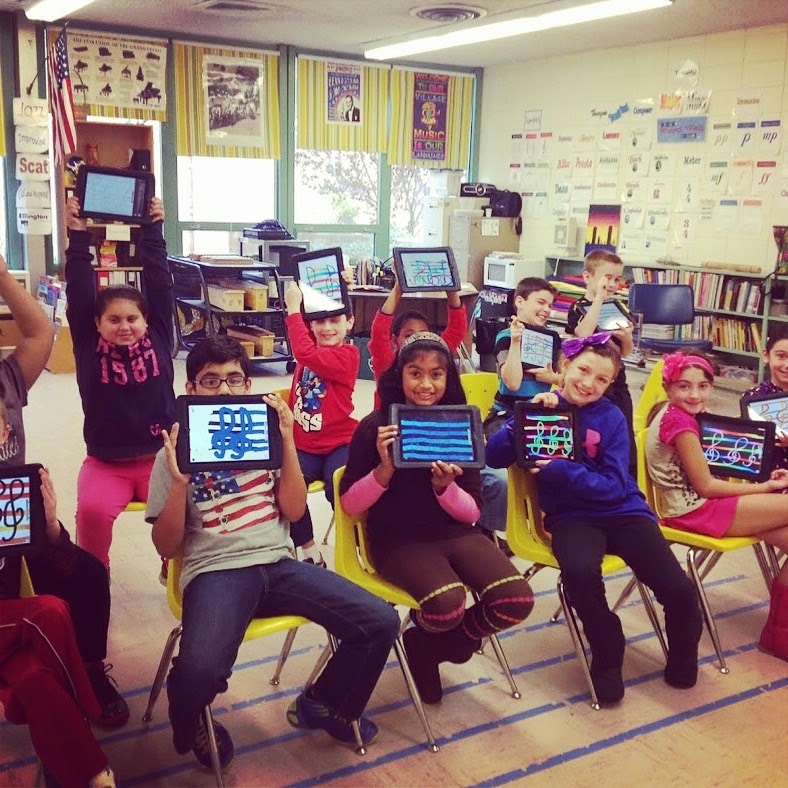
I have read with great interest Larry Cuban’s three-post series titled The Lack of Evidence-Based Practice: The Case of Classrooms Technology. As someone who supports the integration of more resources for students and educators, I think there is some truth to Mr. Cuban’s words. However, as someone who has seen a number of anti-EdTech posts over the years, I also feel strongly that there is no new information here.
It is quite easy to find examples where large amounts of money were spent on devices for schools with little forethought given to intended outcomes or professional development. We need look no further than Los Angeles Unified School District (LAUSD) which seems to be the poster child for anti-iPads/Devices in schools. The bottom line in this whole conversation is summed up in the tweet below from Will Richardson.

Unfortunately, I have spoken with many administrators who have spent money on devices without a firm understanding of what they intended to accomplish with them. But despite the fact that I believe the schools and districts who have integrated technological resources thoughtfully are in the minority, I am tired of those like Cuban who wish to throw the baby out with the bathwater. We need to put our energy into finding outliers where things are working well and highlight the steps that were taken in these schools and districts.
Assertions that success stories do not exist are false. But the difficult part here is pinpointing the real cause of success because it has much more to do with the mindset changes regarding learning than it does with the deployment of devices. School communities that embrace a more constructivist mindset where students are encouraged to create their own understanding of key concepts with access to modern technological resources are what we all need to strive for.
As Tim Holt points out in his rebuttal to the Cuban posts, Taking On Larry Cuban and The Case of Classroom Technology (Parts 1, 2, and 3), it is ironic that Cuban is utilizing technological resources like his blog and his Twitter account to get out his message. Imagine if he encouraged schools to teach students to use such platforms to connect and learn with others who share their passions on a particular topic? I imagine some of his colleagues at Stanford could show him some evidence of the successful integration of technology to impact student learning.
Anyway, I am left to ponder the Five Stages of Innovation and wonder whether or not Mr. Cuban will ever hit the fifth stage?
The Five Stages of Innovation
- People deny that the innovation is required.
- People deny that the innovation is effective.
- People deny that the innovation is important.
- People deny that the innovation will justify the effort required to adopt it.
- People accept and adopt the innovation, enjoy its benefits, attribute it to people other than the innovator, and deny the existence of stages 1 to 4.
— Inspired by Alexander von Humboldt’s ‘Three Stages Of Scientific Discovery’, as referenced by Bill Bryson in his book, ‘A Short History Of Nearly Everything’. (source – http://www.philcooke.com/five_stages_of_innovation/)
 My Un-Learning Journey