So I recently had to make a call to a relative regarding his son’s Twitter account because I had come across some pretty disturbing material on the 15-year old’s feed. When my relative answered the phone I asked, “Have you ever checked (his) Twitter feed?” Not surprisingly, my relative responded, “never.”
Category: Uncategorized
BPS Tech Advisory Committee Meeting Next Tuesday
The BPS Technology Advisory Committee will meet next Tuesday June 18th at the Central Administration Office at 123 Cambridge Street from 2:30-3:30. Here is a link to the notes from our last meeting in March.
Our High School Is Featured On Apple’s Education Page
In case you missed it, Apple posted a great video on it’s Education page yesterday highlighting Burlington High School. Seeing it made me prouder than ever to be part of a community that is willing to take a risk and be a leader in providing the most modern classroom resources to help prepare our students.
We are quite fortunate to have a community that supports its schools financially and a teaching staff that is dedicated, talented, and willing to take risks! Having all of these factors supporting ours schools is something that has led met to say the following on more than one occasion:
“If it can be done, then it can be done in Burlington.”
Here is the link if you are interested in watching the Apple video.
Related articles
BHS Sophomore Nikkhil Thakkar Starts Alcohol Ed. Program
A 15-year old sophomore at Burlington High School, Nikhil Thakkar has taken what he has learned in the classroom and used it to create something truly unique. Inspired by eclectic sources, such as Mrs. Doughty’s health class, he has founded his own free Alcohol Education Program, S.A.F.E (Staying Alcohol Free Education). His program is targeted at middle school students, high school students, and parents who want to learn about the ills of alcohol.
Also inspired by Mrs. Dacey, Nikhil combined his love for Spanish with his love for helping people and has made this a bilingual program. He can offer his his presentation in English, Spanish or both, depending on his audience. Nikhil’s presentation includes interactive activities and stimulating discussions which keep students engaged and motivated to learn about the effects of alcohol
The activities and discussions center on drinking and its effects, having fun without drinking, and resisting peer pressure. His most recent presentations have been at the middle schools and high school in the Haverhill Public Schools, however he has invitation to present other schools, library, and conferences. Nikhil’s hope is to expand his program and present it in as many venues as possible. Administrators, superintendents, principals, teachers, parents, or people who would like him to present may contact him (see contact information below). Visit his blog (see address below) to learn more about his program, past presentations, and schedule of upcoming presentations. Feel free to leave a comment there. Nikhil explains more about his program in the accompanying video interview.
More Holiday Sounds From Our Pine Glen Elementary Students
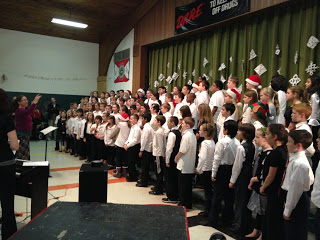
On the eve of Christmas, I wanted to share a few of the sounds from our winter concerts at Pine Glen.
Winter Concert – Grades 4 and 5
Winter Concert – Grades 1, 2 and 3
Happy Holiday Wishes!
![]() |
| Mrs. Guanci’s First Graders |
![]() |
| Adriana, grade one at Francis Wyman |
![]() |
| Pine Glen Holiday Concert
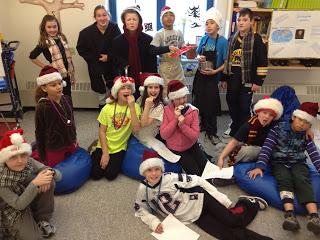
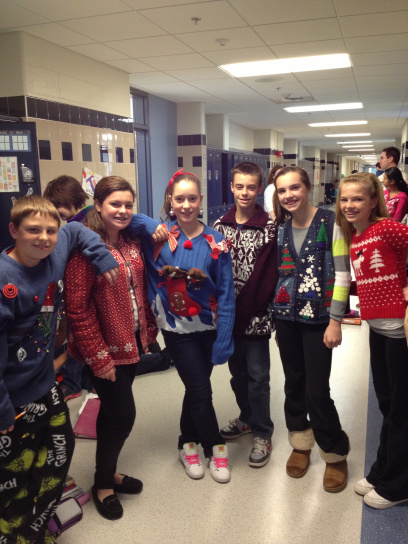
Memorial School – Mrs. Burns Reading Class Ugly Sweater Day at Marshall Simonds |
Answering A Few Questions From My Sessions At AASSP/AAMSP Fall Conference
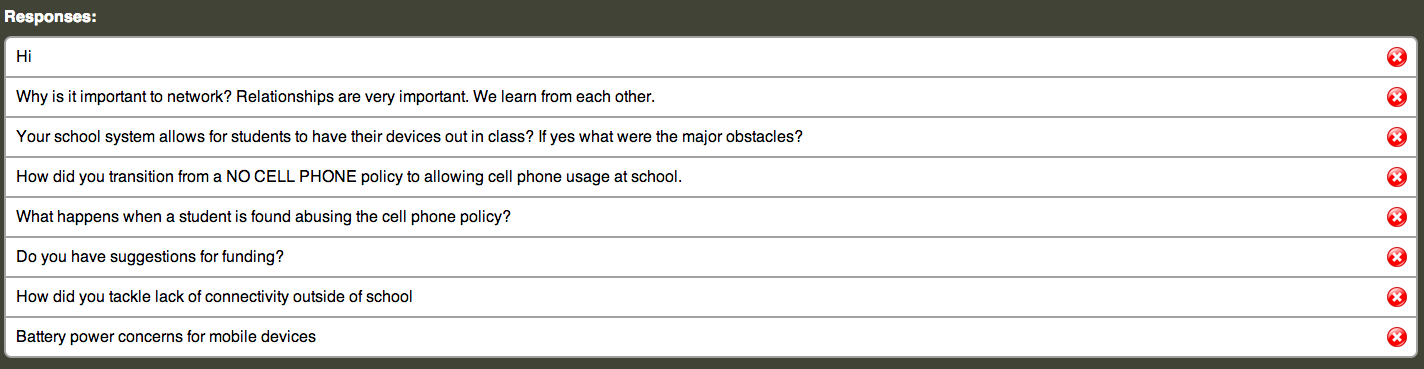
I was fortunate to have the opportunity to provide a keynote and a breakout session at the AASSP/AAMSP Fall Conference which was organized by Council for Leaders in Alabama Schools in Orange Beach, Alabama this week. The two sessions were titled – Leading in a Learner-Centered Environment and Transparent Leadership. During each of the sessions, I used Socrative and allowed audience members to ask questions using the short answer option from Socrative. (See the responses below).
At the end of the sessions we had a chance to answer a few of the questions, but there were a few that we did not get to discuss. Since the list is relatively short, I will respond to all of the questions below.
Why is it important to network?
The question above was a key focus of the session on Transparent Leadership as we discussed not only why it is important to network, but how to use digital resources to expand our networks beyond what we were capable of in the past. Who you know and who you can learn from has always been an important factor for individuals. It is imperative that school leaders are modeling the use of the most current resources to show all of the learners in their communities how they build their network to collaborate and learn with/from others.
If your school allows students to bring their own devices, what are the major obstacles?
We provide the devices for students here in Burlington where all of the students have iPads. There is a lot of information out there about BYOD programs. Here is an article that Peter DeWitt wrote for Education Week back in August. I have also saved a number of articles on BYOD in my Diigo bookmarks.
How do you transition from NO CELLPHONE POLICY to allowing cellphones in School?
Here’s a link to a blog post that I wrote back in 2009 when we started to discuss the change in our policy. The bottom line for me is that we need to provide more resources to our classroom teachers and not take away access to resources that they want to utilize in their classrooms. Our change in the handbook the next year went from “no cellphones” to “cellphones may be used at the discretion of the classroom teacher.” Due to the smooth nature of the transition, we opened it up the following year to cellphone use in the cafeteria and in the halls between classes.
What happens when a student is found abusing the cellphone policy?
The protocol is pretty similar to most situations where students are not compliant with school regulations. The first offense is a warning along with a discussion to find out what necessitated the use of the cellphone in a disruptive manner, the second offense and subsequent offenses call for the device to be sent to the Assistant Principal’s Office to be claimed by a parent.
With the move to all students having iPads in the school, the use of cellphones in a disruptive manner has really been a non-issue.
Do you have suggestions for funding?
At BHS we looked at some of the things that we had spent money on traditionally (i.e. textbooks) and decided we were going to use these funds differently. In addition, we cut way removed a number of printers and cut back on our paper consumption. While these savings did not cover the entire cost of the devices, we did get a good start in covering the cost.
How do you tackle lack of connectivity outside of school?
In our town connectivity outside of school is not an issue. We have a number of businesses in town that have free wifi. In addition, most people have a wireless connection at home. For those who have a problem with this expense, Comcast offers internet access for low-income families for $9.99 a month.
Battery power concerns for mobile devices?
Battery life was definitely a concern for us at BHS, especially when we considered the fact that the electrical infrastructure in our 40-year old building would not easily support 1,000 mobile devices being plugged in daily. Fortunately, the iPad solved this issue with its battery-life lasting multiple days for most students.

Asking The Wrong Question In Regards To Technology
![]() |
| Image via www.ilcnsw.asn.au/ |
So I got a text from a friend in a nearby community who was involved in a conversation about moving to a 1:1 environment in his school. He was concerned about a question coming from one of the people opposed to the move. The question being asked was “How will you judge the effectiveness of the technology?”
Here was my response:
In regards to the question about the effectiveness of technology, I don’t think we can measure the effectiveness of technology. I think we could ask the same question about a number of the other resources that the school district has provided. How do we measure the effectiveness of their use?
I think what we can measure is whether or not these resources are used effectively. I think we could ask the same question about the number of the other resources that the school district has provided. How do we measure the effectiveness of their use? The point is that by putting a Web-enabled device in the hands of each student and teacher we are increasing the amount of resources the teachers can draw on to make their classrooms more engaging learning environments.
And one more thing, if people want to talk about standardized test scores as a measure of success then I think we don’t even need to purchase any technology.
Anyone else have any thoughts?