
-
How can we amplify our #ELLs’ voices, both in our classrooms and beyond? https://t.co/zSH6p879bN #edchat https://t.co/TGJLKxK37y
-
What My Morning Journal Looks Like https://t.co/CepWFXJ5nJ
-
@emilyfranESL @noasbobs Did u see this by @Larryferlazzo? His larger scale empathy project has inspired me.… https://t.co/oYJ1H2slNM
-
Here is the link to Notes from @MSSAA33 #MSSAASI #EdCamp SmackDown https://t.co/rEFAqEJ8d3 Please check them out.… https://t.co/xkinJoqvrQ
-
Boost English lang learning w Autonomy, Purpose & Mastery. #ESL Newcomer explains why: https://t.co/LBkyIy8bAS… https://t.co/VDf2s4u7aY
-
Do’s & Don’ts for Teaching English-Language Learners https://t.co/Dec2gVGx86
-
16 G Suite Challenges for Beginner, Intermediate… https://t.co/azC0N9hFw6
-
Switching Careers Doesn’t Have to Be Hard: Charting Jobs That Are Similar to Yours is the headline of an interesting NY Times interactive that lets you see how your present occupation is like – and unlike – others.
-
“The companies that think their employees’ digital IQs are unimportant are probably few and far between. After all, in just one decade the concept of “digital” has changed from a niche skill set to something that’s mandatory for virtually all blue-chip companies.”
-
From Larry Ferlazzo – The Best Resources For Planning The First Days Of School
-
“The problem with meetings is that they are often boring, and they don’t usually get the desired results. There are a couple of reasons this happens. I’d like to share some of what I learned from Lencioni’s book and encourage you to read it if you would like to have killer meetings instead of death by meetings.”
-
Summaries of three of the MSAA SUmmer Institute Workshops from Joe Scozarro Making Time for Professional Growth #MSSAASI https://t.co/WDIcfSJNaU https://t.co/qErKA318LT
-
@patrickmlarkin Participate in connected communities, speak publicly abt: (1) what they’re learning, (2) how they’r… https://t.co/b1usB46Zj8
-
#WeLeadBy Student Digital Leadership at its best https://t.co/UdpoIWijb1 via @JCasaTodd
-
“Books can give children an entry point to taking action in the outside world by providing examples of how to address bullying, bias, and injustice.”
-
@patrickmlarkin Provide teachers with the ability to connect with like minded peers, allowing them to share best pr… https://t.co/94wuqRo9rt
-
Natick parents, don’t forget to use myON with your kids this summer for summer reading. Check out summer guide for… https://t.co/fuUTTTFO5H
-
@patrickmlarkin It starts with idea that PD should model what you want to see in the classroom. A Guide to Designin… https://t.co/IIvHIHDl6r
-
Good overview from Peter Pappas
-
The MSPA is a collaboration of Massachusetts school districts that share common concerns around student privacy. The goal of the MSPA is to set standards of both practice and expectations around student privacy such that all parties involved have a common understanding of expectations.
-
Bristol Warren’s EdTech Tutorials – YouTube
-
The resources here support Kelly Gallagher’s strategy of doing “minute readings” on a daily basis. via @classroomD4
-
Are you our next author? We’re currently accepting manuscripts for several 2018 theme issues: https://t.co/1HfyqjeAzh
-
5 Questions to Ask Your Students To Start the School Year https://t.co/cMYSmVV8oM https://t.co/FvxkuxPeOK
-
“Once they started to see a positive impact of what they were publishing online, they began to understand they had the power to develop their own digital presence and could network with industry professionals in their fields of interest,” says Scheffer.
-
Here is a roadmap for getting your students to discuss and think about math problems. https://t.co/n56lK2OsH8 via @TEDTalks
-
#socialLEADia: An Important Read for Everyone! Thx @patrickmlarkin for this amazing post! https://t.co/Sw4DUliZRq… https://t.co/kWJ2lTONzF
-
My Chrome extensions https://t.co/olhCL9ljAg #googleEDU https://t.co/6vgXMW7MXU
-
My Breakfast Routine Before Workouts https://t.co/rcMYuArT75
My Weekly Diigo Bookmarks (July 23, 2017)
-
“Superman syndrome—the belief that you need to be everywhere at all times to save the day—is problematic for school leaders. As Dr. Rodriguez warns, it’s tempting for leaders to take charge of a project and push ahead without the participation or buy-in from their team. When Superman syndrome takes over, the short-term results may be positive, but can alienate your community in the long run. This behavior leaves those you work with in the dark, keeping them from valuable information and experiences that would otherwise help build a motivated, resourceful, and goal-oriented team.” Read about and listen to @Dr_Rodriguez21 speak about Superman Syndrome: https://t.co/HGWEHjViiu #MASSEI2017… https://t.co/9Xp6cK6Owp
-
Great thought from @patrickmlarkin Creation vs consumption, digi cit, C & C readiness, online portfolios- so much i… https://t.co/p9SWQLfOFl
-
Why teach #coding? This district isn’t trying to build a “community of coders.” They’re cultivating problem solvers: https://t.co/MnE0sYI8Uh
-
Productivity Secrets: The Apps I Use https://t.co/nVjyGzZlnR https://t.co/Bf3fnEDRmy
-
Why Teacher Professional Development has to be D.I.Y. https://t.co/ZmH0N8VYPu via @EduWells
-
Reading – Google Spent 2 Years Studying 180 Teams. The Most Successful Ones Shared These 5 Traits https://t.co/OITautuuR4
-
Be Internet Awesome Helping Kids be Safe, Confident Explorers of the Online World https://t.co/BE87q3agU0 #edtech #edchat #edtechchat
-
Why (and How) Creative People Need to Say “No” https://t.co/7Cno6oYVCu
-
8 Tips for Communicating with Parents using Email https://t.co/ydjVz2RSXQ https://t.co/FgfRiH3fXH
-
Jane McGonigal on Getting More Done with Less Stress and The Health Benefits of Gaming https://t.co/8E3LgG4nVu https://t.co/WYdtOCtyWF
-
I just published “He Was Bitten By The Black Dog…” https://t.co/BYKfo6uZqO
-
New 2-page guide to anchor stnds for #reading explains how kids should be reading in school: https://t.co/FvL6QXovxm #maedu #ELA
-
.@StephenKing & I talk teaching, writing @ our shared love of grammar, via @TheAtlantic https://t.co/hSdo04sh0u https://t.co/VTsTMd9dCq
-
Interested in #BookSnaps? https://t.co/YUOEXJZuZA
-
Research: “Homework in elementary school does not contribute to academic achievement,” but daily reading does. https://t.co/g6aGcAbwx2
-
Best educational TedTalk – I’m Kate Simonds @gcouros #LynnUDL https://t.co/vvMA5W1WmK
-
Should you trust that story relying on anonymous sources? @perrybaconjr provides a guide: https://t.co/csbeJwUEJ0
-
Great resource for experiential learning opportunities…in Canada
-
From Rusul Alrubail , Edutopia Community Facilitator/ Student Voice & Literacy at The Writing Project
-
Want to Become a Great Leader? Act Like a Student, Not an Expert https://t.co/yDk5FVWWQS
-
The Shortcut to the Shortcut: The 4 Key Principles of The 4-Hour Body https://t.co/q7hppga52I https://t.co/aNWmrc0IKO
-
Here’s how to prepare #ELLs at three levels of proficiency for critiquing and writing arguments: https://t.co/xStuC6TPJl @Larryferlazzo
-
3 Simple and Powerful Feedback Tools in Google Docs: https://t.co/He6pvQ0t2h #edtech
-
Case Study: What Does a Real 4-Hour Workweek Look Like…With a Family? https://t.co/fE1S4l2oEq
-
Awesome https://t.co/5wJNMUKeix
-
High performers devote at least 5 hours a week (1 hour per day) to reading, reflecting, or experimenting. https://t.co/jrC9US3d7t
-
Reading – You Probably Don’t Suck at Math, You Just Need a Better Attitude https://t.co/Unc4PrFWy5 #mathchat cc @joboaler
-
10 Uncommon “Superfoods” from the World of Ultra-Endurance https://t.co/jaVZgTkCDw
-
Incredible. https://t.co/rp1mnkohQg
-
“Going Open Beyond the Hype” by @andycinek https://t.co/OS3ZqTM5by #GoOpen #edtech #edchat
-
Summer Reading For Your Woke Kid https://t.co/mS8zk1lWU3 https://t.co/K2v48fuhOU
-
“Digital literacy is closer to looking both ways before you cross the street.” https://t.co/fs32NQHAiu Great, sober… https://t.co/zYVkJqE3cd
-
All Extremely Successful People Do These 10 Life Practices (To Find Fulfillment) @M_tthewJones https://t.co/AwBsj3d95m
-
@PeteFrates3 Keep fighting. Here’s a @PearlJam playlist that I listen to in when I’m “in the ring” Love you. -SG https://t.co/csXHKoOFWP
-
I Spy: What’s Happening on All Those Student Devices? https://t.co/SZzJH0tKJr
-
Avalon Project + Google Docs = Guided Introduction to Primary Sources https://t.co/tXNnTKwkd6
-
Reinventing the Office: How to Lose Fat and Increase Productivity at Work https://t.co/Y5oYSaSGUU https://t.co/6yfAJ5G67F
-
How To Shift Complaints To Constructive Conversation https://t.co/tZhklkNKCd
-
Here’s a blog about #iste17 https://t.co/RmNyRRvQBZ #313teach We can’t stop growing and having passionate conversations.
-
New from @KerryHawk02: This is Your Brain on Technology #ISTE17 #IGNITE https://t.co/U3rIqm4ihs https://t.co/2EPiUX0E8h
-
Plz take 5 minutes to listen to my interview with CBS News Radion about how parents can respond to Pres. Trump’s tw… https://t.co/txDgbhSewz
-
Everything you need to start teaching #digcit next year! https://t.co/aCKA1fVxdz #teaching #teachertips https://t.co/NJOvm0HHaT
-
Transforming Schools Through Sustainability | ASCD Inservice https://t.co/Hv0ETlZ90U #moedchat
-
Safe travels everyone! Remember to empower your Ss to Fight Fake With Fact https://t.co/dIaRPmT3Ks #ISTE17… https://t.co/idmMl0aQ8a
-
Updated American demographics: becoming an older, more diverse nation https://t.co/mBEGs5GCKJ Interesting.
Social LEADia – An Important Read for Everyone
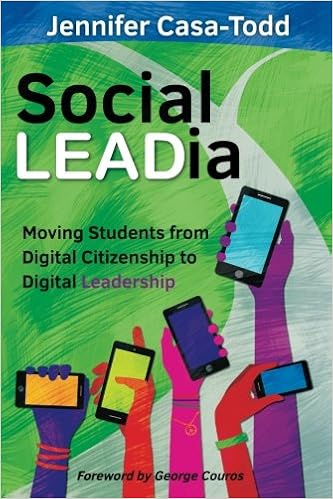
One of my first summer reads of the summer was Jennifer Casa-Todd’s Social LEADia. This book covers all of the angles to help educators and parents understand the critical role that digital resources will play in the success of our students. The book is broken down into the following three sections:
- Why Digital Leadership Matters
- What Digital Leadership Looks Like
- How We Make Digital Leadership Happen In Schools
I. Why Digital Leadership Matters
The opening section of the book makes a clear case for why we need to be moving beyond scaring students (and their parents) about the behaviors they need to avoid in utilizing social media tools. Our job in schools is to help students create a digital identity that will help get them where they need to go. In addition, we need to support parents in our school communities develop a comfort level with digital tools so that they can also support their children.
Casa-Todd makes a clear case for the fact that we can no longer separate digital literacy from literacy and because of this those who wish to be considered literate need to understand how to use digital tools communicate and learn. In order for this to happen, we need to ensure that educators also have the necessary comfort level to support students in this area. She notes the following:
“So, for student to become successful, they need to be proficient in all literacies, not just the traditional ones we’re accustomed to or with which we are comfortable…We need to help students see that their blogging texting and tweeting on social media is real writing.”
In addition to students utilizing social media tools to communicate and create, it has also become the primary source through which many people get their news. With this in mind, we need to help our students understand the sources of the information coming at them. Casa-Todd cited a November 2016 Stanford University research study of 7,804 students found that “students have trouble judging the credibility of information online.”
The final big reason under “Why” concerns supporting our students in finding balance in their lives regarding the use of digital devices/tools. Casa-Todd asks her students one important question – “Is your device helping you or distracting you?” She adds the following, “when I co-teach with teachers where cell-phone distraction is an ongoing concern, we explicitly make self-regulation a learning goal we assess.”
If we do not lead our students to this sense of self-awareness then we will come up short of fulfilling their potential in this area.
II. What Digital Leadership Looks Like
This section of the book gives a number of concrete examples of how we can support students in finding meaningful online connections that will support their ongoing learning.
Resources like the Digital Human Library as well as Twitter hashtags like #GlobalEd, #EduMatch, #cblchat (for connections-based learning) are just a few of the resources that Casa-Todd highlights which allow educators to jump right in and start building their Professional Learning Networks PLN’s) so they can model what this looks like for students to do the same.
Casa-Todd states the following regarding this topic:
“Remember, social media os defined as tool or platforms through which people can engage ‘in a large-scale conversation, exploration, and opinion sharing’ and ‘create and share their own content.'”
A critical part of this equation is curation, the ability of students to find relevant sources of information and decide if they are reliable. If we are not providing opportunities for our students to locate and evaluate resources, then we are doing them a disservice in this area.
III. How We Make Digital Leadership Happen In Schools
The final section of the book looks at ways we can set up schools and classrooms that empower students to be digital leaders. Casa-Todd shares some very authentic ways that other teachers have allowed their students to gain experience with digital tools. She notes the following:
“It is important that we travel alongside our students on this journey and be mentors for them.”
This mentoring needs to start early on in elementary school with teachers following the lead of some of the examples outlined in this section (i.e. classroom Tweeter, Instagrammer, and Snapchatter of the Day, or a rotating classroom PR team to update the classroom blog and social media accounts.).
Casa-Todd makes the point that allowing students to gain a comfort level in promoting all of the positive things happening in their classroom will help them build a great foundation for promoting other causes that they become involved in down the road:
“We need to consider the extent to which our students can create (or are already creating) a positive change and how that positivity can spread via social media.”
As I mentioned earlier, this book is full of practical examples that will allow teachers to begin or deepen the depth of their students’ engagement in utilizing digital tools for learning. There are also great discussion questions at the end of each chapter that will allow teams of teachers or entire school communities to read this book together in order to expand conversations in this area. Even if you are the only one in your school reading this book, you can connect with all of the other educators around the globe who are also reading it by going to the Twitter hashtag #SocialLEADia and sharing your insights.
In concluding this post, I will leave you with one final quote from the book:
“Social media and technology affect everything our kids do, so we need to stop teaching as if they don’t exist.”
If you are wondering where to start in this overwhelming area, Casa-Todd has given you a path…
My Weekly Diigo Bookmarks (July 16, 2017)
-
-
Social and emotional learning programs for youth not only immediately improve mental health, social skills, and learning outcomes but also continue to benefit children years later, according to new research from UBC, University of Illinois at Chicago and Loyola University.
-
-
“But it’s not easy to make that change, O’Connor said, even if it really would be better for teens. Even if school starts later, parents’ jobs don’t, which would mean more teenagers who have to get themselves up, fed, dressed and to school without any adult supervision or assistance. Because of the impact on bus schedules, younger students could end up starting school earlier than ever. “
-
Wakefield Public Schools website for alternative assignments if school is cancelled due to inclement weather.
My Weekly Diigo Bookmarks (July 9, 2017)
-
From TED.com
-
Common Sense Ed Video on kids and social media
-
Great project from the Harvard Graduate School of Education
-
A study found that almost a quarter of things you see on social media are either faked or exaggerated. However, ‘faking it’ can have consequences on your health with issues such as poor mental health and low self-esteem are increasing as a result.

First blog post
This is your very first post. Click the Edit link to modify or delete it, or start a new post. If you like, use this post to tell readers why you started this blog and what you plan to do with it.
The Sometimes Misleading Nature of Social Media
 |
| Most of what we see on social media offers only one perspective. |
One topic that continues to resonate with me following ISTE 2017 surrounds the misleading nature of social media feeds. What we see in the posts of those who we friend or follow are typically the highlights of their lives. People tend not to share the more mundane aspects of their lives, nevermind the negative moments. So given the fact that our lives are a series of peaks and valleys, we need to take the time to remind students of this phenomenon.
Think about your old photo album…
George Couros’ great session on Digital Leadership reminded me of the process that used to be followed to produce and organize photos. Many of us have photo albums around the house from when we were younger. The albums contain only the best pictures from the photos that were taken and developed by our parents. They didn’t throw in all those pictures that weren’t good enough to take a slot in the photo album. What percentage of the pictures taken with a roll of film do you think actually ended up in the album?
We need to help our students keep perspective on what they see posted
There are so many articles referring to the links between student depression and social media. It is no wonder given the fact that students may not realize that social media feeds are typically a highlight reel of a person’s life. Most people share all of their best moments on Facebook while keeping their low-points to themselves.
In her ISTE Keynote, Jennie Magiera highlighted this point while referencing a recent New York Times article by Seth Stephens-Davidowitz titled Don’t Let Facebook Make You Miserable. In the article, Stephens-Davidowitz discusses his work analyzing Google search data and how the terms people enter into the Google search bar are the polar opposite of what they are posting on Facebook. Here is one example he cites:
On social media, the top descriptors to complete the phrase “My husband is …” are “the best,” “my best friend,” “amazing,” “the greatest” and “so cute.” On Google, one of the top five ways to complete that phrase is also “amazing.” So that checks out. The other four: “a jerk,” “annoying,” “gay” and “mean.”
 |
|
|
The excerpt above, which Jennie highlighted in her keynote, also comes from New York Times article and it is something that we need to ensure all of our students understand. I have no doubt that many students look at all of the beautiful pictures that their peers are sharing on various social media platforms and then begin to feel that their own lives are inferior in some way. As educators, we need to ensure that our students have a balanced perspective.
My Weekly Diigo Bookmarks (July 2, 2017)
-
“The truth is that all of us, children and adults alike, are learning how to use the powerful communication tools the online world has to offer. This means that all of us are making mistakes and learning from them. “
-
iOS 11 introduces a new Do Not Disturb While Driving feature that’s designed to block incoming calls, texts, and notifications while you’re driving, with the aim of cutting down on distractions to prevent accidents.
-
… you just want to see your search results sorted by date. How can you do this? Turns out it’s not hard, just slightly obscure.
-
Jennie Magiera’s Keynote from ISTE 2017 – Intro starts at the 25-minute mark
-
“Devote a much greater proportion of total course hours to discussion. If section meetings don’t always seem productive, that’s an argument for figuring out how to facilitate those conversations more skillfully, not an excuse for having students spend more time passively listening, which we know doesn’t work.”
-
“if you want to build an inclusive culture, build a minimum culture. Build it around professionalism, boundaries, and work-life balance. “
ISTE 2017 – A Great Deal to Think About…and do
It’s hard to believe that I am back in my office this morning and that ISTE 2017 is just a memory. There is a bit of a letdown that must be overcome, following four days filled with engaging sessions and conversations surrounding how we can continue to improve our classrooms and schools to ensure that our students are well-equipped for what they will face when they leave our doors. After being submerged in a sea of over 20,000 passionate educators for an extended period, there is no way to leave ISTE without a sense of hope for what is possible. The harder part is taking this overwhelming sense of optimism and translating it into quantifiable actions that will lead to real change.
My biggest takeaway from this whirlwind experience was a reminder about the importance of personal connections. At a time when there seems to be more concern about the emotional and physical health of students than at any previous period in history, we need to provide safe places where kids can find their way and find their passions. Jennie Magiera’s amazing keynote on Tuesday highlighted multiple examples of how caring educators can both enlighten and empower students.
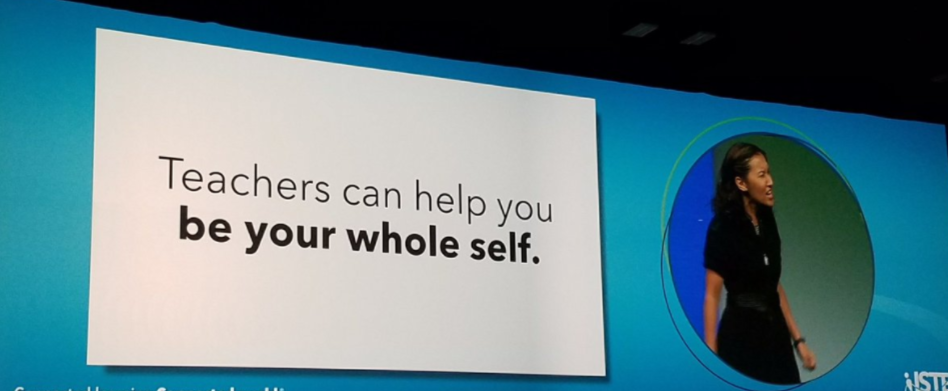
There is a lot more to talk about from both Jennie’s Keynote and ISTE 2017. Thanks to all of my educational colleagues from around the globe for another heaping dose of inspiration!
My Weekly Diigo Bookmarks (June 25, 2017)
-
Two E-Mail Autoresponses That Work https://t.co/vhyU4VvPH8 https://t.co/baUrPm6MfJ
-
Great content on @GrantLichtman new site. @patrickmlarkin you will like his new posts. #EdLeadership https://t.co/0keqpVMCri
-
“Letting Go of the Fear Narrative” Isn’t it about time? Powerful post by #socialLEADia author, @JCasaTodd… https://t.co/n6ojkZOzMN
 My Un-Learning Journey