What’s The Hold Up With Ditching Homework?

What would your perfect school or classroom look like? What are some of the age-old practices that you would revise or do away with?  I am struck by the fact that despite overwhelming research that the elimination of certain practices would benefit students, we continue on with these “traditional” approaches. Maybe it’s just easier to maintain the status quo rather than spend the time and energy discussing changes to the way we have always done things.  The main question for me is what do we have to lose? Or even better, what could we gain?

The first topic I would like to look at is homework. With close to 20 years of data telling us that there are no academic benefits to giving elementary students homework, there is no groundbreaking information here. A few articles over the last weeks have brought this topic back up in many school communities.

One of the pieces, Homework is wrecking our kids: The research is clear, let’s ban elementary homework by Heather Shumaker, first appeared in Salon earlier in March. The article references the efforts of Duke University Researcher Harris Cooper to go back through over 100 studies on the impact of homework that were conducted from the late 1980’s until 2006.

While the results of the research showed no impact on academic performance at the elementary level, the studies did find one area that homework impacted students in a significant way.  Unfortunately this is a reference to the negative impact that homework had on the attitude of students toward school.  Shumaker offers clear direction to school communities as to where we should focus our attention to best support the growth of the whole child.

“Non-academic priorities (good sleep, family relationships and active playtime) are vital for balance and well-being. They also directly impact a child’s memory, focus, behavior and learning potential. Elementary lessons are reinforced every day in school. After-school time is precious for the rest of the child.”

A School That Stopped Giving Homework
If you are looking for a concrete example of a school that has taken on the challenge of eliminating useless homework, look no further than the Cambridgeport School in Cambridge, MA.  The efforts of Cambridgeport Principal Katie Charner-Laird were outlined on the Washington Post’s Answer Sheet blog in a post titled Principal: What happened when my school ended useless homeworkAfter a review of Alfie Kohn’s The Homework MythCharnier-Ladd and her staff decided that they would step away from the old way of doing things and stop assigning nightly homework.  Amazingly enough, meaningful learning outside of school increased in ways that many would not have imagined.

“I heard repeatedly from students, teachers, and parents about the significant, meaningful work they are doing at home. A fourth grader begged to take home his writing notebook on the third day of school so he could keep working on the story he had started in class.  A class of fifth graders  requested additional practice problems to take home with them.  A father-daughter pair showed me the model they created of the setting of the book they were reading together…Our school may be giving less homework but we have more students engaged in more meaningful learning activities at home than ever before.”

Like Charnier-Ladd’s school, many of the schools that do away with traditional homework shift the focus to nightly reading for pleasure. While I know nightly reading for elementary students is not a new concept, I was struck by CNN segment last month that touched upon the impact that nightly reading had upon the brains of students.  This is your child’s brain on reading discussed the following:

“The researchers saw that, when the young children were being told a story, a number of regions in the left part of the brain became active. These are the areas involved in understanding the meaning of words and concepts and also in memory.”

I am hoping that CNN (or someone) will do a follow up segment and call it This is your child’s brain on homework But seriously, if we cannot come to an agreement as an entire school or community on reducing homework, why can’t we just have some classrooms pilot this practice? Let’s try it for a year and see if students who do not get traditional homework suffer academically when compared to their grade-level peers who do get nightly homework. At the same time, let’s be sure to document the types of learning/activities the students without traditional homework are doing outside of school. Really, what have we got to lose? More importantly, what will More importantly, what will we gain?!

My Weekly Diigo Bookmarks (March 27, 2016)

Posted from Diigo. The rest of my favorite links are here.

New Keys to Literacy Blog and a Post on Behavior – BPS Blog Update (Volume 7)

It’s hard to believe that we are under 60 days left in the school year. Before a rundown of the most recent posts on the BPS blog, I wanted to share two things. First, I wanted to pass along the new Keys to Literacy (KTL) Blog that has been started as a resource to help with our implementation of Keys to Literacy in the middle and high school. The Keys in Burlington Blog will feature posts from the KTL Coaches as well as links to resources and student work. 


For elementary staff, I wanted to pass along a blog post that Director of Special Education Louise D’Amato passed along recently. The post – Why Ignoring May Backfire: Positive Alternatives for Disruptive Behavior – was written by Jessica Minahan who has consulted with some staff in the district. Here is a brief excerpt from the article that counters what we have been taught to do in order to deal with some disruptive students.

“…we’ve been taught when a student wants attention and we give it to them, we might be reinforcing the behavior. But it is not that simple. When a student a student seeks attention in disruptive ways, it may be due to underlying distress or uncomfortable feelings, such as anxiety. Ignoring the behavior can increase anxiety or discomfort and subsequently increase the student’s behavior.”

Please continue to share posts with me via e-mail if you have something that you would like to see shared as the daily post!
Day 96 – First Grade Book Reviews – Mr. Murphy – Fox Hill Library/Media Specialist

My Weekly Diigo Bookmarks (March 20, 2016)

Posted from Diigo. The rest of my favorite links are here.

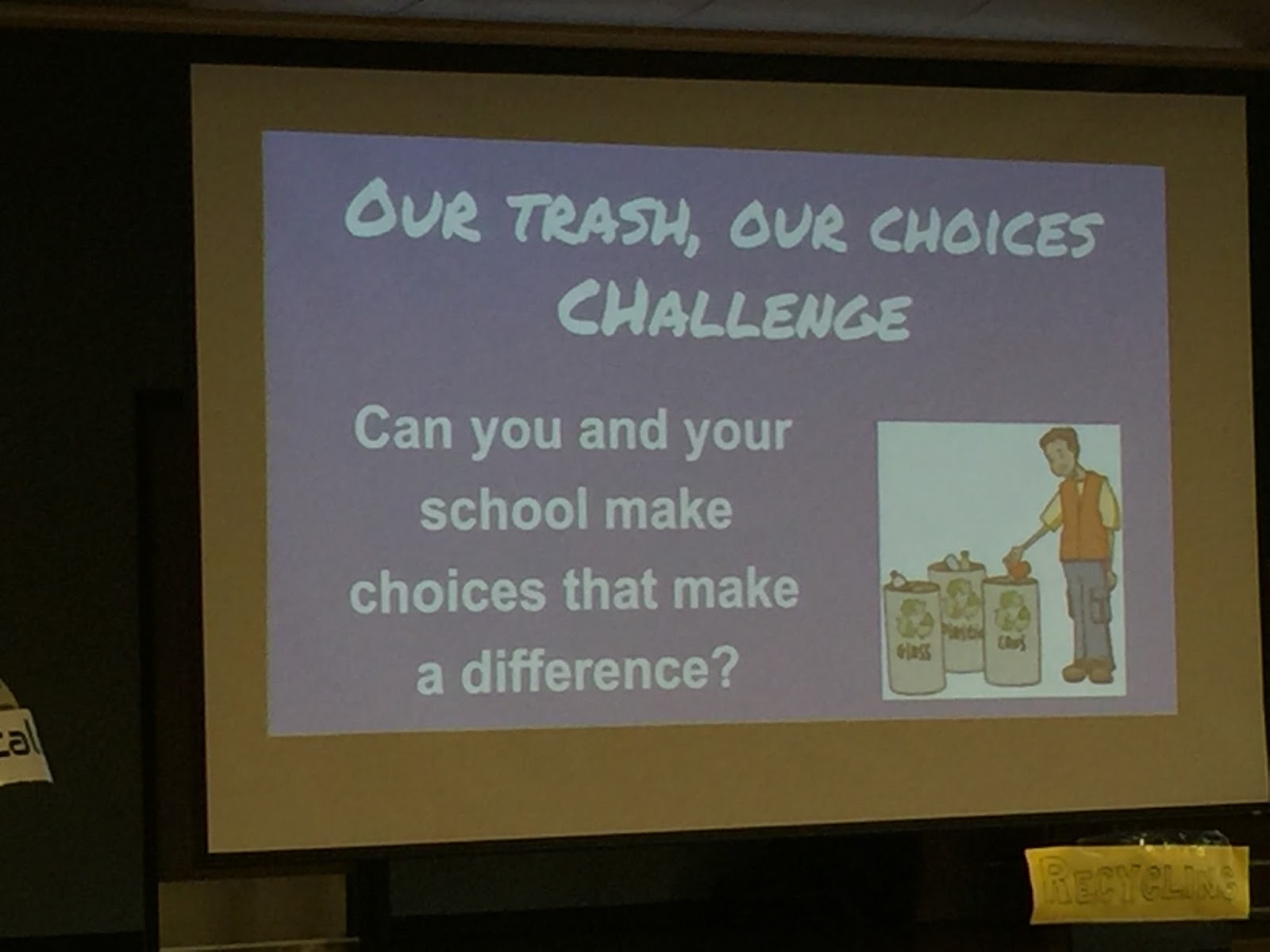
Our Trash, Our Choices Challenge Hits Memorial School

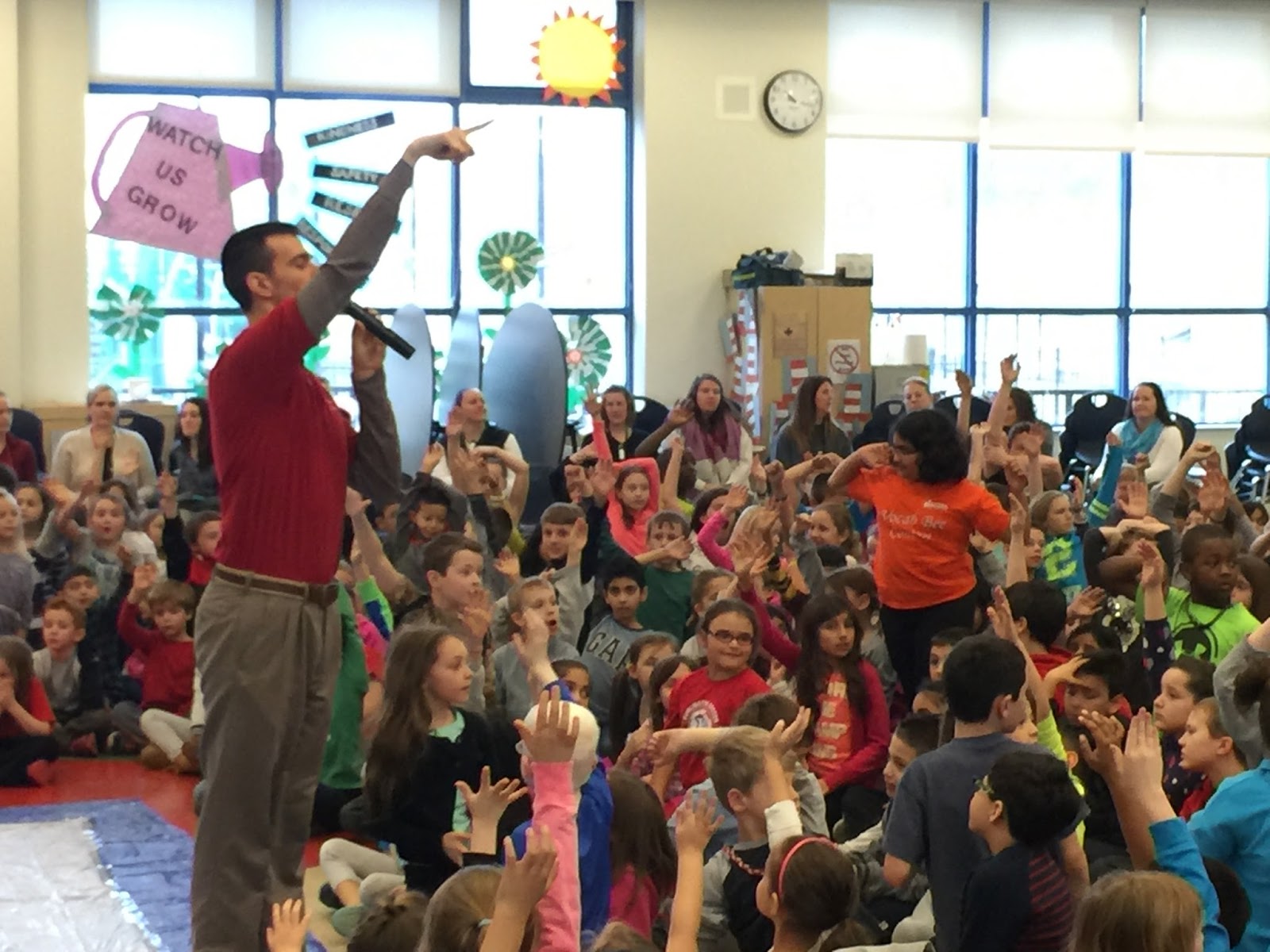
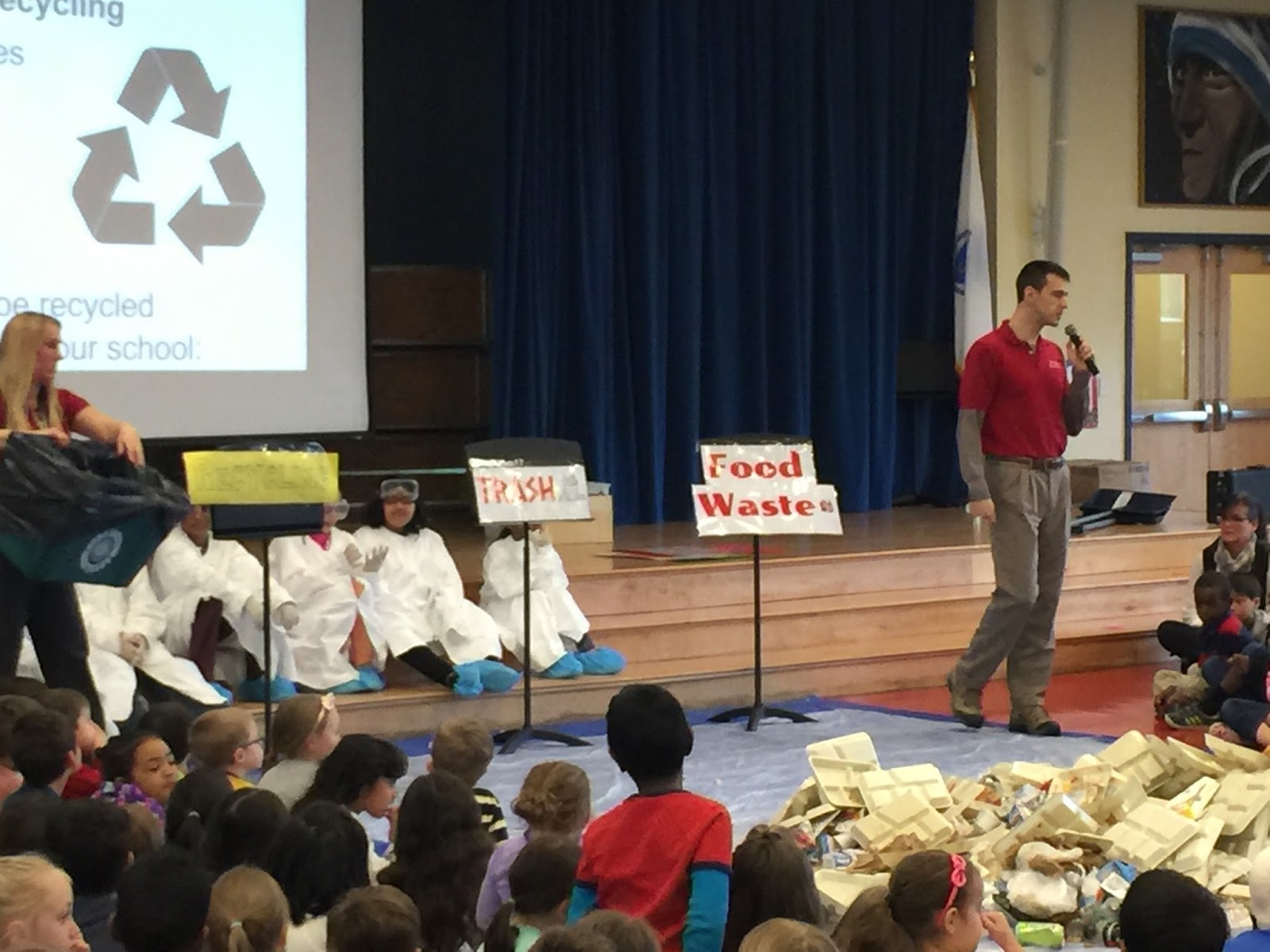
This morning Mr. Musselman and Ms. Pavlicek from the Burlington Science Center made their way to Memorial School to meet with the entire student body about their habits discarding their trash during lunch.  Mr. Musselman and Ms. Pavlicek had confiscated the trash bags from the lunch room yesterday and today they returned to dump out the contents and do a little digging to see if the students had some solutions that would lead to less waste. 
The presentation started with the video above and following the video student volunteers were selected by Mr. Musselman to help sort the trash. 
The students donned there trash-sorting gear below and helped dump out the trash from Monday’s lunch.

The students were then asked to sort the trash into the following three categories:
  1. Recycling
  2. Food Waste
  3. Trash
Mr. Musselman and Ms. Pavlicek let the students know that the weight of all of the trash on Monday was 103 pounds (shown in the slide below) and that the goal for the remainder of the week would be to lower the number of trash each day.  They discussed the items that should be placed in each of the non-trash categories to help lower the total weight. In addition, permanent recycling bins have been ordered to help encourage students to think twice about what they put in the trash. Additionally, students were asked to consider ways to lessen the amount of food that is thrown away.
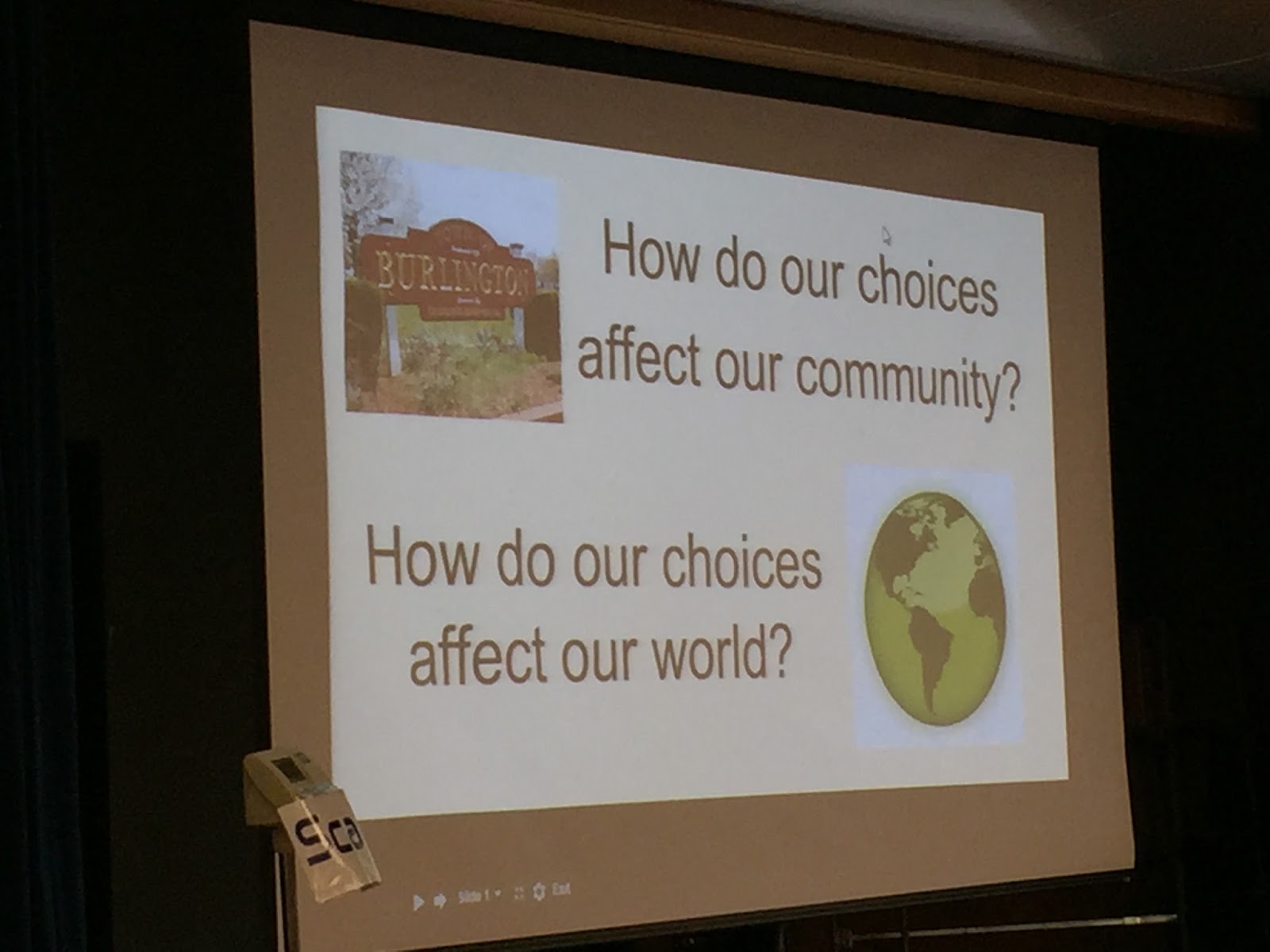
Stay tuned for the results from the Our Trash, Our Choices Challenge at Memorial during the remainder of the week and thanks to Mr. Musselman and Ms. Pavlicek for helping to reinforce the importance of making positive choices to support our community and our world!

For all of the great resources that have been pulled together for this challenge be sure to check out the Science Center’s post on this topic.

Open Educational Resources Are About Much More Than Saving Money

This post first appeared on my Edweek Blog

Screen Shot 2016-03-11 at 3.50.11 PM.png
I have been somewhat disingenuous about my rationale for the transition away from traditional textbooks. In my discussions about the importance of the move I always cite financial savings as the top reason to move away from textbooks. However, after spending a lot of time thinking about moving towards Open Educational Resources (OER) to replace textbooks , I have realized that saving money is not at the top of my list of reasons to move away from these items that have burdened the backs of students and the budgets of school districts for decades.

Don’t get me wrong, I think that the economics involved here need to be discussed. For instance, a new social studies textbook could cost $100 or more. Multiply this times 250 students and you are quickly looking at a price tag of $25,000 for one set of textbooks. What if we spent half, three-quarters, or all of that amount to train and compensate our teachers to create resources to take the place of textbooks? In my opinion, this would give us higher quality resources that we could revise regularly and make them a sustainable resource.

But beyond the clear economic advantages, switching away from third-party content allows us to fulfill a much greater purpose.  This transition will help us make the cultural shift that is necessary in our schools to truly prepare our students for the rapidly changing landscape beyond K-12 education. Supporting our teachers in these efforts is a critical step for success here. A recent post about the #GoOpen initiative from Joseph South, Director of the  Office of Educational Technology at the U.S. Department of Education, articulated this well:

“We now expect successful students to exhibit skills such as critical thinking, problem solving, collaboration, and digital literacy. We know without these skills they won’t be fully prepared for the rigors of college or the day-to-day challenges of a fulfilling career…We have no doubt that the use of openly-licensed educational resources in schools, districts, and states will continue to grow. The question is: how quickly, how thoughtfully, how sustainably, and with how much rigor and support?”

The ball is clearly in the court of states and local districts to answer Director South’s questions on how quickly this initiative will flourish. It is clearly easier to throw money at third-party content developers as we have always done and go about business as usual. However, the continued focus on these types of traditional resources as the major component for instruction across  curricular areas is likely to leave our students underwhelmed and underprepared. The road to the adoption of Open Educational Resources is bound to be bumpy, but it is a clear route to the creation of true communities of learners who understand the growth mindset necessary for success in the future.

My Weekly Diigo Bookmarks (March 13, 2016)

Posted from Diigo. The rest of my favorite links are here.

My Weekly Diigo Bookmarks (March 6, 2016)

Posted from Diigo. The rest of my favorite links are here.

BHS Student Help Desk Featured on WBZ’s Eye On Education

Check out the great segment from WBZ’s Eye on Education segment last night featuring our Burlington High Help Desk students. http://up.anv.bz/latest/anvload.html?key=eyJtIjoiY2JzIiwicCI6ImRlZmF1bHQiLCJ2IjoiMzM2NzA0NyIsInBsdWdpbnMiOnsiY29tc2NvcmUiOnsiY2xpZW50SWQiOiIzMDAwMDIzIiwiYzMiOiJCb3N0b24uY2JzbG9jYWwuY29tIn0sImRmcCI6eyJjbGllbnRTaWRlIjp7ImFkVGFnVXJsIjoiaHR0cDovL3B1YmFkcy5nLmRvdWJsZWNsaWNrLm5ldC9nYW1wYWQvYWRzP3N6PTJ4MiZpdT0vNDEyOC9DQlMuQk9TVE9OJmNpdV9zenMmaW1wbD1zJmdkZnBfcmVxPTEmZW52PXZwJm91dHB1dD14bWxfdmFzdDImdW52aWV3ZWRfcG9zaXRpb25fc3RhcnQ9MSZ1cmw9W3JlZmVycmVyX3VybF0mZGVzY3JpcHRpb25fdXJsPVtkZXNjcmlwdGlvbl91cmxdJmNvcnJlbGF0b3I9W3RpbWVzdGFtcF0iLCJrZXlWYWx1ZXMiOnsiY2F0ZWdvcmllcyI6IltbQ0FURUdPUklFU11dIiwicHJvZ3JhbSI6IltbUFJPR1JBTV9OQU1FXV0iLCJzaXRlU2VjdGlvbiI6ImZlYXR1cmVkIn19fSwiaGVhcnRiZWF0QmV0YSI6eyJhY2NvdW50IjoiY2JzbG9jYWwtZ2xvYmFsLXVuaWZpZWQsY2JzbG9jYWwtc3RhdGlvbi1ib3N0b24tYm9zdG9uLXVuaWZpZWQsY2JzbG9jYWwtc3VicHJpbWFyeS1zd3R2LXVuaWZpZWQsY2JzbG9jYWwtbWFya2V0LWJvc3Rvbi11bmlmaWVkIiwicHVibGlzaGVySWQiOiJjYnNsb2NhbCIsImpvYklkIjoic2NfdmEiLCJtYXJrZXRpbmdDbG91ZElkIjoiODIzQkEwMzM1NTY3NDk3RjdGMDAwMTAxQEFkb2JlT3JnIiwidHJhY2tpbmdTZXJ2ZXIiOiJoZWFydGJlYXRzLm9tdHJkYy5uZXQiLCJjdXN0b21UcmFja2luZ1NlcnZlciI6ImNic2RpZ2l0YWxtZWRpYS5kMS5zYy5vbXRyZGMubmV0IiwidmVyc2lvbiI6IjEuNSJ9LCJyZWFsVGltZUFuYWx5dGljcyI6dHJ1ZX0sImFudmFjayI6ImFudmF0b19jYnNsb2NhbF9hcHBfd2ViX3Byb2RfNTQ3ZjNlNDkyNDFlZjBlNWQzMGM3OWIyZWZiY2E1ZDkyYzY5OGY2NyJ9

My Weekly Diigo Bookmarks (February 29, 2016)

Posted from Diigo. The rest of my favorite links are here.