OER Needs To Be On Your Radar

Screen Shot 2016-01-15 at 6.02.53 PM.png
Is this the year we will start to make some headway in the curation and creation of digital content and start to move away from our reliance on pre-packaged materials (aka textbooks)? While I have a lot more questions than answers when it comes to making this transition, there is one thing that I am sure of here.  We will make no progress without a detailed plan with clear benchmarks along the way. So, where do we start?
Here are three key issues we need to tackle in order to gain momentum with the move to Open Educational Resources (OER):
  1. Agree to a common understanding of OER –
When we talk about OER, I think we need to be clear what are intentions are. Are we looking to pay big dollars to have a third-party tool that helps us curate and create resources? Personally,  I like the definition of OER stated by the U.S. Department of Education’s Office of Educational Technology as part of the #GoOpen Initiative is pretty clear – Openly licensed educational resources are learning materials that can be used for teaching, learning, and assessment without cost. They can be modified and redistributed without violating copyright laws.”
  1. Build capacity of educators (and school communities) –
We need to make sure that our teachers (and stakeholders in our communities) understand the purpose and scope of this initiative. Moving away from pre-packaged content is a significant change for many to grapple with. However, when we break down the reasons for this work in regards to relevance of materials, allowing our educators the flexibility to customize resources on a frequent basis, and economic savings our intentions will be clearer.
On another note, with so many schools pushing 1:1 initiatives, we have the tools in place to make this transition to OER a reality. If we really want to stress the importance of our students being creators and not just consumers of content, we need to create communities of educators who are also creators.
  1. Set clear goals and benchmarks –
Whether it is an entire course, a unit, or a lesson, we need to start this work with the understanding that this is a work in progress. We will not necessarily create perfect products on our first attempt, but the beauty of this process is that we have the ability to revise content in a way that is not currently possible. In a short time we will be in the year 2020. Where would you like to see yourself in 2020? In other words, what is your 2020 Vision? Every district in the country needs to ask themselves this question and work backwards from here.

My Weekly Diigo Bookmarks (January 17, 2016)

Posted from Diigo. The rest of my favorite links are here.

Wondering In Mrs. Fitzpatrick Class At Pine Glen

During a visit to Pine Glen Elementary this week, Mrs. Fitpatrick shared with me some of the work her students are doing on their “I’m Wondering” projects.  All of the students have an opportunity to research and write about anything that they would like to learn more about during intervention/extension time.  On the wall of the classroom there are pictures of the students with what they are working on during their “I’m Wondering” time.  

In addition, some of the students have posted QR codes on the wall which link to publications that they have created to document what they have learned.  Check out a couple examples below from Cooper and Emma.

My Weekly Diigo Bookmarks (January 10, 2016)

Posted from Diigo. The rest of my favorite links are here.

Social Media Shouldn’t Be an Impediment for Superintendents

Screen Shot 2015-12-20 at 1.28.24 PM.png
A blog post on Edweek’s District Dossier Blog cited the fact that a recent survey by the American Association of School Administrators (The Superintendent’s Association) found that the majority of superintendents surveyed feel that social media is an impediment to their job. As I thought about these results, I couldn’t help but wonder why so many school district leaders felt this way. I came up with two possible conclusions for this result:

District leaders have failed to embrace social media as a useful tool   

Most superintendents out there are still not utilizing social media tools for communication in their school communities, never mind for their own professional learning. A district Facebook page is a perfect way to get news out to the parents in your community and brag about the latest awards and accomplishments by staff and students. Of course, a Facebook page is also a space to post pictures and videos from happenings around the school district. 
A district Twitter account is another great way to share a steady flow of information from the district office. Beyond basic communication, a district with a Twitter account can create a district hashtag to share news, have discussions with stakeholders, and get a handle on any issues that may be developing in their school community. The days are well past from where we can wait for the local newspaper to tell us what the news is in our schools. Social media allows us to get the news out in real time, and it’s a two-way street. We do not have to be passive recipients of the news. We can also make our own news by sharing a steady flow of the great things that are happening in our districts.  
We have the ability to control the narrative by using social media tools to our advantage. If we sit back and avoid social media then the narrative will be controlled by others. In many cases, those telling the story of our schools will be critics with a different agenda.

District leaders are concerned about inappropriate social media use

I know that there are frequent news stories about school communities dealing with headaches caused by the misuse of social media by students (or sometimes teachers). There’s no foolproof way to solve this problem, but embracing the power of social media is more likely to mitigate problems than avoiding and/or prohibiting the use of social media. School district leaders modeling the power of social media from the top, and leading discussions surrounding digital citizenship, are less likely to find themselves dealing with fallout from misuse of these resources. On the odd chance that these school leaders do find themselves dealing with negative uses of social media within their schools districts, they should have plenty of positive examples to fall back on which will ensure that the negative example is not all that their school community has to talk about.

Happy New Year! Help your students with some resolutions – Burlington Blog Update (Volume 5)

Welcome back and Happy New Year! I hope everyone had a restful vacation and is feeling recharged and optimistic for what is ahead in 2016. On that note, I wanted to share a great blog post from Jennifer Gonzalez on her Cult of Pedagogy site which contains a lesson to support students in setting some resolutions/goals for themselves.  


My Weekly Diigo Bookmarks (January 3, 2016)

Posted from Diigo. The rest of my favorite links are here.

What Do You Do When You See Inappropriate Social Media Posts By High School Students? (My Top Post from 2015)

This post from January of 2015 was far and away my top post from last year with twice as many views as post #2.


It’s no secret that I’m a huge fan of social media as a tool for learning. In order to stay on top of the various conversations that I like to follow, I have a number of lists that I have created. These various streams sometimes lead me to inappropriate posts by students. These instances concern me as to the amount of guidance that these students are being given in regards to the things that they post online and the possible ramifications.

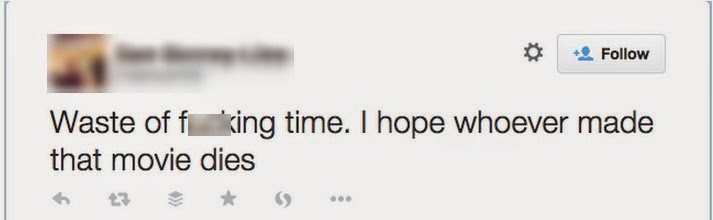
As an educator, I feel it is the job of all of us to support students and ensure that they are fully aware of the implications of their online activities. Therefore, when I saw the tweet above from a local student-athlete, I decided to send the e-mail below to his Principal. I encourage others to take similar actions when they see this type of behavior. (I have removed the name of the student and the school because the truth of the matter is these things are happening at all of our schools). 

Dear Principal Name,

I wanted to ask you to please have a conversation with Student Name about his use of Twitter. I stumbled across it while looking for some local high school basketball scores last night. While I do not think most student profanity on Twitter or other social media is a school issue, I have a concern for students who say things in this forum who may fail to understand the implications. As a former high school Principal and a current Assistant Superintendent, I am a big advocate of social media use and I continue to push for the constructive use of social media by all members of a school community. 

My concern is that I do not want to see students lose out on opportunities due to comments they make on Twitter or anywhere else on social media. At one point when I was a high school Principal, I pulled all of my juniors and seniors into the auditorium and shared some of the comments that I had seen them using and talked about the ramifications with them in regards to the question on the top of the slide below. I worry that someone would make a judgement about the type of person one of our students is because of a single social media post. However, the fact of the matter is that this might be the only evidence of social interaction from that individual to which a school or employer has access and when there is a pile of other applicants it is easier to move to the next option.

In addition, The New York Times article They Loved Your G.P.A. And Then They Saw Your Tweets highlighted the fact that some college admissions offices check the activity of students Just this week, USA Today had an article titled One Bad Tweet Can Be Costly To A Student Athlete. While I know most student-athletes aren’t concerned about scholarships, they should know that employers and college admissions offices actively check social media accounts of applicants and make decisions based on what they find.

 In most cases, a quick Google search by a students using their name  + Twitter would quickly bring you to their account information.

I was going to tweet to Student Name directly, but I did not want to bring attention to this.  I have little doubt that he is a fine representation of a student-athlete at your school and I hope he will consider cleaning up his social media accounts. While I don’t condone the use of profanity and such, I remember being a high school student and the fact that many of these same conversations and comments were common in the locker room or hanging out with friends or teammates. My concern is that now many of our students are having these conversations online without a full awareness of how public they are.
Anyway, sorry for the long e-mail. I wish you the best during the remainder of the school year and trust that this will not be a disciplinary matter but just a “teachable moment.” Good luck to Student Name and the team for the rest of the year! 

My Weekly Diigo Bookmarks (December 27, 2015)

Posted from Diigo. The rest of my favorite links are here.

Top Five Reasons to Jump Into a Twitter Chat

This post first appeared on my EdWeek Blog

School leaders are always looking for quality professional learning opportunities for themselves and their teachers. For me, there is still nothing better than participating in an hour Twitter chat.  Dedicating some time to show staff where they can connect with colleagues from around the globe who have similar interests is well worth the time.  
Here are the top five reasons that school leaders should get themselves and their teachers involved in Twitter chats:
  1. Build your network – Educators will find colleagues from all over the globe who are in similar roles, whether it be classroom teachers or support personnel
  2. Solve problems – Educators will learn from others who have already found solutions to problems they are struggling with
  3. Receive affirmation – Educators will receive positive feedback from others who agree with their practices.
  4. Find experts – If there is a new initiative you want to try in your classroom or school then you will certainly find someone who has already tried it on Twitter.
  5. Keep up with current trends – Things are changing inside education at a faster pace than ever and there is no place better to stay on top of these changes.
 I had the chance to take part in a Twitter chat hosted by some colleagues in Massachusetts last week and the final question asked partcipants about their biggest takeaway. Check out a few of the responses below.  If you’re looking for some great background information to share with your colleagues about how to do a Twitter chat and when different chats take place then check out Cybraryman’s detailed page on the topic.