Our First Parent Technology Night: Elementary iPad 1:1

How Do I Do That Blog.011
The Burlington Public Schools EdTech Team will be hosting a Parent Technology Night on Tuesday, October 1 at Marshall Simonds Middle School. Please join us for information about the BPS elementary school 1:1 iPad program. The session will provide an opportunity to learn about the iPad initiative at grades 1, 4, and 5 this school year. Our team will discuss Foundational Apps, student access to devices, student responsibility, and digital workflow.
Time during every Parent Tech Night session is also dedicated to technology related questions and support.

The Boston.com MCAS School Rankings Stink!

This post originally appeared on October 10, 2012.  However with the annual rankings going up again today, I thought I would share these thoughts again. 

Since the first time I saw the school rankings in the Boston Globe over a decade ago, I have been frustrated by the simplistic and misleading approach that this news outlet has taken in publicizing the scores from our state’s high stakes test.  The approach is simply to rate the top schools from “Number One” to whatever the final number is depending on the grade level that was tested. For instance, if you were a school that had third graders in your building last spring then you had 954 other schools to compare yourself with.

As I discuss my thoughts here on these rankings, I need to make it clear that my intention is not to criticize or praise a school that I reference, but simply to clarify how this works for those who take these rankings too seriously.

Going back to third grade for a moment, the “number one” ranked school in the state in English Language Arts was the Richmond Consolidated School which had 100-percent of its students score in either Advanced or Proficient.  By the way, the Richmond Consolidated School tested only 19 students. Compare this to the school that had the largest third grade population in the state, the Woodland School in Milford, MA which tested 303 students and ranked 571.  Clearly we are comparing apples and oranges and it is unfair to the students and teachers to portray such a misleading picture. There are countless examples of these same types of comparisons that can be done at every grade level.  This is without even getting into the demographics of individual schools and communities.

Here’s a another thing that irks me about the Boston.com ratings

Using the Grade 10 English Language Arts rankings as an example this time, I would like to ask this question.  Do you think that a school ranked “number one” clearly outperformed a school ranked 99th?  While the answer is an emphatic NO,  if I were a typical parent from Andover, Brookline or any of the 23 schools that were ranked 99 I would probably be wondering why my child’s school is apparently so far away from “number one.”

The explanation is pretty straight forward, there were 28 schools that had 100% of their students score either Advanced or Proficient and were therefore ranked “number one.” The next ranking was “number 29,” a ranking that was shared by 22 schools that had 99% of its students scoring in the top two levels of the ELA MCAS.  So, the good news for folks who ranked “number 99” is that 96% of their students scored either Advanced or Proficient.

Growth Scores Are A Better Measure

Thankfully our state’s Department of Education has moved to a growth model in regards to testing.  What is a growth model?

Here is a quick definition from the DESE’s website

For K-12 education, the phrase “growth model” describes a method of measuring individual student progress on statewide assessments (tests) by tracking the scores of the same students from one year to the next. Traditional student assessment reports tell you about a student’s achievement, whereas growth reports tell you how much change or “growth” there has been in achievement from year to year.

Shouldn’t we be paying more attention to these measures? Isn’t it more important to show where students were and how we track their growth and chart their progress compared to all of the students who had a similar score during the previous school year?   For example, if we had a student who was in the lowest category (warning), shouldn’t we get some credit for moving them along to the next level (needs improvement)?  The obvious answer is – yes!

In addition, I am sure that there are students that walk in the door in September and could score in the advanced level on that year’s MCAS test on day one of the school year.  Therefore, I think it is insignificant when these students score advanced in May of the same school year.  Again, we need to show that we are supporting student growth no matter where they are on day one of the school year.

One More Thing About Ranking Ourselves Based On Standardized Test Scores  

For those who aren’t aware of the correlations between socioeconomics and standardized test, there are clear connections between standardized test results and the median household income in a community or a state.  Check out the graphic below depicting average NAEP scores across our country and the median household income in each state.

Source: http://www.edpolicythoughts.com/2012/10/why-does-massachusetts-rank-highly.html

Concluding Thoughts About Standardized Tests
In closing, I think that measuring student progress is critical. However, I think we have to keep standardized test results in the proper perspective. In Burlington, we are always of the opinion that we can do a better job for our students. There are certainly areas where we think our state tests scores could be better and we will have plans in place to accomplish this. However, we also have to be careful not to be focused solely on these tests when we talk about our progress.  Our feeling is that these tests are the floor and not the ceiling for what we hope to see our students accomplish.  As a community, we need to make sure that we are utilizing multiple measures to chart the progress of our schools and our students.  
As a parent of three children in another district (grade 1, grade 7 , and grade 9), I am less concerned about the standardized test scores of my students and more interested in whether or not they are developing the skills that they will need to be successful after their formal education is complete. I am fairly confident that their MCAS results or their scores on whatever new federal or state standardized test comes down the pike is not something that will have a major impact in their success.  If the major focus of their schools is on these results then I pretty sure I can find a computer program that can prepare them equally well.
Don’t get me wrong, I think we need schools more than ever. The dilemma is that we need schools that realize the world that we are preparing our students for is one that has changed dramatically and that we cannot prepare students with business as usual.
Here are few blog posts that reference this idea:

An Interesting Question To Ponder – Are Schools KillingYour Child’s Creativity?

A decade of No Child Left Behind: Lessons from a policy failure

Enhanced by Zemanta

Connected Educator Month Begins In Two Weeks! What Will You Do To Connect?

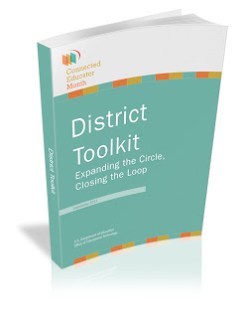
For the second year in a row, the United States Department of Education has made October Connected Educator Month.  What is Connected Educator Month (CEM) you ask? Check out the following description from the great CEM District Toolkit created by Powerful Learning Practice:

Connected Educator Month (CEM) is a month-long celebration of community, with educators at all levels, from all disciplines, moving toward a fully connected and collaborative profession. 

 The goals of Connected Educator Month include:

  • Helping more districts promote and integrate online social learning into their formal professional development 
  • Stimulating and supporting collaboration and innovation in professional development 
  • Getting more educators connected (to each other) 
  • Deepening and sustaining the learning of those already connected
The Connected Educator Month District Tool Kit
The bottom line is that our students need to know how to create Personal Learning Networks (PLN’s) that will allow them to connect with others who share their passion in a particular area. For this to happen to the fullest extent possible, we need out students to be surrounded by educators who can model the practices of a connected learner.  
With this in mind, I hope to profile one Connected Educator from my PLN on each school day during the month of October. To make this happen, I will be asking the members of my network to fill out a short Google Form and share a bit of information about who they are, where they are, and why they connect. Stay tuned…
If you are willing to help me achieve my goal of a “Connected Educator Profile” for each school day during October, please fill out this brief form.
Thanks in advance for your help!

Enhanced by Zemanta

Join Us For Our First Parent Technology Night – Elementary School 1:1 Program

The Burlington Public Schools EdTech Team will be hosting a Parent Technology Night on Tuesday, October 1 at Marshall Simonds Middle School. Please join us for information about the BPS elementary school 1:1 iPad program. The session will provide an opportunity to learn about the iPad initiative at grades 1, 4, and 5 this school year. Our team will discuss Foundational Apps, student access to devices, student responsibility, and digital workflow.
Time during every Parent Tech Night session is also dedicated to technology related questions and support.

Enhanced by Zemanta

Here’s A Great Way To Keep Up With #BPSCHAT – Our District Twitter Hashtag

Paper.li is a great resource to create a newspaper highlighting the feed from a Twitter hashtag. We have our own weekly edition from our Burlington Public Schools hashtag #BPSChat which you can check out below.

If you would like to receive a weekly update by email, just click on the subscribe button on the top right hand side of the paper.

http://widgets.paper.li/javascripts/sr.embeddable.jsPaperli.PaperFrame.Show({id: ‘200dfe38-91fb-44ef-9675-ff7cb99e15e3’, width: 590, height: 680, background: ‘#ECECEC’, borderColor: ‘#DDDDDD’}) Enhanced by Zemanta

Our Newest Blog And Other Ways To Follow Burlington Public Schools

We are excited to announce the creation of our district’s newest blog – Burlington Public Schools Blog. The word “Blog” in the title is actually used as a verb to represent all of the active bloggers throughout our school district. This space will be utilized to share a blog post daily from one of our staff or student bloggers.

Here are a few other ways you can follow our district’s learning journey:

Our new district Instagram account – We will routinely post photos from around the district here.

Our new district Twitter Account – @BurlMASchools – While many of our staff and administrators have been on Twitter for quite some time, we have not had a general account for the district aside from @BPSAlerts, which we reserve for emergencies, and @BPSEdtech, the Twitter account of our EdTech Team.

Finally, we don’t want to forget our District’s Facebook Page which is another great way to stay on top of the happenings in our school district.

Let us know if there are any other social media resources that you would like to see Burlington Public Schools access to share information!

Strong Intentions Lead To Amazing Unintended Benefits #LeadershipDay13

This post is for Leadership Day 2013. For the past five years, Scott McLeod has asked school leaders to blog about how they support the integration of technology in their communities as a way to support other school  communities and school leaders. For more information on this, please check out this post from Scott’s blog.  The following is my contribution for this year:
As we made the case to create a 1:1 environment at Burlington High School a few years ago, we were clear in our intentions to provide our teachers and students with the most current technological tools to support their learning.  Our premise was that if we were going to prepare our students fully for the world outside of our doors then we needed to give them hands-on experience using the tools that they will have access to when they leave us.  
Let’s face it, no one can argue the fact that technology is ubiquitous in the “real world.” Therefore, we are well past the point where we should be arguing about whether or not it is appropriate to provide or allow these tools in our classrooms.  
As we enter year three as a 1:1 high school and year two as a 1:1 middle school, we are excited about the expansion of 1:1 to the elementary level where we will also be 1:1 in grades 1, 4, and 5.  Of course, one of the most frequently asked questions is how this initiative has improved test scores.  But then again, improving standardized test scores was never a goal of this initiative. Looking back after just two years of 1:1, we prefer to focus on some of the unintended benefits that this initiative has had. These are things that are unquantifiable by any standardized measures.
Here is a partial list of some of the things our students have done due to their experiences as students in a school where everyone has access to iPads:
  1. Presented at regional conferences
  2. Been highlighted by national educational media outlets EdWeek and Edutopia
  3. Served as consultants for app developers
  4. Consulted with our state’s Commissioner and Secretary of Education
  5. Run their own technology conference
  6. Created viral videos that have been noted by national media outlets
  7. Taught university professors
  8. Assisted with product design
  9. Consulted with districts from all over the country on 1:1
  10. Created a successful blog that has followers from around the globe

The video below is a presentation I did for our school committee recently highlighting these exciting occurrences and reinforcing the fact that their decision to provide an educational environment where technology is prevalent for staff and students has created opportunities for our students that they never would have had.  

We could never have predicted some of these things would occur, but the important thing was that we were willing to take a risk and have faith in our staff and students.  In my opinion, betting on your staff and students is something that school leaders should do every time! 

Plan C – Why I’m An Educator #SAVMP

Back in July, I shared a post about the School Administrators Virtual Mentor Program, a wonderful idea that my friend George Couros came up with to pair new administrators with experienced administrators during the 2013-2014 school year. If you are interested in learning more check out the SAVMP Blog here. You can also share in the learning on Twitter by following the hashtag #SAVMP. 

Our assignment for week one is to answer one of the following questions: Why Do I Lead? or Why I’m an educator? As you can see from the title of the post, I chose the second option. I look forward to sharing my learning here as the year continues…Now, back to my assignment.

photo via http://edelmaneditions.com/
Somewhere on my journey to be a Major League Baseball player, I was detoured by the fact that my fastball topped out at about 70 miles per hour and my ability to hit a pitch any faster than that occurred at a success rate of well under 30%. So I quickly adjusted my plan to play professional sports and instead decided to focus on writing about them.  I was much more fortunate in Plan B, landing a full-time sports writing position at a local newspaper a few years out of college. At first, it was a lot of fun covering sporting events and getting paid for it.  It was even more exciting when I got to cover the Bruins beat and a few Celtics games.
However, after about a year of experiencing the routine of a full-time sports writer, I came to the conclusion that something was missing. I was not feeling the sense of connectedness and excitement that I had felt when I was able to be part of a team. After a great deal of thought, I quit what I thought was my dream job and decided to go back to school to become a teacher. 
When I think about my path to “Plan C” it is clear that this was my destined path all along. First of all, I was raised by a teacher (my mom Nancy pictured below with 3 of her six grandkids).  My mom raised my brother and I as a single parent after the death of my father in my middle school years and some of my fondest memories were tagging along with her to her school and classroom.

In addition, my biggest male influences through my junior high and high school years were a few of my male teachers and coaches. I can honestly say that I was blessed to have so many caring adults that helped me far beyond my academic pursuits.  The truth of the matter is that school has always felt like home to me due to the nurturing environment created at the high school I attended. Ironically, many of these same teachers were big influences when I returned to my alma mater to work as an English teacher (and later an Assistant Principal).   
As I enter my 17th year year as an administrator, it is unbelievably satisfying to have a career that I love so deeply. It is a privilege to be able to work in a profession where you have the ability to support the development of young people! I can only imagine where I would be today if I hadn’t been in schools where so many educators felt the same way! 

Old News – Schools Have Dropped The Ball On Teacher Evaluation

Before I get into the specifics on this, I will put out a disclaimer that there may be outliers who feel that they have a meaningful process for conducting teacher evaluations.  I am confident that there are some school communities out there who have initiated teacher evaluation processes that increase teacher capacity and improve student learning. Unfortunately, history has proven that these school communities are extremely rare.

One great reference point on this is a report completed in 2009 by The New Teacher Project titled The Widget Effect.  This comprehensive study looked at 15,000 teachers and 1,300 administrators from the states of Ohio, Arkansas, Illinois, and Colorado. Here are the main points from the Executive Summary that are worth some thought:

  • In districts that use binary evaluation ratings (generally “satisfactory” or “unsatisfactory”), more than 99 percent of teachers receive the satisfactory rating. 
  • When all teachers are rated good or great, those who are truly exceptional cannot be formally identified. 
  • 73 percent of teachers surveyed said their most recent evaluation did not identify any development areas, and only 45 percent of teachers who did have development areas identified said they received useful support to improve.
  • 66 percent of novice teachers in districts with multiple ratings received a rating greater than “satisfactory” on their most recent performance evaluation
  • 41 percent of administrators reporting that they have never “nonrenewed” a probationary teacher for performance concerns in his or her final probationary yea

Looking at the data from such a comprehensive study it is clear that Teacher Evaluation has been looked at as just another thing on the lengthy to-do list in most schools instead of a critical component in school improvement. We can talk semantics and look at the word “evaluation” and the fact that it infers that something is going to be done to the individual being evaluated and not a two-way conversation where teachers and administrators work together to collectively to improve individual classroom and school-wide outcomes.

The following statement from the Executive Summary of the The Widget Effect  explains clearly where the focus of teacher evaluation has been:

“…information on teacher performance is almost exclusively used for decisions related to teacher remediation and dismissal paints a stark picture: In general, our schools are indifferent to instructional effectiveness—except when it comes time to remove a teacher.”

Schools that have success in changing this focus and having a teacher evaluation that is meaningful will be ones where administrators and teachers partner to ensure regular focused discussions around teaching and learning.  Given the amount of collaboration in most schools, this will prove to be a cultural change as much as it is a technical change.  However, with studies citing the average tenure of a school superintendent or principal in the vicinity of three years (with larger districts and schools averaging less), it is clear to me that if administrators are taking too much control then sustainability will be impossible.

Now that I’ve looked at a bit of the history surrounding teacher evaluations and despite some big concerns, I will focus on some of the reasons I am optimistic about this undertaking in my next post.

Enhanced by Zemanta