How To Make Sure Professional Development Is Not An Oxymoron

This post first appeared on Edudemic.


I have always contended that the term “Professional Development” is an oxymoron for most educators. Let’s face it, most people do not look forward to Professional Development (PD) Days in their school district due to the fact that most of these are created with someone else deciding what is most important for the learners. While there are certainly exceptions to this approach of deciding what professionals need to learn about, the fact of the matter is that most educators do not have enough of a voice when it comes to their own learning.


It is interesting to me that we focus a lot of time looking at differentiation, learning styles, and relevance when it comes to student learning but then toss these factors out the window when it comes to the learning opportunities for the adults in our schools. Maybe it is the time crunch or the ever-increasing number of mandates that we need to implement? Whatever our excuse, we need to find a way to present learning opportunities for our staff that replicate the types of opportunities we would like to see for our students in the classroom.  The question for the administrators setting up PD Days is – How would you evaluate this learning experience if it was one that you were viewing with students taking part instead of staff?


In our district, we have had a lot of discussions about Phillip Schlechty’s “Eight Qualities of Engaging Student Work.” (Graphic Below)From my standpoint, we could change PD dramatically for the better if we focused our professional learning efforts on just two of these eight qualities, choice and learning with others.  
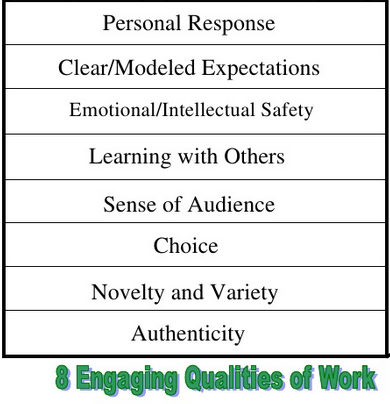

In regards to choice, it baffles me that we do not allow more choice for the talented educators that we have hired to lead their own learning and go deeper on topics and issues that impact their day-to-day efforts with students. While I understand that a neatly organized schedule for the year of upcoming PD events looks great on paper, I know that we would never expect a teacher to create a schedule of learning for their students that was set in stone ahead of time. The reality of the matter is that some of the most meaningful “teachable moments” in classrooms occur when teachers make adjustments on the fly based on feedback and/or assessment results from learners. We need to find ways for our staff to receive the same kind of timely support based on priorities that may have come to light well after the year’s schedule for Professional Development was created. We know how important timely interventions are important to support students learning and we need to create the same opportunities for adult learning in our schools.

This leads me to “Learning with Others,” my favorite of Schlechty’s eight engaging qualities. In fact, I would contend that a Professional Development program focused on bringing educators together to share best practices on topics of their choice would be far more meaningful than most of the current PD experiences that educators experience in their schools and/or districts.  There is also a deeper issue here in regards to collaboration that we can help address here. It has been clearly stated by Harvard’s Dr. Tony Wagner and others that one of the fundamental skills are students will need to be successful is the ability to “collaborate across networks.” My concern here is that we have not done enough to foster collaboration within our school network and this inability on the part of the adults to see the value in networking locally will stifle our ability to teach students how to access on a broader level.  In order for our students to develop this critical skill,  we need to ensure opportunities for our staff members to collaborate with people both inside their school and outside of their school network and these opportunities must be both face-to-face and virtual.
With so much happening in public education with the Common Core, New Educator Evaluation procedures, and a number of other new mandates it is imperative that we take advantage of the professional learning time that we have available. So don’t forget that the same engaging qualities that we strive to create in our classrooms should be replicated for staff members when it comes to planning professional development.

Related articles

Enhanced by Zemanta

On Cheating (Guest Post)

Cheat It Up, Cheatin' Cheater!
(Photo credit: Mr_Stein)

This post was written by BHS staff member Tim Calvin and originally appeared on http://timcalvin.prxy.net/. You can follow Tim on Twitter here.

There has been a lot written on the topic of cheating in classrooms – and how we respond and treat such circumstances. I thought I’d offer my thoughts.

A recent post by Patrick Larkin quoted George Couros in saying that if a student can answer a test question with a simple Google search, it’s not a very good question. I have to agree. In fact, I’d go a bit further, and suggest that we might begin to think about allowing Google searches and structuring the test with that taken into account. It’s an interesting idea, but not really what I want to talk about here.

Cheating is a cultural problem. Our emphasis above all things of getting the “right” answer contributes to this. Our stress on regurgitation of fact encourages this. Our artificial stress on students completing tests in absolute isolation (and at odds to the way the rest of the world functions) rewards this. We need to think about changing that culture.

As educators, we have to set a better example ourselves. We need to cite the work of others we use. We need to note where the image we took from a Google search came from. We need to cite where the article we photocopied was published. We need to credit who made the activity we adapted. We need to make it the standard operating procedure to cite work that is not ours in all venues- and we need to do this in all grade levels. In doing this, we might be able to create a culture where open citation of work and influences is the norm. We might begin to cause change.
We must think first about what we are trying to teach. Traditionally, when data was scarce and static, we distributed information. We built schools and tests to measure how much information students could accurately regurgitate. This, I would argue, should no longer be the case. We should be teaching students how to analyze.

This is a good thing on two levels: we are imparting a much more powerful and versatile set of skills AND we’re able to build assessments that are un-cheatable. If we build a test that looks at a student’s ability to analyse and explain that analysis, we are free from a cheatable set of facts.
Above all, we must to a better job with our education of the nature of cheating. We cannot hold students responsible with an ever-harsher set of punishments and expect real change. It has been long established that longer prison sentences don’t dissuade people from committing crimes. We create a dynamic of adversary and punishment which precludes learning.

Enhanced by Zemanta

More Chatter about Cheating

Cheat sheet in a juice box. Español: Chuleta o...
Cheat sheet in a juice box. (Photo credit: Wikipedia)

The conversations around cheating have taken off since yesterday’s post Cheating is Cheating, but why does it happen?

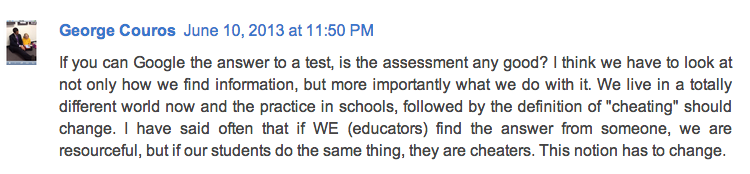
My good friend George Couros nailed one of the key points from my perspective with the comment below. Those of us who have spent any significant time working in schools need to make sure that we have not lost touch with what is happening outside of schools. If we are preparing students exactly the same way as we always have then there is a problem

This morning I was excited to see a blog post from a Paul Huebl,  a teacher in Adelaide, Australia who wrote a great post titled Cheating v. Inspiration.  While I encourage you to read the entire post, the portion that stuck out for me was where Paul talked about assessments.

“What are we assessing when we give a test? Is it whether a student has good memory? Whether they can apply knowlwedge  to a new situation? Whether they can perform well on tests…? I propose that any situation where a child is able to cheat, is not a very good assessment (*most of the time).”

Finally my friend Tony Baldasaro shared a story from his first year as a teacher this morning in a post titled One of the Worst Decisions in my Career… . Tony recounts his experience having “no mercy” on a student he caught with a cheat sheet and giving an otherwise top student an insurmountable hole to dig himself out of as one of his veteran colleagues urged him to hold the line.

Again, I am thankful for a PLN with so many lifelong learners (like Tony, Paul and George) who reflect on their practice and are flexible in the interest of students. Tony’s question is one that all of us who have ever given a zero to a “cheater” should consider.

“What would have happened if I taught differently, assessed more creatively, and engaged the (student) in the learning in such a way as to emphasize learning and not the grade?”

While I know there are many different directions that this conversation can take based on the unique circumstances of individual cases, I think we need to ensure that we are emphasizing learning and not punishments.

Enhanced by Zemanta

Congratulations To Our Memorial School Elite Math Team!


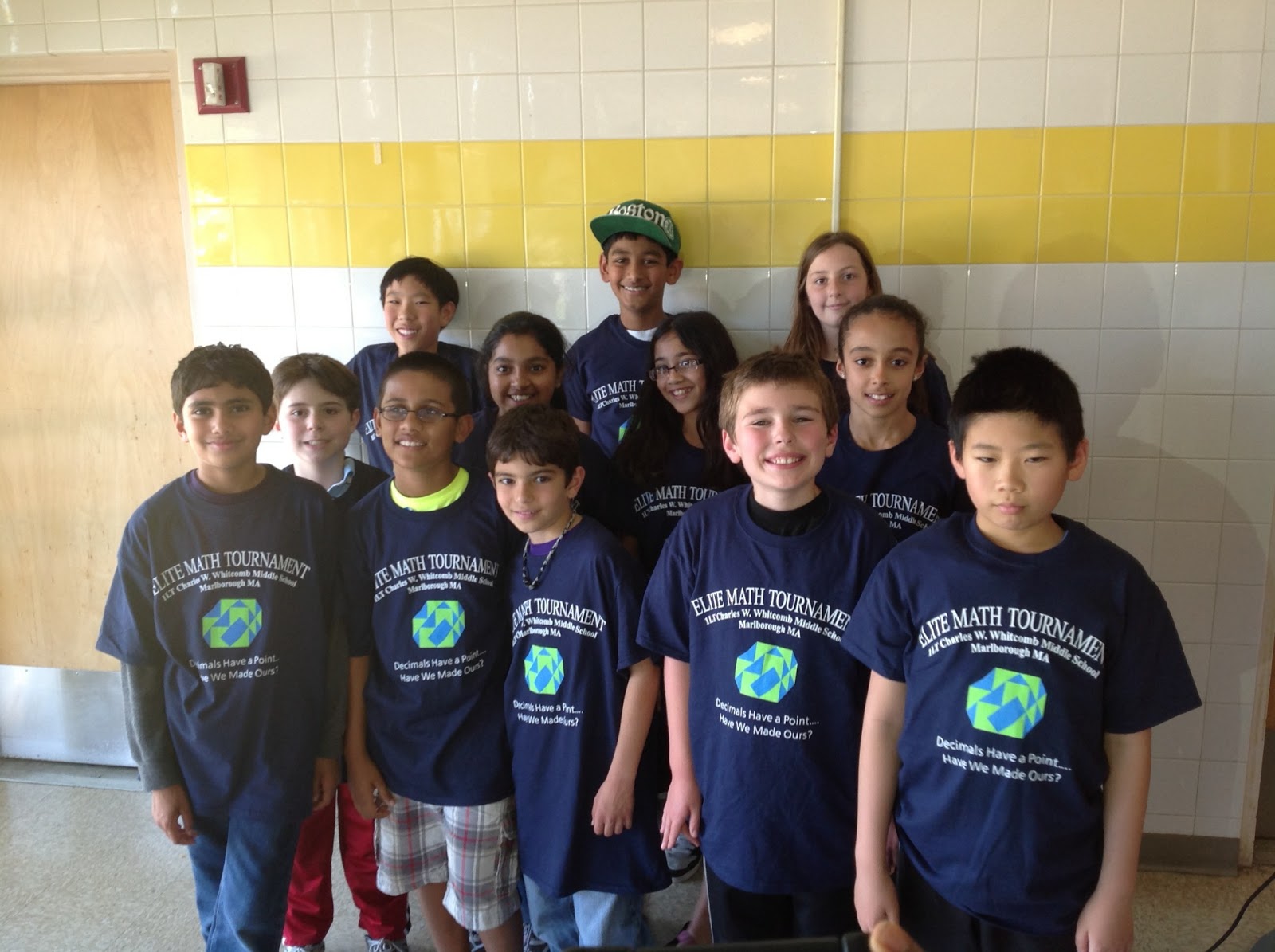
On Saturday June 8th,  two teams from Memorial Elementary School traveled to Marlborough Massacusetts to compete in the Elite Math Tournament. This annual tournament is an extension of Math Olympiad for Middle and Elementary Schools.  Each of the teams from Memorial, one fourth grade and one fifth grade, had strong performances in both the individual and team events. 

What a great job they did proudly representing Burlington! Thanks to their teachers Mrs. Olshaw and Mrs. Burns for all of their support!

Cheating Is Cheating, But Why Does It Happen?

image via http://www.salisburyschool.org/ 

There was an interesting back and forth this week in the Washington Post’s The Answer Sheet  surrounding the topic of cheating. The first take on the topic was by Penelope Trunk who kicked things off with an article titled Why Schools Should Relax About Cheating.  Strunk, a successful entrepreneur with two successful startups under her belt, noted the following:

In school, looking at someone else’s paper to get the right answer is forbidden.  But in the work world, the people who rise the fastest are the ones who know the right person to ask to get the answer.

Personally, I find it hard to argue with this logic.  But when I tweeted out the article, I got some pushback from a few folks on Twitter.

//storify.com/patrickmlarkin3/tweets-about-cheating-article.js[View the story “Tweets About Cheating Article” on Storify] As usual, the folks on Twitter got me thinking a bit more deeply on the topic of cheating. The follow-up article that appeared the next day by Elaine Power, a Biology teacher in Maryland also made me reflect on my initial reaction. Power titled her counter to Trunk’s point of view Cheating Isn’t Networking, It’s Cheating.

While putting out the disclaimer here that I do not condone cheating, I think it is important to have a clear definition of cheating while also asking ourselves why cheating occurs.  In regards to the defining cheating, we need to be sure that we are all on the same page. For instance it was not too long ago that some students at Ryerson College were disciplines for starting a Facebook Page to help prepare for their final exam.

Finally while I will not support anyone who copies from someone else’s paper, I do think we need to reflect upon assessments and the fact that if there are too many of them that require rote memorization of inane facts that we are the ones cheating. We are cheating our students of valuable time that could be used for something more significant that would better prepare them to be the true collaborators who Power describes as “the gem of the workplace.”

Enhanced by Zemanta

What do our middle school teachers think about the iPads?

Reposted from the Marshall Simonds Middle School Help Desk Blog:

Mrs. Barkley (Spanish)

What is the best part about having the iPads?
Variety of lesson plans
What is the worst part about having the iPads?
Sometimes technology does NOT work
How are the Ipads helpful in the classrooms?
They give the students and teachers a variety of teaching and learning strategies
What apps do the kids use most?
Study Blue- flashcards, Google Drive- paragraphs, Evernote- notes & projects
Do you find that the students get distracted easily by having the iPads on them?
Sometimes
What do you use the iPads mostly for?
Teaching Tool
Do you think the iPads were a good addition to the school and the students education?
Yes
Do you prefer having the iPads in class or not at all?
I prefer to have them as an everyday option
Do you think the iPads would be more helpful if the students could take the iPads home?
Yes, I think it would be easier, 8th graders especially if they could take them home
Are there any apps that you have used previously that are NOT on the iPads that you think should be on them?
Fruit Ninja, Scrabble, and Boggle
Overall what are your thoughts on the iPads?
I think that they can help students stay organized and more engaged
 
Mrs. Cerretani (Science)
Best part of having the iPads?
Google Search
Worst part about the iPads?
Secretly getting on the internet
How are they helpful in the classrooms?
Notes
What app do the kids use most?
Notability
Do you find that the students get distracted easily by having the iPads on them?
Some
What do you use the iPads mostly for?
Notes and Search
Do you think the iPads were a good addition to the school and the students education?
Limited use; too much tech is not good for anybody
Do you prefer having the iPads in class or not at all?
Not at all; over used, don’t need
Do you think the iPads would be more helpful if the students could take the ipads home?
Take the iPads home
Are there any apps that you have used previously that are NOT on the iPads that you think should be on them?
None
Overall what are your thoughts on the iPads?
Useful


Mrs. Dearden (Art)
Best part of having the iPads?
Search – Resource – Tracking
Worst part about the iPads?
No printing
How are they helpful in the classrooms?
Research and tracking
What app do the kids use most?
Safari
Do you find that the students get distracted easily by having the iPads on them?
Some
What do you use the iPads mostly for?
Research
Do you think the iPads were a good addition to the school and the students education?
Yes
Do you prefer having the iPads in class or not at all?
In class
Do you think the ipads would be more helpful if the students could take the iPads home?
Not necessary
Are there any apps that you have used previously that are NOT on the iPads that you think should be on them?
None
Overall what are your thoughts on the iPads?
Lucky kids


Mrs. Hewitt (Language Arts)

Best part of having the iPads?
Something New/ Challenge

Worst part about the iPads?
Feeling like I want to be the best with the iPads
How are they helpful in the classrooms?
Used in so many different ways
What app do the kids use most?
Notability and Google Drive
Do you find that the students get distracted easily by having the iPads on them?
Not Really
What do you use the iPads mostly for?
Writing Process
Do you think the iPads were a good addition to the school and the students education?
Yes, because it is making Burlington stand out
Do you prefer having the iPads in class or not at all?
I prefer and can NOT see class without them now
Do you think the iPads would be more helpful if the students could take the ipads home?
There are positives and negatives; but over all it would be good
Are there any apps that you have used previously that are NOT on the iPads that you think should be on them?
No
Overall what are your thoughts on the iPads?
It is a good thing mostly because we all learn from it and it is helpful and makes us more flexible
Miss Mirabella (Spanish) 

Best part of having the iPads?
Quia
Worst part about the iPads?
Distractions
How are they helpful in the classrooms?
Hands-on
What app do the kids use most?
Safari
Do you find that the students get distracted easily by having the iPads on them?
Few kids
What do you use the ipads mostly for?
Vocab
Do you think the iPads were a good addition to the school and the students education?
Yes
Do you prefer having the iPads in class or not at all?
In class
Do you think the iPads would be more helpful if the students could take the ipads home?
Yes
Are there any apps that you have used previously that are NOT on the iPads that you think should be on them?
No
Overall what are your thoughts on the iPads?
They are helpful


Mrs. Molina (Family Consumer Science)

Best part of having the iPads?
Instant access to information
Worst part about the iPads?
Distractions
How are they helpful in the classrooms?
Helpful to get questions answered quickly
What app do the kids use most?
My fitness pal
Do you find that the students get distracted easily by having the iPads on them?
No
What do you use the iPads mostly for?
Resource
Do you think the iPads were a good addition to the school and the students education?
Can be if it is used properly
Do you prefer having the iPads in class or not at all?
Rather have it
Do you think the iPads would be more helpful if the students could take the ipads home?
Yes, a lot more helpful
Are there any apps that you have used previously that are NOT on the ipads that you think should be on them?
I do not know
Overall what are your thoughts on the iPads?
When used for the purpose of educating and not just used to be used than it is helpful

Mr.Pearl (Language Arts)

Best part of having the iPads?
Research
Worst part about the iPads?
Distraction
How are they helpful in the classrooms?
Debate,Research
What app do the kids use most?
I do not know
Do you find that the students get distracted easily by having the iPads on them?
Yes, a little
What do you use the iPads mostly for?
Research
Do you think the iPads were a good addition to the school and the students education?
Yes, to a degree
Do you prefer having the iPads in class or not at all?
In classroom
Do you think the ipads would be more helpful if the students could take the iPads home?
No
Are there any apps that you have used previously that are NOT on the iPads that you think should be on them?
None
Overall what are your thoughts on the iPads?
Good Start


Mr. Powers (Language Arts)
Best part of having the iPads?
Research
Worst part about the iPads?
Games
How are they helpful in the classrooms?
Storage
What app do the kids use most?
Evernote
Do you find that the students get distracted easily by having the iPads on them?
Yes
What do you use the iPads mostly for?
Notes/ writing/ research
Do you think the iPads were a good addition to the school and the students education?
Good for the future
Do you prefer having the iPads in class or not at all?
In class
Do you think the ipads would be more helpful if the students could take the iPads home?
Hopefully
Are there any apps that you have used previously that are NOT on the iPads that you think should be on them?
None
Overall what are your thoughts on the iPads?
Useful and distraction


Mrs. Tate (Math)
Best part of having the iPads?
Easier to move around the classroom
Worst part about the iPads?
None
How are they helpful in the classrooms?
Note, organization, making learning fun
What app do the kids use most?
Notability
Do you find that the students get distracted easily by having the iPads on them?
No; I could take the ipad away if someone was distracted
What do you use the iPads mostly for?
Notes
Do you think the iPads were a good addition to the school and the students education?
Yes, helps organize and more freedom
Do you prefer having the iPads in class or not at all?
In classroom
Do you think the ipads would be more helpful if the students could take the iPads home?
Yes
Are there any apps that you have used previously that are NOT on the iPads that you think should be on them?
Dictionary
Overall what are your thoughts on the iPads?
They are helpful and fun

Mr.Vitale (Math)
Best part of having the iPads?
Share folders and submit homework
Worst part about the iPads?
Distraction
How are they helpful in the classrooms?
Yes
What app do the kids use most?
Notability, Evernote, Google Drive
Do you find that the students get distracted easily by having the iPads on them?
Yes
What do you use the iPads mostly for?
Notes, some worksheets
Do you think the iPads were a good addition to the school and the students education
Yes, because it changes responsibility
Do you prefer having the iPads in class or not at all?
Prefer
Do you think the iPads would be more helpful if the students could take the ipads home?
Yes
Are there any apps that you have used previously that are NOT on the iPads that you think should be on them?
No
Overall what are your thoughts on the iPads?
Good enhancement to school

Enhanced by Zemanta

A Great Website From Ms. Gould’s AP Psychology Students

I received an e-mail this week from Shannon Murray, a senior in Ms. Gould’s AP Psychology class.  Here’s an excerpt from the e-mail:

As part of our final course project this year, my AP Psychology class has constructed a website intended to help adolescents in Burlington (and hopefully beyond) through mental health situations that students this age typically face. We were hoping that you would have an opportunity to post the following blog post that we have constructed on your blog at some point in order to help us publicize this website to other educators?

Since I am always proud to share the great work of our Burlington staff and students, please see the check out the Helping Hands Website that Shannon and her classmates created!

The website offers help and guidance to cope with these challenges, which include, for example, bullying, body image, relationships, drugs and alcohol, and other social/emotional issues.  

The students in Mrs. Gould’s class understand how hard it is to find information about possible difficulties or struggles that high schoolers can face.  As a result they attempted to only use the most helpful and trusted resources in the Helping Hands website.  Students from AP Psychology hope that students will find this website to be very useful.

Enhanced by Zemanta

Pre-Release Event for Ms. Sullivan’s Debut Novel – Golden Boy

We are excited to share in the festivities with Burlington High School Spanish teacher Tara Sullivan in regards to the release of her first novel, Golden Boy. Check out the details below!

On June 18th, BHS’s own Ms. Sullivan will hold a book event to celebrate the release of her novel Golden Boy, which is scheduled for release by Penguin Publishing in late June. She has arranged for Penguin to send her some copies in advance of the release date just for BHS students & staff. On the 18th, Ms. Sullivan will hold a Q&A during each period that will be open to the English classes & electives, and she’s offering the opportunity to purchase a copy of the book in advance (and even get it signed!)

If you are interested in ordering a copy of the book, please download and fill out this form and bring it in to the main office at the high school.  Since Ms. Sullivan has to put in the order for these copies soon, please bring in the form and the payment by the end of this week (May 31).
For information about the novel, CLICK HERE

You can also pre-order the book from Barnes and Noble here and from Amazon here.

Thanks!