If Students Designed Their Own Schools (Video)

The video above first appeared in a Huffington Post article last week titled The Independent Project – High School Allows Teens To Decide Their Own Curriculum.   The clip gives an overview of a progressive program at Monument Mountain High School in Great Barrington, MA that allows students to design their own course of studies.

I can’t help wondering how many of our students would jump at the opportunity to do something similar…

Enhanced by Zemanta

If It Aint Broke, You Still Need To Try Something Else

photo
For the last two years here in Burlington, there has been a great deal of focus on our integration of iPads into our classrooms. It has been an exciting time where many people have changed their workflows and started to rethink what learning environments can and should look like.  But even as I witness the excitement from students and teachers as we continue to add devices at the middle and high school level, I am always wondering if we are going to remain open-minded to other possibilities that may come along.
A recent post by Royan Lee on his must read blog, Spicy Learning, got me thinking more about this. In the post, titled “Why Mish-Mash Is Better Than 1:1,” Royan states the following:

“I prefer teaching with the limitations of no class sets, because it means we’re constantly reflecting on the merits of each tool for the given purpose.”

As I think about the skills that our students will need most, I am sure that flexibility and adaptability will be at the top of the list.  I think the best option for students would be a buffet of options where they can choose which option is best for them and the task at hand.  I am worried that we will be handicapped by traditional thinking and forget that the question of which device is best or which tool is best to perform a particular task will never again have a static answer.

This whole thing is a moving target that I don’t ever see stopping. We need to make sure that we are helping our students see beyond the device or resource of the day and keep their eyes open for what comes next.

An Amazing School In The UK

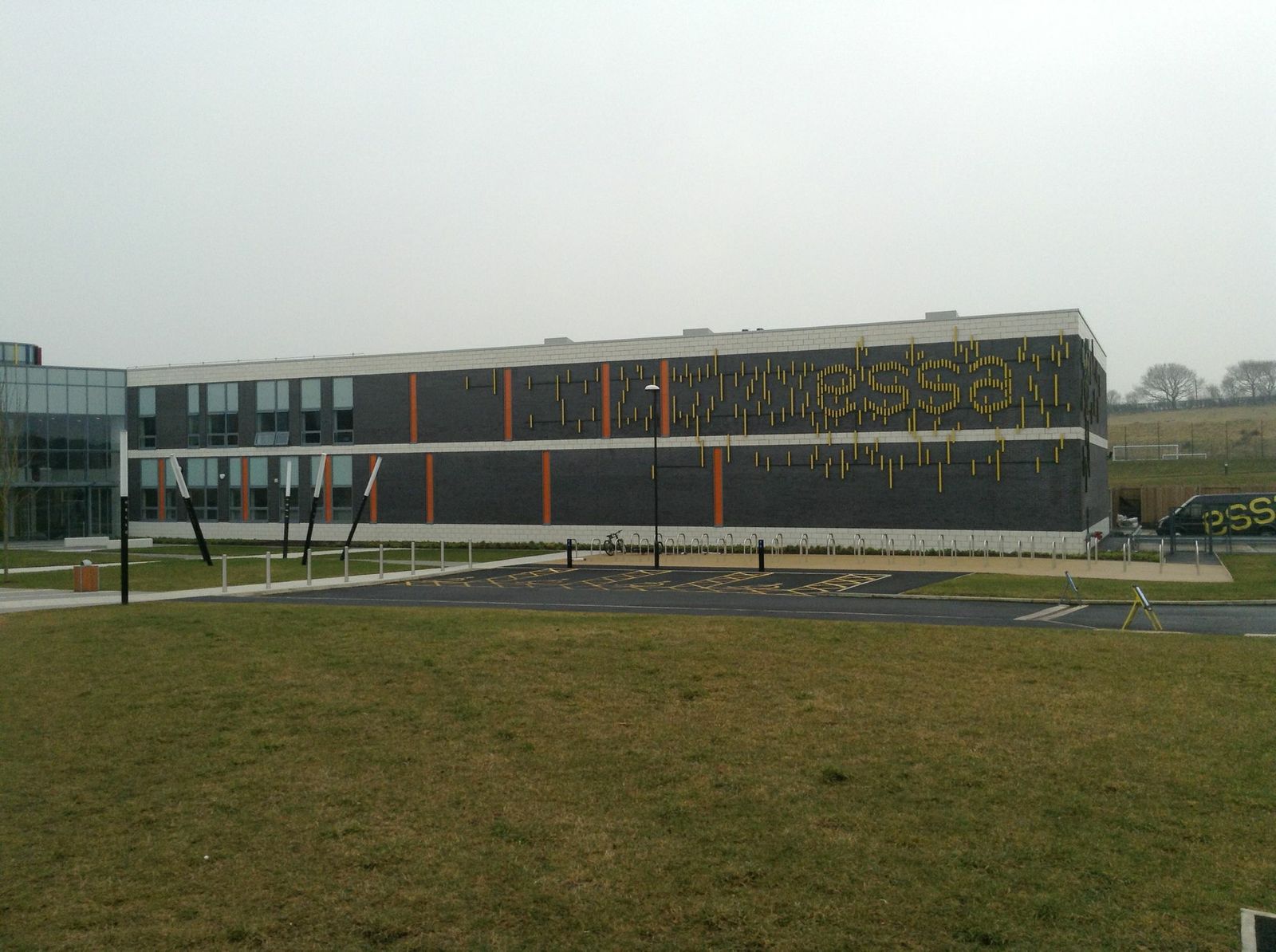
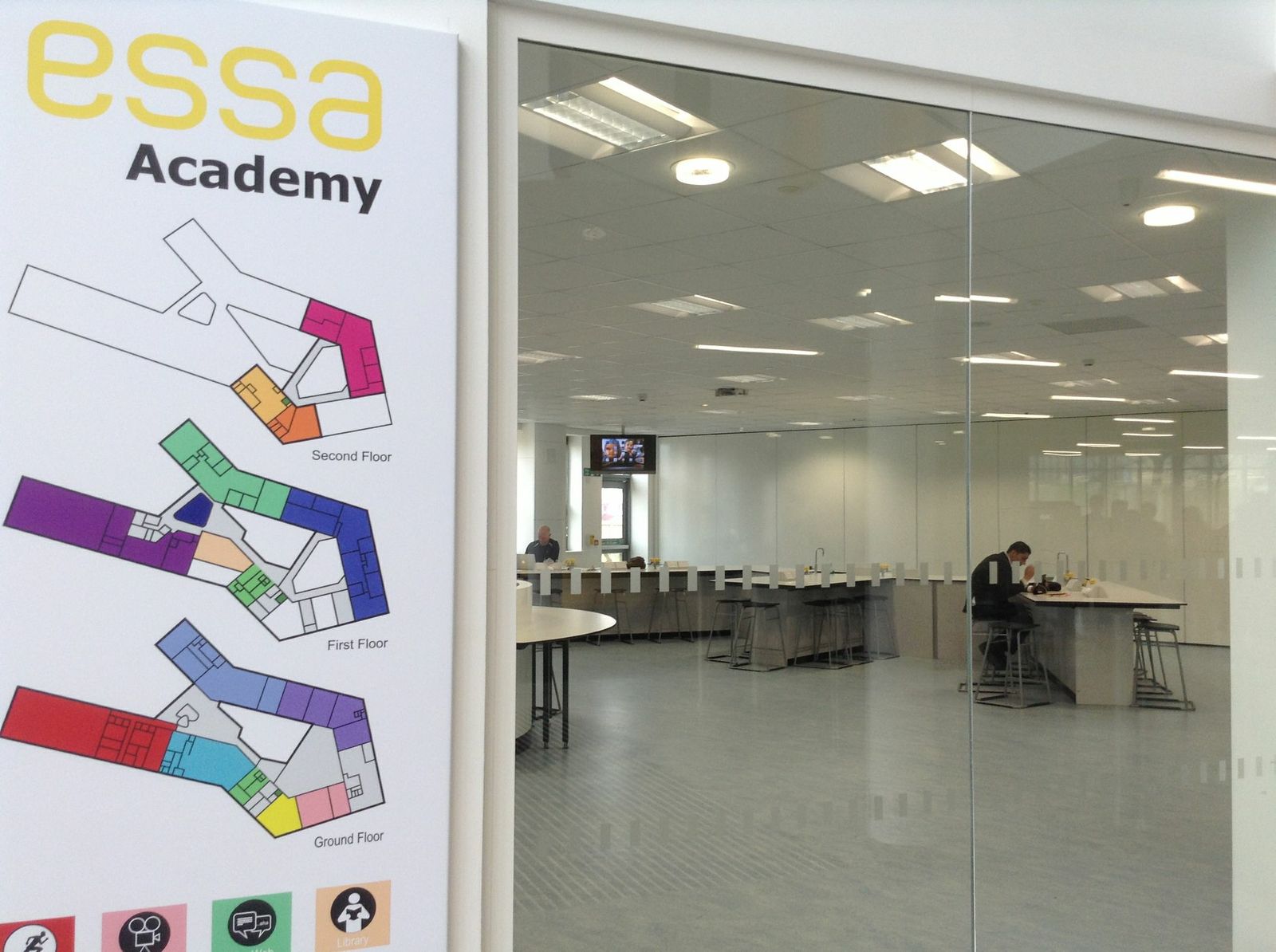
I had the chance to spend the day at an amazing school in the United Kingdom yesterday in Bolton which is just outside of Manchester. The School, Essa Academy, has been making some news for its use of iPads and was recently featured on the BBC. There is also a profile of the school on the Apple website.
While all of this is nice, the thing that makes Essa Academy so impressive is the student-centered building and of course their most impressive resource, the staff and students inside.
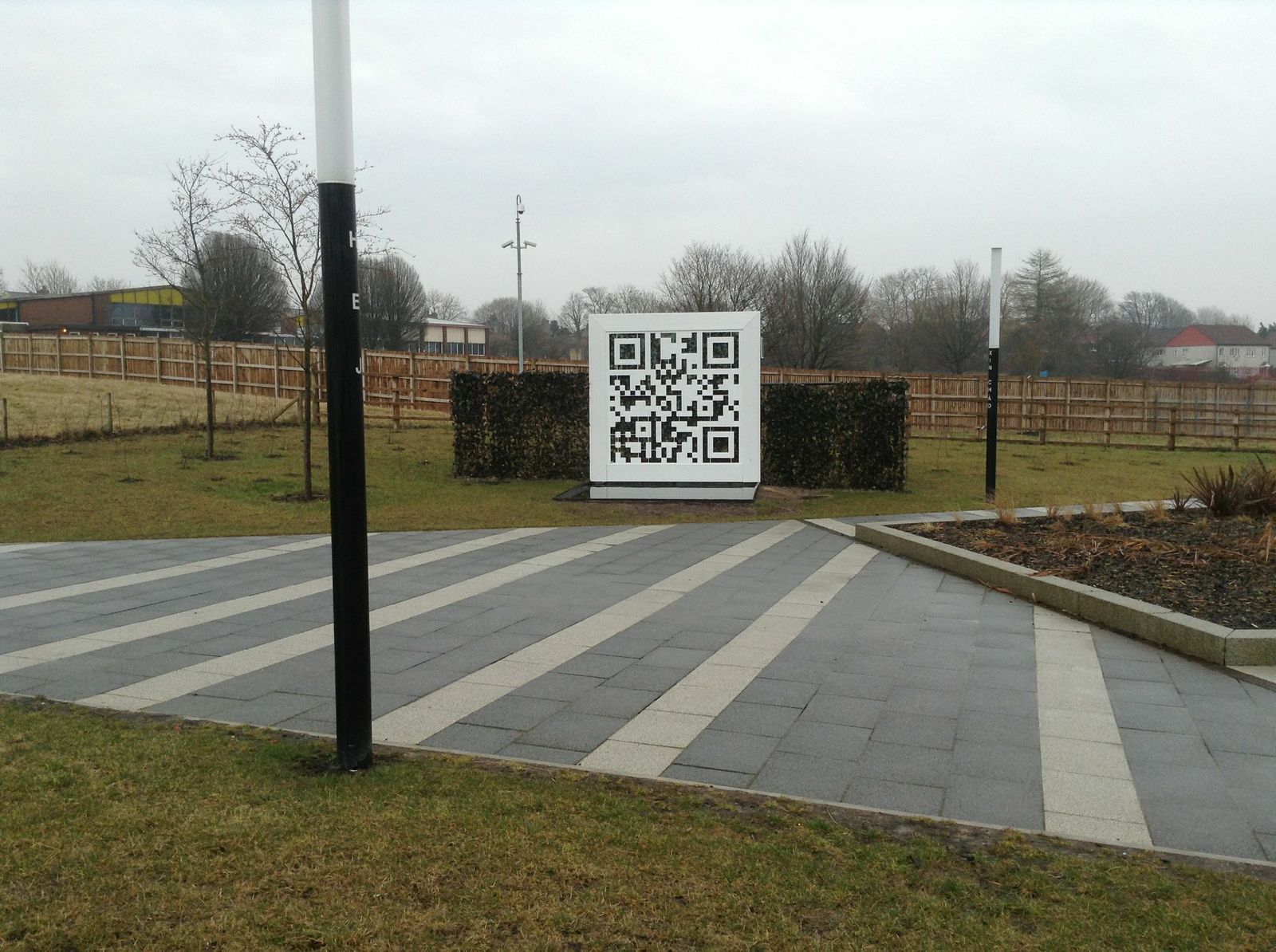
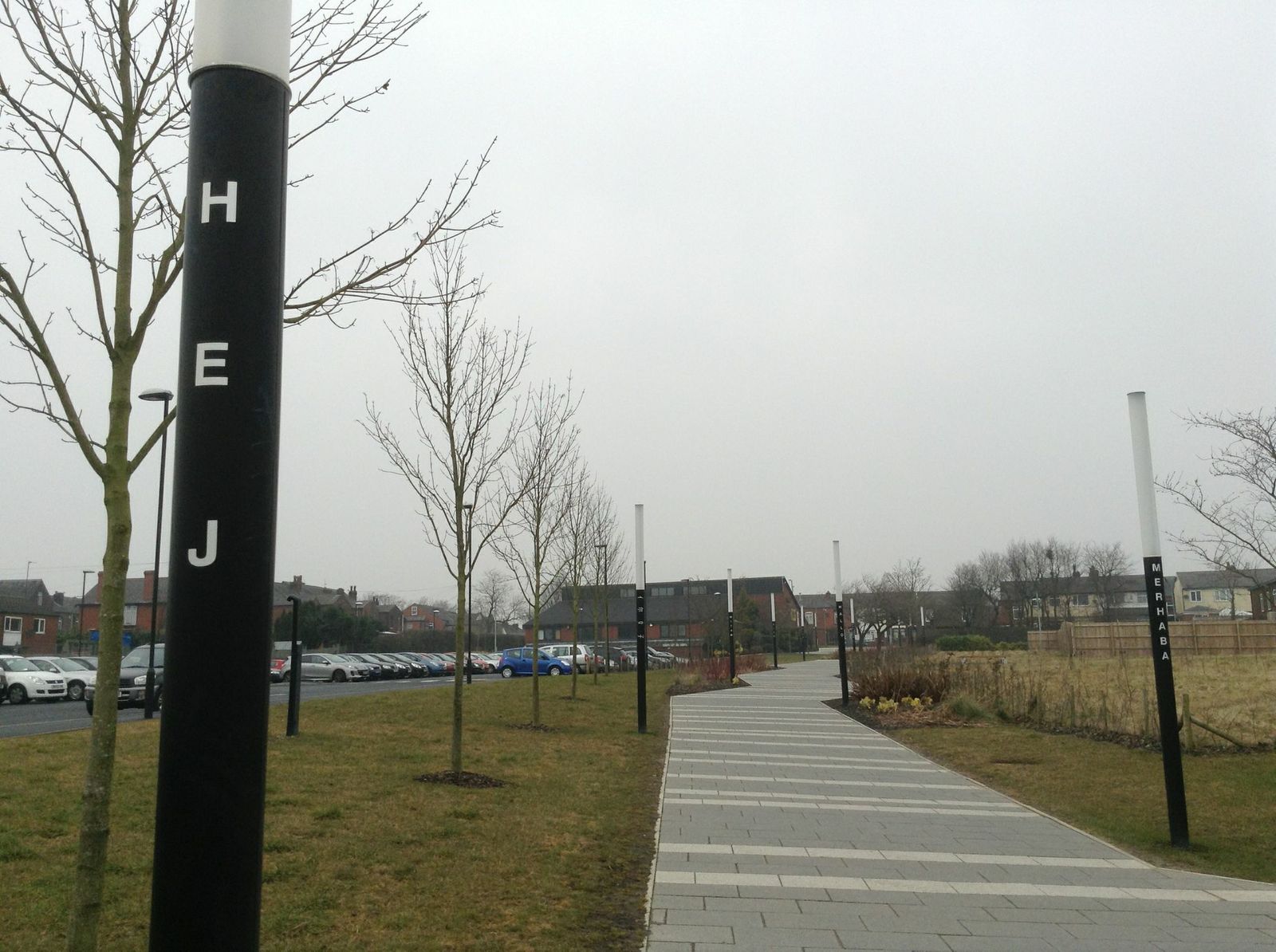
We felt welcomed immediately upon arrival as we walked down the pathway to the entrance and saw welcomes written on the light posts in a number of different languages. We were also impressed with the large monument of a QR code out in front of the school that directed us to the Essa Academy website.
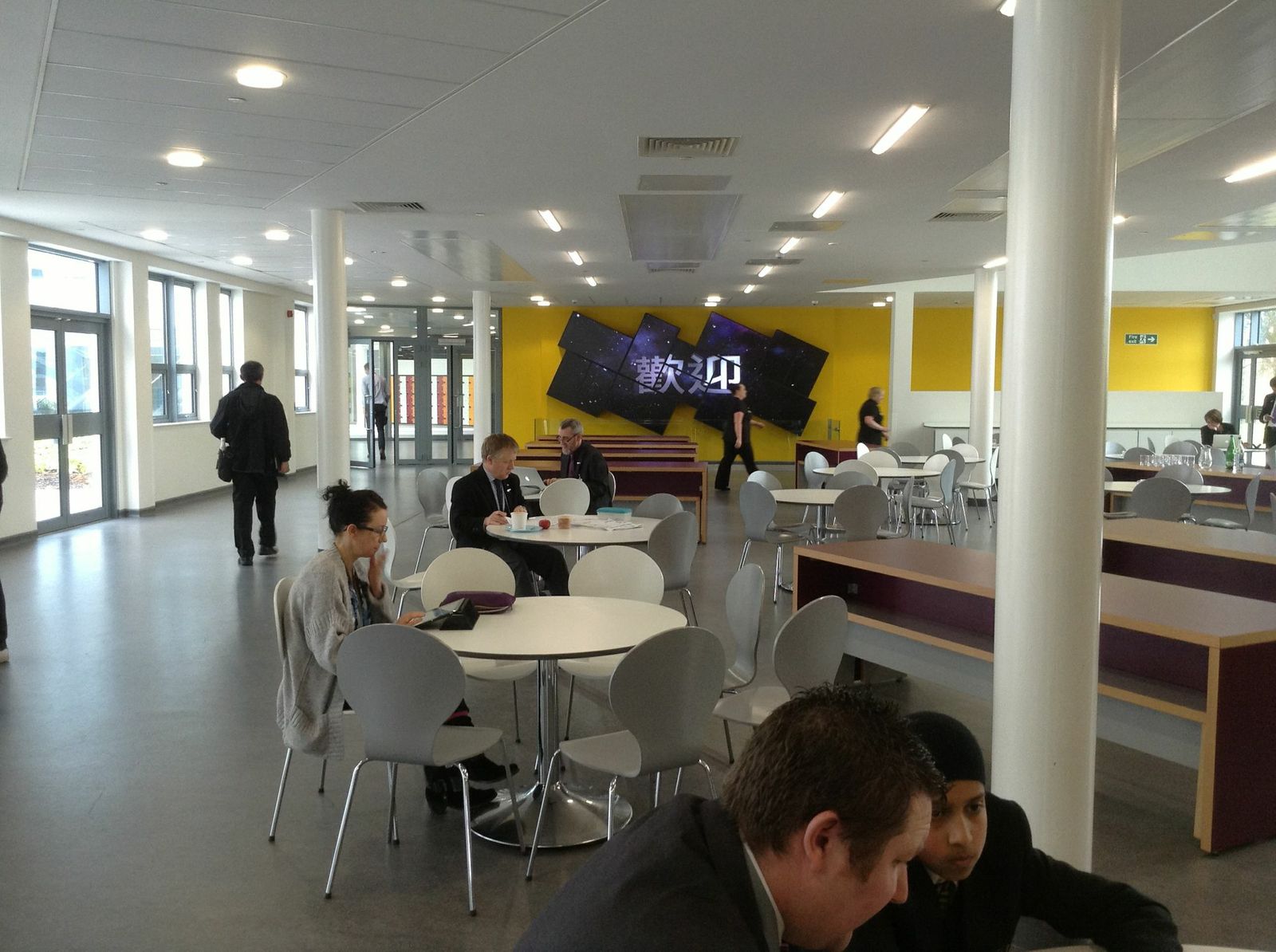
The first thing you see when you enter Essa Academy is the dining area. It is seen as an important gathering space where students and staff share meals and spend time socializing together. When students enter in the morning the first thing they see is their teachers sharing a breakfast and talking to one another.
Interestingly, this is the only place in the school where community members eat. There is no separate dining area for staff.
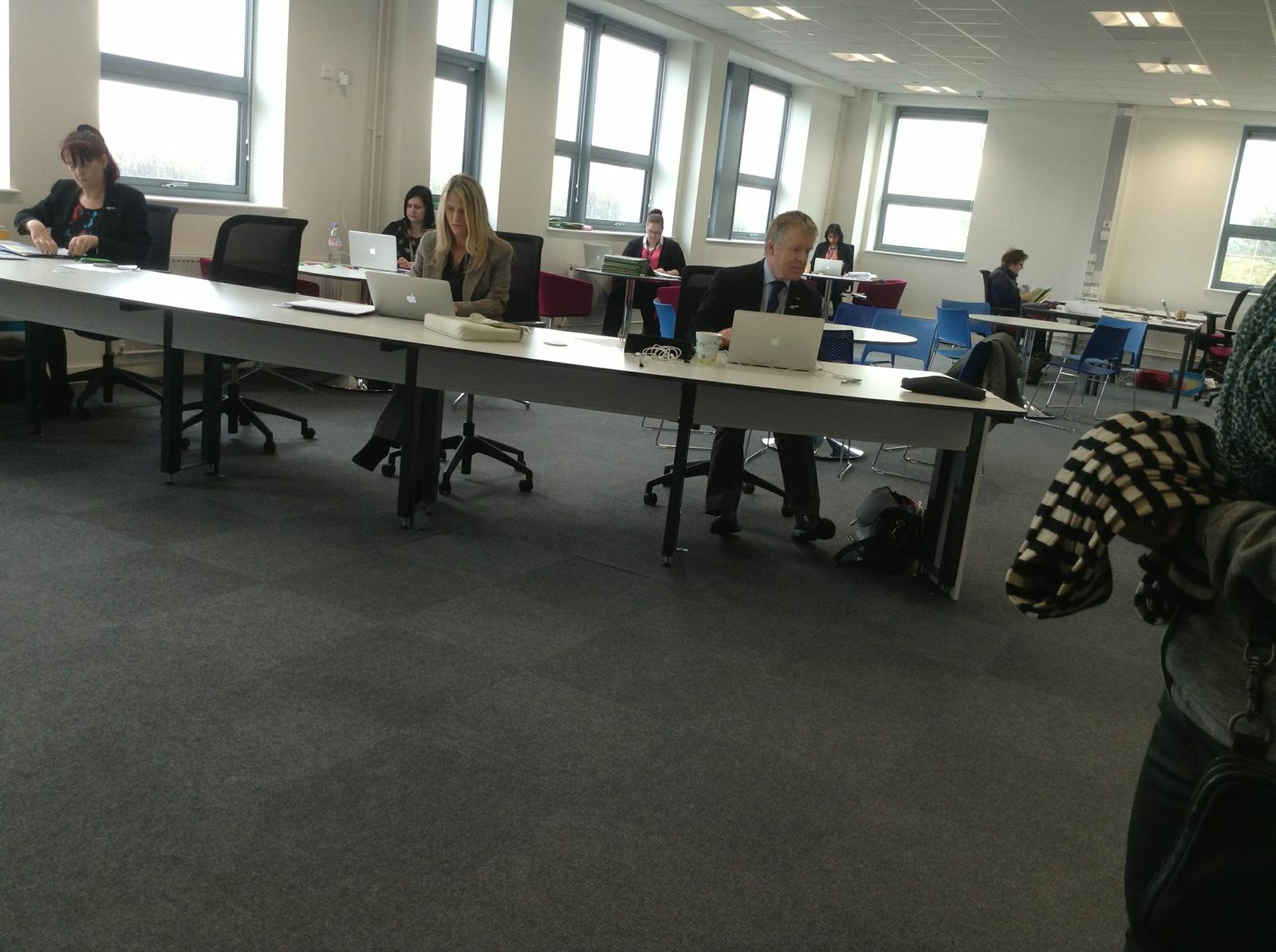
In addition there are no departmental meeting spaces. All of the teachers share this large community space to get work done and collaborate.
I loved the science labs which featured these large windows so that others could look in and see the learning happening in the lab. Students are also encouraged to use the windows as a board to write formulas and brainstorm solutions to tasks.
The classroom spaces are very different from traditional schools in the fact that there is no teacher desk or whiteboard at the front of the room that is the focal point of students. Students work together in groups on different challenges and it takes some time to figure out who the teacher was. The spaces were clearly designed to focus on learners not teachers.

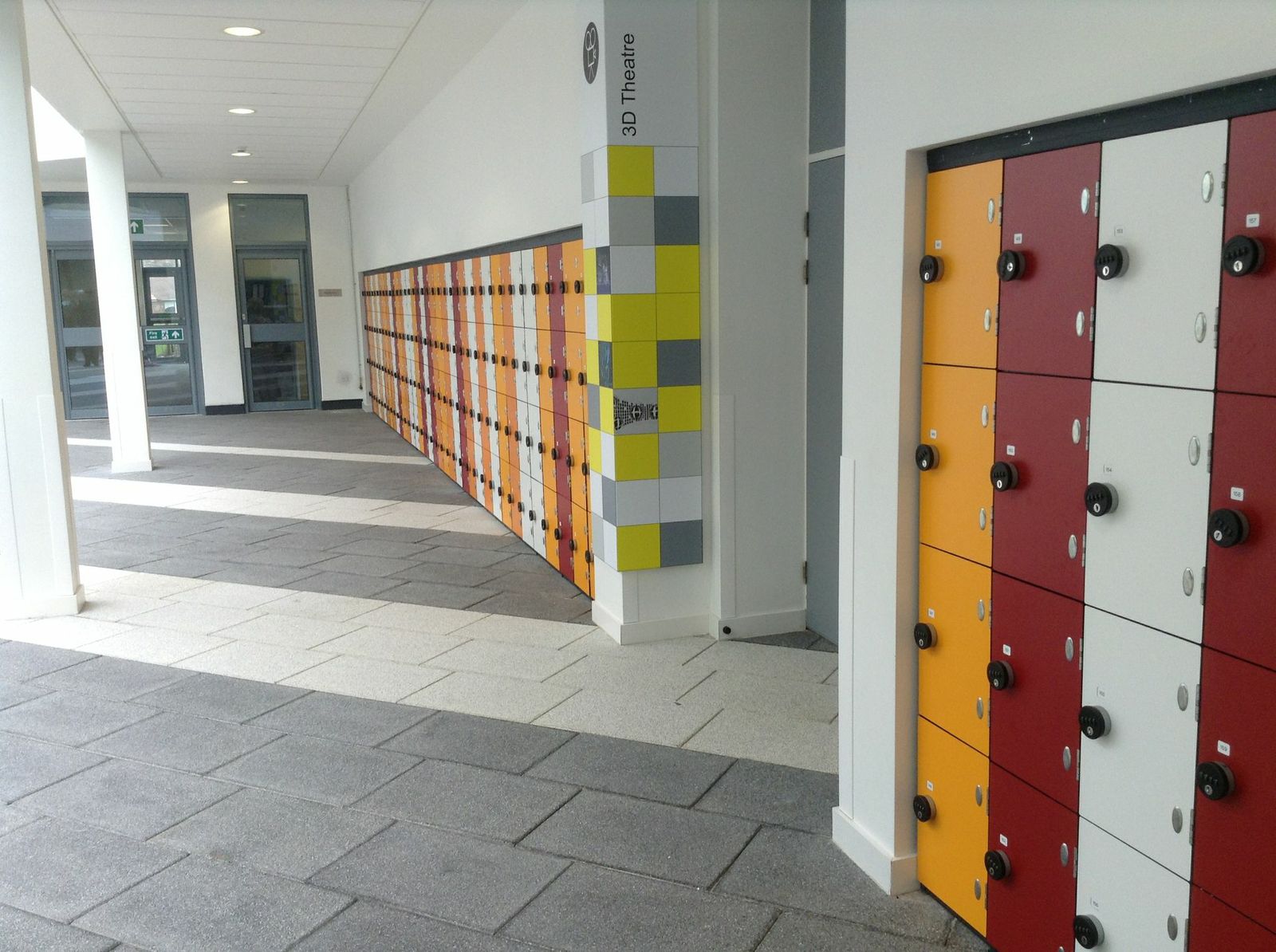
While I wouldn’t have thought much about the lockers other than the fact that they are more colorful and smaller than what I am used to seeing, the thing that I found interesting was that these were also the spaces where teachers stored their belongings.
It was really a joy to see a school built in 2009 that was designed with a student-centered vision! I hope other communities that are fortunate enough to build new schools are as thoughtful as the folks at Essa Academy.

Our High School Is Featured On Apple’s Education Page

IMG_0724

In case you missed it, Apple posted a great video on it’s Education page yesterday highlighting Burlington High School.  Seeing it made me prouder than ever to be part of a community that is willing to take a risk and be a leader in providing the most modern classroom resources to help prepare our students.

We are quite fortunate to have a community that supports its schools financially and a teaching staff that is dedicated, talented, and willing to take risks! Having all of these factors supporting ours schools is something that has led met to say the following on more than one occasion:

“If it can be done, then it can be done in Burlington.”

Here is the link if you are interested in watching the Apple video.

Related articles

Enhanced by Zemanta

My Day At Fox Hill

Camera Roll-113

One of the fun parts of my new position this year has been the opportunity to visit all of the other schools in Burlington.  Each time I have the chance to see what students and teachers are up to I am left with an extremely positive feeling. It is so great to be able to see all of the wonderful things happening across the district!  In fact, I have set a goal for the remainder of the school year to try to spend a full day in an elementary school each week.

This past week, I spent a day at Fox Hill and had the opportunity to sit in with a number of classes. Check out some of the pictures below. Thanks to Principal Johnson and the staff and students for their warm welcome!

Camera Roll-109
Students working on “sight words” in Kindergarten
Camera Roll-111
Student working on the egg drop in science class.

Camera Roll-110
Students making their Rainbow Fishes

Edweek Highlights Burlington’s EdTech Efforts

The video above appeared on Education Week’s Digital Directions Website back at the beginning of February.  We are certainly fortunate to be gaining this type of recognition nationally for the phenomenal efforts that staff members have made to integrate technological resources into their classrooms.

Enhanced by Zemanta

Don’t Miss This Month’s Parent Tech Night – Social Media And Our Children

Social Media and Our Children
Tuesday, February 26, 2013
Marshall Simonds Middle School Learning Commons
7-8 PM 

As a parent of three, I am amazed at the role social media plays in the lives of my three children. While doing my best to keep tabs on my son Timothy who is a 9th grader and recently started a Facebook account and my daughter Bryn, a 7th grader who is an Instagram lover, I wonder sometimes whether I am doing enough to guide them in the appropriate use of these communication tools.  It can certainly be overwhelming! I can’t even imagine what is coming down the road for my first-grader (pictured above) who is taking it all in

With this in mind, we invite parents to the February topic in our Technology Series For Parents – Social Media And Our Children.  Please join Burlington Public Schools Director of Instructional Technology and me as we discuss some of the most popular Social Media sources of our students. We will discuss how parents can keep tabs on their children and share best practices in appropriate use of these resources.
We will also spend a little time discussing School Connect, a wonderful communication tool that the school district will be launching in March. 

Finally, time during every Parent Tech Night session is also dedicated to technology related questions and support. All are welcome, so please feel free to bring a friend!
Enhanced by Zemanta

Testing, Testing, 1,2,3…

Think outside the bubble
 (Photo credit: MrSchuReads)

As I read through Marion Brady’s great article in The Answer Sheet titled A REAL Paradigm Shift, I can’t help thinking about how difficult it is to create an educational experience for our students that is vastly different than the one we experienced ourselves.  When we talk about redesigning our curriculum, we have to first consider origin of the word curriculum. 

Curriculum came from the Latin word ‘Currere’ which means race course/ to run/ run way, referring to the course of deeds and experiences through which children grow to become mature adults (via Wikipedia).

This is where we hit our biggest obstacle in changing the way we do school in our country.  The folks leading the way, the educators, have a tremendous hurdle to overcome in the fact that for most of us the “deeds and experiences” we have had do not mirror the experiences that we need to lead our current crop of students through.  As I make a disclaimer that I am one of those educators trying to unlearn my own formal education, I am not saying that this is an impossible task.

The rub here is that while I believe in teachers and know that they would be up to the challenge of creating a new reality in our schools, we cannot begin to tackle this work in places where our present and future judges educators, students, schools, and communities on their latest round of standardized test scores.   For educators, this is a never-ending rat race that typically evolves into an environment of “test prep” that is equally unfulfilling for them and their students.  As our state begins a redesigned teacher evaluation process that links teachers to the test scores of their students, I can’t help thinking we are headed towards an infinite loop…    

As Brady points out, as long as education reform efforts in our country continue to define accountability so narrowly, we are perpetuating a myth that there is something significant is happening or will happen.

“Standardized tests are to accountability what a finger in the wind is to a weather station. What they measure — information stored in memory — is useful, but for kids facing an unknown future, that’s not nearly enough. They need to know how to create new knowledge. That knowledge will be original, and standardized tests can’t evaluate original, non-standard thought.”

In this model, we may be able to ensure that certain things are being taught, but even this will not guarantee that significant learning is taking place.

Anyone disagree?

Related articles

Enhanced by Zemanta

What Are Standardized Tests Preparing Our Kids For?

De Cito Eindtoets Basisonderwijs.
  (Photo credit: Wikipedia)

Over the weekend, an interesting article titled A warning to college profs from a high school teacher ran in The Washington Post’s Answer Sheet Column.  The article, which has generated well over 1,000 comments already, was written by award-winning high school teacher Kenneth Bernstein from Washington, D.C.  Despite the article’s title, Bernstein is really sending a warning to all of us about the current reality concerning our students and the climate of testing that has overtaken our educational system.  

His concluding paragraph sums up his thoughts:

“Now you are seeing the results in the students arriving at your institutions. They may be very bright. But we have not been able to prepare them for the kind of intellectual work that you have every right to expect of them. It is for this that I apologize, even as I know in my heart that there was little more I could have done. Which is one reason I am no longer in the classroom.”

While Bernstein’s conclusion is very general, he also cites some concrete reasons for the state of the current crop of students heading out of our public high schools being ill-prepared for what is ahead of them.

…most of the tests being used consist primarily or solely of multiple-choice items, which are cheaper to develop, administer, and score than are tests that include constructed responses such as essays. Even when a state has tests that include writing, the level of writing required for such tests often does not demand that higher-level thinking be demonstrated, nor does it require proper grammar, usage, syntax, and structure.

According to Bernstein, these problems also carry over into Advanced Placement courses due to the nature of the AP Exams. As a teacher who spent time scoring the writing portion on the exams, he saw limitations in the scoring mechanism.

“If a student hits the points on the rubric, he or she gets the points for that rubric. There is no consideration of grammar or rhetoric, nor is credit given or a score reduced based on the format of the answer. A student who takes time to construct a clear topic sentence and a proper conclusion gets no credit for those words.”

Unfortunately, with PARCC testing due to commence in 2015 for our students, we are looking ahead to even more time spent on standardized testing and not less.

Enhanced by Zemanta

The End of Standardized Testing? Hey, A Guy Can Dream…

No one I know takes standardize tests for a living
 (Photo credit: Ken Whytock)
As many of us in education dream about a public education system that is not predicated on standardized test scores, there is actually movement in some places to put an end (or at least a pause) to the ridiculous rat race of “high-stakes testing” we have been involved in.  Sam Chaltain recently posted Has Testing Reached A Tipping Point  on his blog and it is a must read for those interested in this topic.  

In the short video below, Chaltain describes schools in other nations where a student’s teachers “the ones who know a student best” design the most meaningful tests a student will take.  He advocates for school communities to answer the following questions:

What are our measures of success for our students? How do we know we are being successful?

http://www.hlntv.com/embed/57819
While many are skeptical that anything dramatic will take place to change our nation’s plans to test students more often than any other country in the world, Chaltain notes some blips on the radar screen that he hopes will lead to more action for this important cause.

“Consider three separate data points as evidence: Maryland, where the superintendent of the state’s largest district of schools has called for a three-year moratorium on standardized tests; Washington, where one school’s decision to boycott its state tests has spread to other schools and communities; and Texas, where a proposed Senate bill would significantly reduce the number of state standardized tests students must pass to graduate.”

It would be interesting to see how a moratorium on testing would impact our students. I will continue to pray that we have an opportunity to see the day it happens!

Enhanced by Zemanta